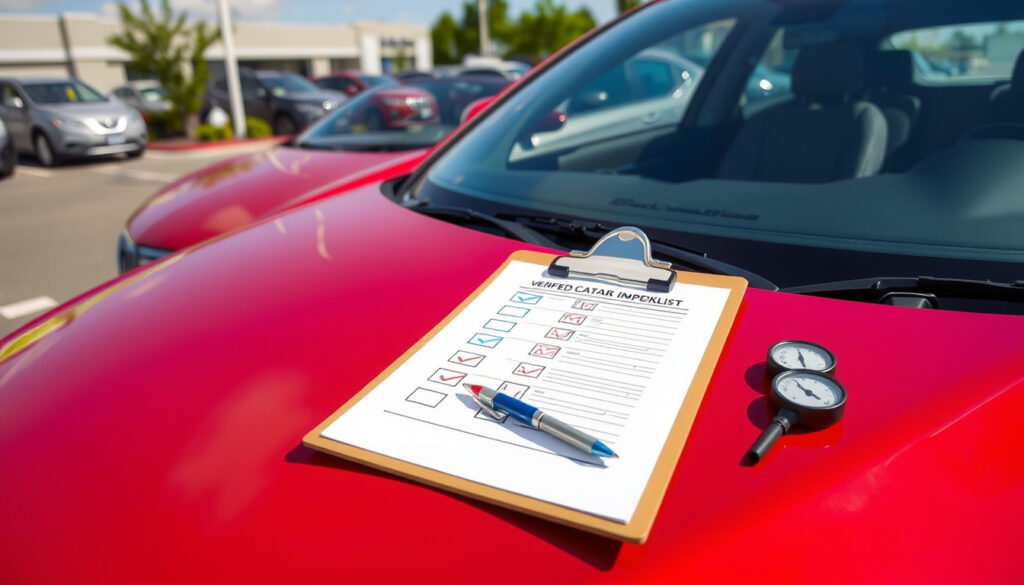
Cars for Sale Trade Me: Verified Buying Guide & Safety Checks
You’ve spotted a tidy hatchback on Trade Me for a few thousand less than anywhere else, and your finger is hovering over the bid button. That’s when the real work begins: checking the listing, the seller, and the legal protections behind the price. Trade Me Motors, New Zealand’s online marketplace, connects private sellers and registered motor vehicle traders with buyers, and most of what you need to verify before paying is free and public. Treat each listing like an unverified claim until the paperwork says otherwise.
Marketplace: Trade Me Motors, New Zealand ·
Listing formats: Auction and Buy Now ·
Dealer verification: Motor Vehicle Traders Register ·
Vehicle finance check: PPSR search ·
Vehicle document: Warrant of fitness and registration
Quick snapshot
- Trade Me Motors lists cars from private sellers and registered motor vehicle traders (Trade Me Motors) (New Zealand Companies Office, official PPSR registry)
- A PPSR search can reveal money owed or a written-off record (New Zealand Companies Office, official PPSR registry)
- Registered traders must provide a Consumer Information Notice (Motor Vehicle Traders Register)
- Photos and descriptions come from the seller and can hide defects (Consumer Protection NZ, pre-purchase guidance)
- A PPSR check does not certify mechanical condition (New Zealand Companies Office, official PPSR registry) (Consumer Protection NZ, pre-purchase guidance)
- Whether a specific car has finance owing is only settled by a PPSR search (New Zealand Companies Office) (Consumer Protection NZ, pre-purchase guidance)
- Check warrant of fitness and registration before you bid (New Zealand Government, used-car guidance)
- Inspect the car or arrange a professional check before the auction ends (Consumer Protection NZ, pre-purchase guidance) (New Zealand Government, used-car guidance)
- Verify a dealer on the Motor Vehicle Traders Register before you commit (Motor Vehicle Traders Register) (New Zealand Government, used-car guidance)
- Transfer the vehicle into your name after the sale (New Zealand Government, used-car guidance)
- Collect a copy of the Consumer Information Notice from a dealer (Motor Vehicle Traders Register)
- Keep records of messages, the PPSR result, and the payment transaction (New Zealand Government, used-car guidance)
Six facts, one pattern: the legal protection you get depends almost entirely on who sells you the car, not where you found it.
| Fact | Detail |
|---|---|
| Buyer type | Private individual or registered motor vehicle trader (Trade Me Motors) |
| Auction formats | Reserve and no-reserve (Trade Me Motors) |
| Buy Now format | Fixed-price listing with immediate purchase (Trade Me Motors) |
| Pre-purchase checks | PPSR, WOF, registration, odometer, physical inspection (Consumer Protection NZ) |
| Dealer coverage | Consumer Guarantees Act applies to registered motor vehicle traders (Consumer Protection NZ) |
| Private sale coverage | No CGA coverage unless the seller is a trader (Consumer Protection NZ) |
What is the latest verified information about cars for sale on Trade Me?
The most useful verified fact about Trade Me car listings is also the simplest: sellers are responsible for the accuracy of their listings, so buyers should verify the details independently (Trade Me Motors).
How do auction and Buy Now listings work on Trade Me?
- Auction: bidders compete and the market decides the final price (Trade Me Motors – sell your car)
- Buy Now: the seller sets a fixed price and a buyer can purchase immediately (Trade Me Motors)
- Classified and asking-price formats: the seller sets an asking price and negotiates (Trade Me Motors)
Trade Me Motors lets sellers pick between auction, classified, and asking-price formats. Motors listings can run up to 90 days and carry an upfront listing fee, with no success or withdrawal fee for cars (Trade Me Motors fees and listing durations). A successful bid or accepted offer can create a binding purchase obligation under Trade Me’s marketplace rules, so review the listing terms before bidding (Trade Me marketplace rules).
Four comparisons, one pattern: auction rewards patience, Buy Now rewards decisiveness.
| Feature | Auction | Buy Now | Source |
|---|---|---|---|
| Price setting | Bidding decides the final price | Seller sets a fixed price | Trade Me Motors |
| Buying speed | You wait until the auction closes | Immediate at the Buy Now price | Trade Me Help |
| Negotiation | Your bid is your offer | Buyers can contact the seller with an offer | Trade Me marketplace rules |
| Price certainty | Final price is unknown until the close | Known before you commit | Trade Me Motors |
The implication: if you want the lowest possible price and can wait, auction is the lever; if you want the car this week, Buy Now is the price of certainty.
What listing details should be checked before contact?
- Odometer reading and service history
- WOF expiry and current registration
- Plate number or VIN for the PPSR search
- Seller type: private individual or registered trader
Consumer Protection NZ advises checking whether the vehicle is stolen, whether money is owing, whether the odometer is consistent, and whether the vehicle has previous damage (Consumer Protection NZ, government consumer watchdog). Each check starts with the details in the listing: the plate or VIN, the odometer, the WOF expiry, and the seller’s name. Cross-check the plate or VIN against the PPSR (New Zealand Companies Office) and the Police stolen-vehicles database (Consumer Protection NZ) before you message anyone.
Where can buyers verify Trade Me seller information?
- Motor Vehicle Traders Register: confirms whether a dealer is licensed (Motor Vehicle Traders Register)
- PPSR: confirms whether finance is owing and whether the car is written off (New Zealand Companies Office)
- Trade Me help: explains fees, listing rules, and dispute steps (Trade Me marketplace rules)
If the seller claims to be a dealer, the Motor Vehicle Traders Register is the official place to confirm it. Registered traders have obligations private sellers don’t: they must tell you if money is owing on the vehicle and give you a Consumer Information Notice (Motor Vehicle Traders Register). If the seller is a private individual, the Consumer Guarantees Act generally does not apply — it protects buyers when they purchase from a motor vehicle trader (Consumer Protection NZ).
What should readers know first about cars for sale on Trade Me?
Two decisions shape everything else: how you buy, and who you buy from. Get those right and the rest of the process becomes a checklist rather than a gamble.
Should I choose auction or Buy Now?
An auction can hand you a bargain when bidding is quiet; Buy Now hands you certainty at a fixed price. You rarely get both from the same listing.
For a first car or a tight budget, an auction keeps the door open to a below-market price. For a specific model you need quickly, Buy Now removes the wait. Sellers choose the format, so the same car can appear either way — the format tells you how the seller wants to sell, not what the car is worth (Trade Me Motors).
What is the difference between a private seller and a dealer on Trade Me?
- Dealers on Trade Me: registered traders, must show a Consumer Information Notice, and the Consumer Guarantees Act applies (Motor Vehicle Traders Register)
- Private sellers: no trader licence, no CGA coverage, and usually less paperwork (Consumer Protection NZ)
This difference decides your legal options after the sale. Buying from a registered trader gives you the Consumer Guarantees Act as a backstop; buying from a private seller leaves the risk with you, which is why the pre-purchase checks matter more (Consumer Protection NZ).
Upsides
- Nationwide selection from dealer and private listings (Trade Me Motors)
- Auction format can deliver below-market prices (Trade Me Motors)
- Official checks — PPSR, trader register, WOF — are public and cheap (New Zealand Companies Office)
Downsides
- Listing details are seller-supplied and can miss defects (Consumer Protection NZ)
- Private sales do not carry Consumer Guarantees Act protection (Consumer Protection NZ)
- An unchecked vehicle can carry finance owing and be repossessed (New Zealand Companies Office)
Why this matters: a dealer sale gives you legal recourse if the car misbehaves; a private sale leaves the risk with you. Price that risk into your offer.
What checks are essential before any car purchase?
- PPSR search: security interests and written-off status (New Zealand Companies Office)
- Stolen-vehicle check (Consumer Protection NZ)
- WOF and registration status (New Zealand Government)
- Professional pre-purchase inspection (Consumer Protection NZ)
Consumer Protection NZ is blunt about this: basic checks are not a substitute for an expert inspection. Where possible, ask the seller not to run the car for several hours before you arrive so you can judge a cold start, and test it on roads similar to your daily driving (Consumer Protection NZ).
Which official sources confirm key claims about cars for sale on Trade Me?
A few official records answer the questions that matter: who is selling, is money owed, was the car written off, and can it legally be driven.
What does the Motor Vehicle Traders Register show?
A licensed trader can be held to legal obligations a private seller cannot. One search changes how much protection you have.
The Motor Vehicle Traders Register is the official record of licensed motor vehicle traders in New Zealand (Motor Vehicle Traders Register, official trader licensing body). If a Trade Me seller says they are a dealer, this register confirms it. Registered traders must display an accurate Consumer Information Notice in the vehicle or online listing and provide the buyer with a copy (Motor Vehicle Traders Register).
What does a PPSR search reveal?
- Registered security interests — money owed against the car (New Zealand Companies Office)
- Written-off status (New Zealand Companies Office)
- Search by VIN, chassis number, or plate, plus make, model, and year (New Zealand Companies Office)
The PPSR, run by the New Zealand Companies Office, can show whether a third party has a registered security interest in a used vehicle (New Zealand Companies Office, official PPSR registry). The guidance is blunt: complete the search before you agree to buy a privately sold vehicle, because a car with a security interest can be repossessed from you even after you’ve paid (New Zealand Companies Office).
What vehicle information does the NZ Transport Agency provide?
- Registration and licensing status (New Zealand Government)
- Warrant of fitness requirements (New Zealand Government)
- Change-of-ownership process (New Zealand Government)
The NZ Transport Agency manages vehicle registration, licensing, and warrant of fitness rules, and the official government guidance for buyers covers the same ground (New Zealand Government, central government transport guidance). Before you bid, confirm the WOF and registration are current; after you buy, transfer the vehicle into your name and keep the records.
What is still unclear or unverified about cars for sale on Trade Me?
Every Trade Me listing is a claim until something official confirms it. These are the gaps the public registers can’t close.
Confirmed facts
- Trade Me is a marketplace; the sale contract is between buyer and seller (Trade Me marketplace rules)
- A PPSR search can show security interests and written-off status (New Zealand Companies Office)
- Registered traders must provide a Consumer Information Notice (Motor Vehicle Traders Register)
What’s unclear
- Real condition behind photos and descriptions (Consumer Protection NZ)
- Whether a particular car has finance owing until a PPSR search is done (New Zealand Companies Office)
- Mechanical health, rust, and accident damage that a records check cannot confirm (Consumer Protection NZ)
- Whether a specific listing’s fee and verification terms apply — each seller sets their own terms (Trade Me marketplace rules)
What do listing photos and descriptions not tell you?
- Accident and repair history not visible in photos (Consumer Protection NZ)
- Whether the odometer matches service records (Consumer Protection NZ)
- Cold-start behaviour and gearbox condition (Consumer Protection NZ)
Consumer Protection NZ’s pre-buy checklist covers exactly these blind spots: is it stolen, is money owing, is the odometer consistent, is there previous damage (Consumer Protection NZ). A professional pre-purchase inspection goes further, because basic checks are not a substitute for an expert look (Consumer Protection NZ).
What can a PPSR check not reveal?
The PPSR is a title check, not a health check. A clean result means no registered security interest — it does not mean the car is mechanically sound.
The Companies Office is explicit that the PPSR shows registered security interests and written-off status (New Zealand Companies Office). Engine problems, hidden rust, and crash repairs sit outside its scope — which is why the register check and the inspection are two different steps in the same process.
When does Trade Me’s role end after a sale?
- Trade Me provides the platform, rules, and listing tools (Trade Me marketplace rules)
- The purchase contract is between buyer and seller (Trade Me marketplace rules)
- Payment, transfer, and disputes happen outside the listing (New Zealand Government)
Trade Me’s marketplace rules define how bids and offers work, including when a successful bid becomes binding (Trade Me marketplace rules). From the moment you agree to buy, the transaction is between you and the seller — Trade Me is not a party to the car’s condition, its finance, or its paperwork.
What are the most common user questions on cars for sale on Trade Me?
The questions buyers ask most are the practical ones: can I negotiate, can I inspect, how do I pay. The answers all point back to the same habit — verify before paying.
Can I negotiate the price on a Trade Me listing?
- Auction: your bid is your offer (Trade Me Motors)
- Buy Now: buyers can contact the seller with a lower offer (Trade Me marketplace rules)
- Reserve auctions: if bidding doesn’t meet the reserve, you can negotiate with the seller after the close (Trade Me marketplace rules)
Trade Me’s formats both leave room to negotiate, but the approach differs. With an auction, a bid is the clearest signal of interest; with Buy Now, a polite message with a realistic price can work when a seller is motivated. Either way, you negotiate with the seller, not with Trade Me (Trade Me marketplace rules).
Is it possible to inspect a car before the auction ends?
- Yes — inspections are arranged directly with the seller (Consumer Protection NZ)
- Ask the seller not to run the car for several hours so you can judge a cold start (Consumer Protection NZ)
- Test drive on road types similar to your normal driving (Consumer Protection NZ)
Consumer Protection NZ recommends inspecting the vehicle where possible and obtaining a professional pre-purchase inspection (Consumer Protection NZ). On Trade Me, that means scheduling the inspection before the listing closes — after you win, your negotiating position is gone.
What is the safest way to pay for a Trade Me car?
- Use a traceable payment method (Consumer Protection NZ)
- Do not send money to a stranger before seeing the car (Consumer Protection NZ)
- Keep the messages, the PPSR result, and the payment record (New Zealand Government)
Official guidance is consistent: do the checks first, pay in a way that leaves a record, and transfer the vehicle into your name afterwards (Consumer Protection NZ; New Zealand Government). A seller who demands a deposit before you’ve seen the car — or who pushes you off the platform — is a warning sign, not an opportunity.
Step-by-step: how to buy a car on Trade Me safely
- Read the listing and note the plate, VIN, odometer, and WOF expiry
- Verify the seller and the vehicle with the official registers
- Inspect the car before the auction closes
- Pay with a traceable method and transfer ownership
- Choose your format: auction for a possible bargain, Buy Now for certainty (Trade Me Motors)
- Read the full listing and record the plate, VIN, odometer, and WOF expiry (New Zealand Government)
- Confirm a dealer seller on the Motor Vehicle Traders Register (Motor Vehicle Traders Register)
- Run the PPSR search using the VIN, chassis, or plate (New Zealand Companies Office)
- Arrange an inspection or professional pre-purchase check before the auction ends (Consumer Protection NZ)
- Ask the dealer for the Consumer Information Notice (Motor Vehicle Traders Register)
- Pay by a traceable method and get a signed record of the sale (Consumer Protection NZ)
- Transfer the vehicle into your name and keep every document (New Zealand Government)
Each step is cheap. Skipping any of them is how a good deal becomes an expensive lesson.
What the official guidance says
The official sources are consistent, and they all push the same sequence: check, inspect, pay, transfer.
“If a PPSR search identifies a registered security interest, the vehicle can be repossessed from the buyer.”
— New Zealand Companies Office, official PPSR guidance for used-goods buyers
“Check whether a vehicle is stolen, whether money is owing, whether the odometer is consistent, and whether the vehicle has previous damage.”
— Consumer Protection New Zealand, pre-purchase guidance for used cars
“Motor vehicle traders must display an accurate Consumer Information Notice in the vehicle or online listing and provide the buyer with a copy.”
— Motor Vehicle Traders Register, trader responsibilities to buyers
“Transfer the vehicle into the buyer’s name, and check that it is not stolen and has no money owing.”
— New Zealand Government, buying a used car
The throughline: every official source sends buyers to the same two moments — before payment and after the transfer.
When you strip away the auction countdown and the listing photos, buying a car on Trade Me is a verification exercise: check the car, check the seller, check the payment. The official registers exist precisely because a listing alone proves nothing. For a buyer in New Zealand, the choice is clear: spend the time on the free official checks before you pay, or accept the risk that the car you win comes with someone else’s debt — or a defect the photos never showed.
Related reading: Trade Me Motors – sell your car · Trade Me Motors fees and listing durations
Frequently asked questions
Can I buy a car on Trade Me if it does not have a current warrant of fitness?
A car listed without a current WOF can still be purchased, but it cannot be driven on public roads until it has a fresh warrant of fitness and current registration. Factor that cost into your bid (New Zealand Government).
What documents should I collect from the seller after buying a car on Trade Me?
At minimum: the signed change-of-ownership details, a receipt with price and date, the PPSR search result, and, if the seller is a registered trader, a copy of the Consumer Information Notice. Keep the Trade Me messages and the payment records (Motor Vehicle Traders Register; New Zealand Government).
Can a Trade Me seller withdraw a listing after I win the auction?
Under Trade Me’s marketplace rules, a successful bid can create a binding purchase obligation. If a seller withdraws after the auction, check Trade Me’s marketplace rules for the withdrawal process (Trade Me marketplace rules).
Is a Trade Me car auction bid legally binding?
According to Trade Me’s marketplace rules, a successful bid or accepted offer can create a binding purchase obligation. Review the listing terms, the reserve, and the seller’s feedback before you bid (Trade Me marketplace rules).
Do I need a New Zealand driver licence to buy a car on Trade Me?
Buying a car and driving it are separate steps. To drive on New Zealand roads, the vehicle must be registered and hold a current warrant of fitness, and the driver must be licensed. Official guidance for buyers focuses on transferring the vehicle into your name and checking that it is not stolen and has no money owing (New Zealand Government).
What happens if the odometer reading on a Trade Me car is different from the listing?
Ask the seller for the reason before you pay. Odometer consistency is one of the checks to complete before buying, and a mismatch can signal previous damage (Consumer Protection NZ). If a registered trader provided a false description, you have options under the Consumer Guarantees Act that a private sale would not give you (Motor Vehicle Traders Register).
More related posts
 ANZ Home Loan Calculator NZ – Repayments and Borrowing Guide
 How to Get a New Zealand Seasonal Work Visa (2026 Guide)
 Reduced to Clear Near Me: Stores, Hours & Online Shopping
 How to Improve Concentration: Science-Backed Techniques
 Beef Short Ribs Recipe: Best Method (Oven vs Slow Cooker)
 NZD to INR Rate Today: New Zealand Dollar Price in India
 Smeg Cast Iron Braiser: Price, Reviews, Recipes and Care
 Seasonal Work Visa NZ 2026: Requirements & Options