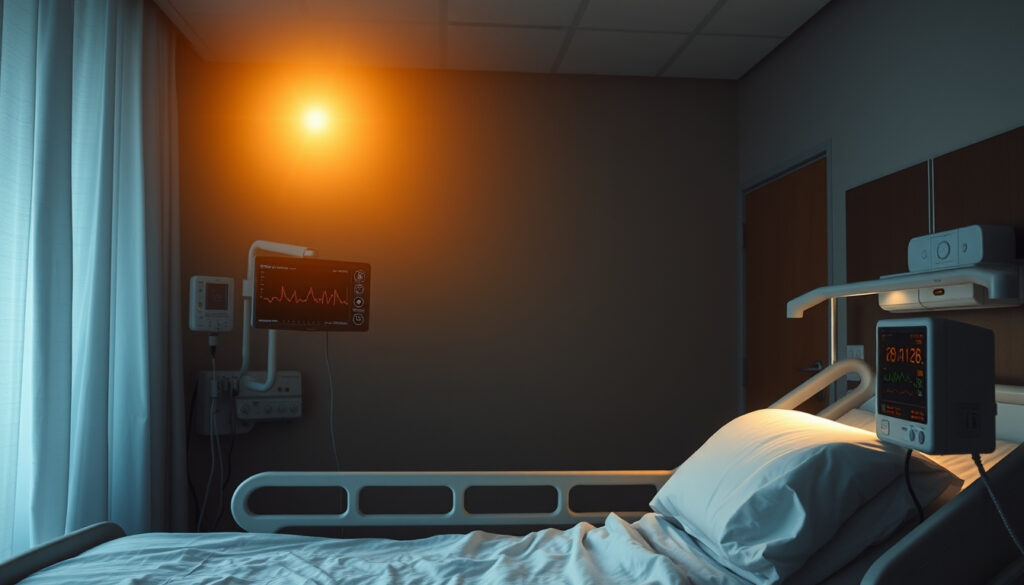
What Happens When We Die? Medical & Spiritual Perspectives
There’s a moment in every life when the question becomes personal: what happens when we die. For some it surfaces in a hospital room, for others during a quiet night’s reflection. Across cultures and centuries, the answers have varied — from clinical accounts of brain shutdown to spiritual stories of tunnels and light. Here we bring together the most reliable evidence from medicine, psychology, and spiritual traditions, with clear markers for what is known and what remains open.
Time until irreversible brain damage: 4–6 minutes after cardiac arrest ·
Percentage of people reporting near-death experiences: 10–20% ·
Age group with highest death anxiety: 40–55 years old
Quick snapshot
- Death is clinically defined as irreversible cessation of heart, lung, and brain function (UW Medicine (university medical center)).
- Brain dies within minutes without oxygen (PubMed Central (peer-reviewed research database)).
- Near-death experiences are reported by a significant minority of survivors (UW Medicine (university medical center)).
- Whether any form of consciousness continues after brain death (UW Medicine (university medical center)).
- Why some people report near‑death experiences and others do not (PubMed Central (peer-reviewed research database)).
- The exact mechanisms behind visual and auditory phenomena during NDEs (UW Medicine (university medical center)).
- 0 min: clinical death — heartbeat and breathing stop (UW Medicine (university medical center)).
- 4–6 min: irreversible brain damage unless resuscitation occurs (PubMed Central (peer-reviewed research database)).
- 7 min: common reference point for near‑death experience reports (UW Medicine (university medical center)).
- Ongoing research into consciousness after brain death (PubMed Central (peer-reviewed research database)).
- Improving palliative care to address both physical and “soul needs” (Royal College of Psychiatrists (UK medical body)).
- Greater societal openness to discussing death and dying (PubMed Central (peer-reviewed research database)).
Here is a summary of the core medical and psychological data on death and dying.
| Fact | Detail |
|---|---|
| Clinical death defined | Cessation of heartbeat, breathing, and brain function |
| Brain activity after cardiac arrest | Ceases within 20 seconds, irreversible damage after 4–6 minutes |
| Near‑death experience prevalence | 10–20% of cardiac arrest survivors report NDEs |
| Peak death anxiety age | 40–55 years (based on meta‑analyses) |
| Top regret among dying patients | “I wish I’d had the courage to live a life true to myself” |
Where will we go after we die?
People have asked this question for millennia, and the answers fall into three broad camps: religious, scientific, and psychological. Religious traditions generally promise some form of continued existence — heaven, hell, reincarnation, or spiritual reunion. Science, on the other hand, finds no evidence of consciousness after brain death (UW Medicine (university medical center)). Psychological perspectives focus on the meaning people create around death and the near‑death experiences that sometimes accompany it.
What does the Bible say about what happens when we die?
Christian scripture describes death as separation from the body and an immediate afterlife in the presence of God (heaven) or apart from God (hell). The Bible speaks of a final resurrection and judgment. These teachings form the core of belief for billions of people worldwide, but they rest on faith rather than empirical evidence.
What does Christianity say about what happens when we die?
Christianity broadly teaches that the soul survives physical death. Catholic doctrine includes purgatory as a state of purification before heaven. Protestant traditions emphasize justification by faith and direct entry into God’s presence. Near‑death experiences that feature encounters with Jesus or angels are often interpreted as confirming these beliefs (Mayim Bialik’s Breakdown (popular science interview)).
What happens to your soul when you die?
That depends on whom you ask. Many spiritual traditions assert that the soul — an immaterial essence — leaves the body at death and continues its journey. Science has no method to detect a soul and therefore cannot confirm or deny its existence. The Royal College of Psychiatrists notes that dying people sometimes describe moving out of their bodies or entering “other‑worldly realms” (Royal College of Psychiatrists (UK medical body)).
The question “where do we go” may be unanswerable by science alone, but the near‑death data suggest that many people, regardless of belief, experience something profound at the brink of death — something that feels like destination.
Is dying peaceful or scary?
Most clinical accounts describe a gradual process that is far less dramatic than Hollywood suggests. Pain is often well controlled, and many patients drift into a state of calm withdrawal.
What will appear after I die?
Common near‑death experience reports include a tunnel of light, encounters with deceased relatives, a life review, and a feeling of overwhelming peace (UW Medicine (university medical center)). A systematic analysis in PubMed Central organizes these into four categories: out‑of‑body experiences, heightened senses, spiritual perceptions, and supernatural encounters (PubMed Central (peer-reviewed research database)).
What happens 2 minutes before death?
In the final minutes, the heart rate drops, breathing becomes irregular (Cheyne‑Stokes respiration may appear), blood pressure falls, and blood flow to the brain reduces, leading to loss of consciousness (Royal College of Psychiatrists (UK medical body)).
What does 7 minutes after death mean?
The “7 minutes after death” often cited in NDE literature corresponds to the window during which some cardiac arrest survivors report vivid experiences after their heart has stopped. Dr. Jeffrey Long, founder of the Near‑Death Experience Research Foundation, notes that NDE accounts frequently occur when the brain is clinically inactive (Mayim Bialik’s Breakdown (popular science interview)).
Near‑death experiences are often described as intensely peaceful and meaningful, yet the physical conditions that trigger them — oxygen starvation and brain shutdown — are objectively chaotic. The contrast suggests that the brain in extremis may be capable of generating profound subjective states.
Does a person know when they are dying?
Many dying patients show signs of awareness that the end is near — withdrawal, vision‑like experiences, or simply stating that they are ready. The Royal College of Psychiatrists guide observes that some people nearing death seem to “move in and out of reality” and may describe embarking on a journey (Royal College of Psychiatrists (UK medical body)). Medical signs include changes in breathing patterns, skin temperature, and blood pressure. Whether this awareness is spiritual or neurological is debated, but the phenomenon is well documented.
The pattern here: awareness of approaching death appears to be a real, documented phenomenon, but its root cause — spiritual intuition or neurological change — remains a matter of interpretation.
What happens 2 minutes before death?
As covered above, the final minutes involve a cascade of physiological shutdown. Heart rate slows, breathing becomes inefficient, and the brain begins to lose oxygen. Patients may appear restless or have agonal (“gasping”) breaths before entering unconsciousness. The timeline is consistent across multiple medical sources (Royal College of Psychiatrists (UK medical body)).
The implication: the body’s shutdown sequence is predictable, offering clinicians clear markers for when death is imminent.
Why is 2033 important?
Some fringe online communities associate the year 2033 with prophecies about death, the afterlife, or spiritual transformation. These predictions often draw on numerological patterns or reinterpretations of biblical timelines. No scientific evidence supports 2033 as a meaningful marker for death‑related events. The query likely reflects niche speculation rather than any established research or doctrine.
What age is most afraid of death?
Death anxiety follows a predictable curve: it peaks in middle age (roughly 40–55 years) and tends to decline in older adults, according to meta‑analyses (PubMed Central (peer-reviewed research database)). Younger adults often feel too distant from death to fear it, while many older individuals report acceptance — especially those who have lived a life they consider meaningful.
What are the 5 biggest regrets before you die?
Palliative nurse Bronnie Ware, based on years of hospice work, documented the top regrets of the dying. The most common: “I wish I’d had the courage to live a life true to myself, not the life others expected of me” (Wikipedia (community‑edited encyclopedia)). The other four regrets include working too hard, not expressing feelings, losing touch with friends, and not letting oneself be happier.
The peak of death anxiety at midlife coincides with the period when people are most burdened by responsibilities. This suggests that fear of death is often fear of unfinished business — a finding that palliative care teams use to help patients resolve regrets before the end.
Here is how the three major frameworks contrast on key questions about death.
| Aspect | Religious perspective | Scientific perspective | Psychological perspective |
|---|---|---|---|
| What happens to consciousness? | Continues after death (soul/spirit) | Ceases with brain function (UW Medicine) | Constructed through meaning‑making (RCPsych) |
| Is death an end or a transition? | Transition to an afterlife | Biological end of life | Existential transition (PubMed Central) |
| What about near‑death experiences? | Evidence of afterlife | Hallucinations from oxygen starvation (UW Medicine) | Coping mechanisms for trauma (PubMed Central) |
Timeline of death and after
The sequence from clinical death to irreversible damage is consistent across medical sources:
| Time | Event |
|---|---|
| 0 minutes (clinical death) | Heart stops, breathing ceases, brain activity ends (UW Medicine) |
| 2 minutes after death | Neurons begin to die from oxygen deprivation (PubMed Central) |
| 4–6 minutes after death | Irreversible brain damage unless resuscitation occurs (PubMed Central) |
| 7 minutes after death | Common reference point for near‑death experience reports (UW Medicine) |
| 2033 | Year cited in fringe predictions; no scientific relevance |
What we know and what we don’t
Confirmed facts
- Death is clinically defined as irreversible cessation of heart, lung, and brain function.
- Brain dies within minutes without oxygen.
- Near‑death experiences are reported by 10–20% of cardiac arrest survivors (UW Medicine).
What’s unclear
- Whether any form of consciousness continues after brain death.
- Why some people report NDEs and others do not.
- The exact mechanisms behind visual and auditory phenomena during NDEs (PubMed Central).
Voices from the bedside
“I wish I’d had the courage to live a life true to myself, not the life others expected of me.”
— Bronnie Ware, palliative care nurse, from her book on the top five regrets of the dying (Wikipedia)
“Dying people need physical pain control and also ‘soul needs’ such as feeling heard, cared for, connected, and emotionally safe.”
— Royal College of Psychiatrists, guide to spiritual care at the end of life (UK medical body)
“Near‑death experiences can be described as strange, illuminating, terrifying, or beautiful.”
— UW Medicine Right as Rain (university medical center)
So what does it all mean?
Medicine has given us a detailed map of the physical process of dying — the slowing heart, the fading brain waves, the final breath. Psychology has shown us that how we approach death shapes our final years and that many people find peace when they are allowed to do so. Spiritual traditions offer meaning and continuity, but their claims about an afterlife cannot be verified by the tools of science. For anyone facing the end of life, the clearest implication is that medical care must address not just the body but the mind and spirit — and that accepting death with awareness can transform our final days.
For a deeper look at the clinical and spiritual dimensions, see this medical and spiritual guide to death.
Frequently asked questions
Can a dying person hear you?
Hearing is believed to be one of the last senses to fade. Palliative care specialists advise speaking to unconscious patients as if they can hear — it may provide comfort (Royal College of Psychiatrists).
What happens to the body immediately after death?
Muscles relax, body temperature drops, and blood settles in lower parts of the body (livor mortis). Rigor mortis sets in over hours (UW Medicine).
Do near‑death experiences provide evidence of an afterlife?
They are cited as potential evidence by some, but scientific explanations — oxygen starvation, neurochemical release — account for many features. The question remains open (UW Medicine).
How long does it take to die after stopping breathing?
Without oxygen, brain cells begin to die within 4–6 minutes. Permanent brain damage occurs quickly after that (PubMed Central).
What is the difference between clinical death and brain death?
Clinical death means the heart and lungs have stopped but may be reversible. Brain death is the irreversible loss of all brain function, including the brainstem — considered legal death (UW Medicine).
Do animals know when they are dying?
Anecdotal evidence suggests that many animals withdraw or seek solitude when death is near, but scientific studies are limited (PubMed Central).
Why are some people more afraid of death than others?
Death anxiety varies with personality, life experiences, cultural beliefs, and age. Peak fear occurs around ages 40–55 (PubMed Central).
More related posts
 NZD to INR Rate Today: New Zealand Dollar Price in India
 How to Improve Concentration: Science-Backed Techniques
 Chicken Leg Ice Cream: Viral Not Fried Chicken Guide
 What Is an Enzyme? Definition, Function, Examples & More
 How to Track a Package on UPS: Online, App, Phone & More
 Comet 3I/ATLAS: What It Heavy Water Reveal
 TV Shows with Mark Bonnar: Line of Duty, Guilt, Shetland
 Milwaukee Brewers vs Dodgers Match Player Stats & Analysis