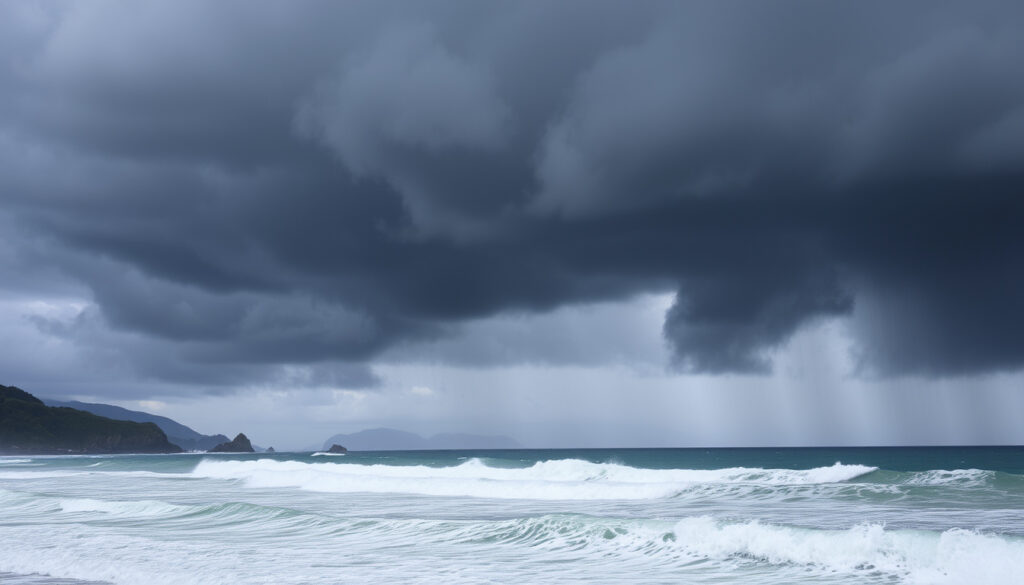
Severe Weather Warning NZ Today: Red Alerts & Cyclone Updates
You don’t need to be a meteorologist to know something’s off when the sky turns that shade of grey. New Zealand is in the thick of a volatile weather pattern, with Cyclone Vaianu churning across the North Island and multiple red and orange warnings active right now. This article brings together the official alerts, the latest cyclone track, and what you should actually do when the warning system tells you to move.
Active weather warnings today: Multiple orange and red alerts in force · Heavy rain threshold: 25mm/h or more · Hail size warning: 20mm diameter or larger · Severe thunderstorm risk: Moderate to high in some regions · Wind gusts: Strong enough to meet severe criteria
Quick snapshot
- Cyclone Vaianu made landfall on the North Island (Civil Defence NZ)
- A red strong wind warning issued for Coromandel Peninsula and Great Barrier Island (MetService)
- Wellington declared a state of emergency after severe flooding (Waikato District Council)
- Exact track of future cyclones such as Tam remains uncertain (RNZ)
- Probability of a large earthquake in the immediate future is not determinable (Civil Defence)
- Travel warnings may change rapidly with weather conditions (MetService)
- The full extent of damage from Cyclone Vaianu is still being assessed (RNZ)
- Red strong wind warning Coromandel – 10:00 Saturday to 18:00 Sunday (MetService broadcast)
- Bay of Plenty upgraded to red from 4:00 a.m. to 8:00 p.m. Sunday (MetService broadcast)
- Mandatory evacuations in Ōhope and Thornton (RNZ)
- Continued heavy rain and wind warnings likely through the week (MetService)
- Clean‑up and slip clearance underway in Waikato (Waikato District Council)
- Exercise Rū Whenua 2024 tests earthquake preparedness later this year (Civil Defence)
Six key facts about the current situation:
| Fact | Value |
|---|---|
| Red warnings in force | 2 (as of latest MetService update) |
| Orange warnings active | 5 |
| Latest cyclone | Cyclone Vaianu – North Island landfall |
| Recent flooding emergency | Wellington state of emergency |
| Tsunami warning history | 2010 Russian 8.8 quake triggered NZ warning |
| Earthquake preparedness exercise | Exercise Rū Whenua 2024 |
What is the red warning in New Zealand?
What do the different warning colours mean?
- Red: Extreme weather expected – take immediate action to protect life and property.
Source: MetService (official weather authority) - Orange: Severe weather criteria met – stay informed and ready to act.
Source: GetReady.govt.nz (government emergency preparedness) - Yellow: Weather could become severe – monitor updates.
Source: MetService
How are red warnings issued by MetService?
MetService issues red warnings when forecast data shows that heavy rain, severe gales, or heavy snow will reach extreme thresholds. As GetReady.govt.nz (official Civil Defence advice) explains, orange warnings are triggered when the criteria for severe weather are met but not yet extreme. The public should check getready.govt.nz for safety advice during red warnings.
The pattern: a red warning is not a suggestion – it’s an instruction. When the Coromandel Peninsula received a red strong wind warning on Saturday, local authorities began evacuations and closed roads. The same call was made for Bay of Plenty hours later.
Why this matters: knowing the difference between orange and red can mean the difference between staying put and getting out in time.
What cyclone just hit New Zealand?
Is Cyclone Tam hitting NZ?
As of the latest forecasts, Cyclone Tam is still being tracked but its exact path remains uncertain. What is clear is that Cyclone Vaianu has already made landfall on the North Island, bringing damaging winds, heavy rain, and coastal inundation (U.S. Mission New Zealand). Cyclone Tam may follow a similar track, but meteorologists at MetService advise monitoring official bulletins for updates.
What damage did Cyclone Vaianu cause?
- Mandatory evacuations in Ōhope, Thornton, and Port Waikato (Waikato District Council)
- State of Local Emergency declared across Waikato (Waikato District Council)
- Red strong wind warnings for Coromandel Peninsula, Great Barrier Island, and Bay of Plenty (MetService broadcast)
- Widespread power outages, road closures, and slip damage (U.S. Mission New Zealand)
For more on cyclone recovery, see our article on Gold Coast Beach Cyclone Recovery.
The upshot: tropical cyclones in New Zealand are multi‑hazard events that can trigger flooding, landslides, and storm surges simultaneously. For residents in affected areas, the question isn’t whether to prepare but how quickly they can move to higher ground.
Where was the recent flooding in New Zealand?
Which regions declared a state of emergency?
Wellington declared a state of emergency after severe floods, while Waikato declared a State of Local Emergency as a precaution ahead of Cyclone Vaianu. The Waikato District Council (local government authority) reported that its Civil Defence centre was active, monitoring rainfall and surface flooding.
How does flooding relate to severe weather warnings?
Flooding often follows heavy rain warnings, especially orange and red alerts. MetService (official weather service on X) warned that streams and rivers may rise rapidly, and that surface flooding and slips are possible. Driving conditions become hazardous during heavy rain, and people are advised to follow Civil Defence instructions.
The catch: even a yellow warning can produce flash flooding if the rain is intense enough. Never assume “yellow” means safe.
What is the current threat level in New Zealand?
What is the national terrorism threat level?
The current counter‑terrorism threat level is managed by the Department of the Prime Minister and Cabinet (DPMC). It is separate from natural‑hazard warnings and is not directly related to weather events.
How does the threat level relate to natural hazards?
Natural hazard threat levels – such as for tsunamis, earthquakes, and volcanic activity – are set by Civil Defence. For example, Exercise Rū Whenua 2024, detailed by Civil Defence (national emergency management agency), tested earthquake preparedness. Tsunami warnings are issued based on earthquake magnitude and location, as was the case in 2010 when an 8.8 magnitude earthquake in Russia triggered a tsunami warning for Aotearoa.
What this means: two separate threat systems exist, and knowing which one applies to you is key to responding correctly.
Is NZ expecting a big earthquake?
How likely is a tsunami in New Zealand?
New Zealand lies on the Pacific Ring of Fire and experiences regular earthquakes. A tsunami warning was issued for Aotearoa after an 8.8 magnitude earthquake in Russia in 2010. The Wikipedia list of tsunamis affecting New Zealand (community‑sourced historical record) shows multiple events over the past century. Civil Defence conducts exercises like Exercise Rū Whenua to prepare for large quakes.
What was the Russian earthquake and its tsunami warning for NZ?
On March 11, 2010, a magnitude 8.8 earthquake struck off the coast of Russia, prompting tsunami warnings across the Pacific. New Zealand’s Civil Defence issued alerts and advised coastal residents to move to higher ground. No significant tsunami impacted NZ from that event, but it served as a real‑time test of the warning system.
The trade‑off: New Zealanders cannot predict the next major quake, but the warning network and regular drills give a fighting chance. Ignoring a tsunami warning because “it didn’t happen last time” is a dangerous gamble.
Three warning colours, one system:
| Warning Colour | Meaning | Criteria | Action Required |
|---|---|---|---|
| Red | Extreme weather – imminent threat to life | Rain ≥25mm/h, hail ≥20mm, winds ≥120km/h | Immediately follow emergency services; evacuate if told |
| Orange | Severe weather – significant impact likely | Meets severe criteria but not extreme | Stay informed, avoid non‑essential travel, secure property |
| Yellow | Weather could become severe – monitor | Potential to reach warning thresholds | Plan ahead, watch for updates |
The pattern across the colours: each level escalates both the danger and the speed of required response. For the orange‑to‑red jump, the difference is often just a few hours of lead time.
Confirmed facts
- MetService issues official weather warnings for New Zealand (MetService)
- Cyclone Vaianu made landfall on the North Island (Civil Defence NZ)
- Wellington declared a state of emergency after flooding (Waikato District Council)
- An 8.8 magnitude earthquake in Russia resulted in a tsunami warning for Aotearoa (Wikipedia)
What’s unclear
- Exact track of future cyclones (e.g., Tam) remains uncertain (MetService)
- Probability of a large earthquake in NZ in the immediate future is not determinable (Civil Defence)
- Travel warnings may change rapidly with weather conditions
Heavy rain from thunderstorms of 25mm/h or more, large hail 20mm or more, strong wind gusts.
MetService – official warning criteria
Orange warnings are used when bad weather will meet Severe Weather Criteria.
GetReady.govt.nz – storms page
Annual exercise to test earthquake readiness.
Civil Defence – Exercise Rū Whenua 2024
Historical records of tsunami events.
New Zealand’s multi‑hazard warning system is robust, but its real test comes when multiple threats overlap – as they do right now with Cyclone Vaianu, active flood emergencies, and the ever‑present earthquake risk. For anyone living in or travelling to the North Island, the choice is simple: treat every orange and red warning as a direct instruction, not a suggestion. Ignoring them can cost lives, while a few minutes of preparation – checking MetService, following Civil Defence orders, and having a grab bag ready – can make all the difference.
For related safety updates, read our article on Christchurch Car Crash Today: Breaking News & Safety Info.
reddit.com, facebook.com, youtube.com, youtube.com, facebook.com
Residents should stay informed through New Zealands severe weather updates for real-time updates on the developing cyclone and red warnings.
Frequently asked questions
What does a yellow weather warning mean in New Zealand?
A yellow warning means weather conditions could become severe. It is a heads‑up to stay alert and plan ahead.
How can I check severe weather warnings for my exact location?
Use the MetService forecast map or the official MetService website for live warnings by region.
What is the difference between an orange warning and a red warning?
Orange means severe weather is expected; red means extreme, life‑threatening conditions are imminent. Red warnings require immediate action.
How should I prepare if a red warning is issued for my area?
Follow Civil Defence instructions, evacuate if ordered, secure your home, and check getready.govt.nz for a detailed plan.
Are severe weather warnings issued for snow or ice?
Yes, MetService issues heavy snow warnings and road snow warnings, often with orange or red levels.
What should I do during a thunderstorm with a severe warning?
Seek indoor shelter, avoid open areas and tall objects, and stay away from windows and plumbing.
How are tsunami warnings different from weather warnings?
Tsunami warnings are issued by Civil Defence after large earthquakes and are separate from MetService weather warnings. They require immediate evacuation of coastal areas.
Where can I find the official MetService warning map?
Visit metservice.com/warnings for an interactive map of all current alerts.
More related posts
 18 Free Things to Do in Queenstown – Local Budget Guide
 Auckland Car Dealership Liquidation: Westpac Owed $3.1M
 Christchurch Car Crash Today: Breaking News & Safety Info
 Cheap Car Rental Wellington: Best Deals & Tips for 2025
 Carterton Pub Boarding House Fire Risk: 2025 Determination
 Rebel Sport St Lukes – Nearest Stores, Hours and Directions
 Black Caps Live Score: Official Updates & How to Watch