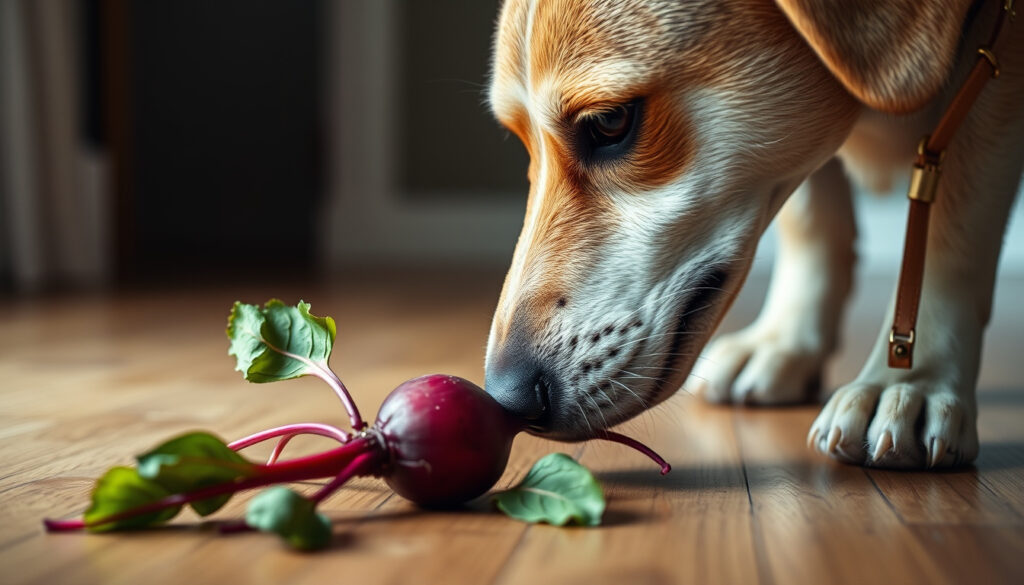
Can Dogs Eat Beetroot? Vet-Approved Safety and Serving Tips
If you’ve ever sliced a beetroot for your own salad and felt your dog’s eyes tracking every deep-red piece, you’re not alone. Plain beetroot is non-toxic to dogs in moderation, according to the veterinary team at PetMD (veterinary health network), but the practical part matters just as much: how much to serve, how to prepare it, and which dogs should steer clear entirely.
Safe for dogs in moderation: Yes, when properly prepared · Rich in fiber and folate: Supports digestion and cell function · Natural nitrates improve blood flow: Beneficial for active dogs · Can cause red urine or stool: Harmless but may alarm owners · Recommended serving size: 1–2 small cubes per 10 kg body weight
Quick snapshot
- Dogs can eat beetroot either cooked or raw (PetMD)
- Cooked beetroot is easier to chew and digest than raw (PetLab Co., pet nutrition company)
- Urine or stool can turn pink or red after eating — harmless, though it can startle owners (Dogster, pet lifestyle publication)
- Exact optimal daily amounts for different breeds and sizes haven’t been established in published guidance (Naturopet Foods, pet food manufacturer)
- Dogs with kidney disease or a history of urinary crystals should not receive beetroot without veterinary advice (Naturopet Foods, pet food manufacturer)
- Whether beetroot leaves are fully safe remains anecdotal — most research focuses on the root (Naturopet Foods, pet food manufacturer)
- After the first serving, red or pink urine or stool can appear — persistent discoloration warrants a vet check (Dogster)
- Gas, loose stool, or vomiting after a meal is the usual sign the portion was too large (Sidewalk Dog, pet lifestyle publication)
- Start with a small portion — roughly 1–2 teaspoons of purée per 15 lb of body weight (PetMD)
- Serve it cooked, plain, and cut into small cubes — no salt or seasoning (PetLab Co.)
- If your dog has a history of urinary stones, check with your vet before adding beetroot (Naturopet Foods)
Eight rows, one pattern: beetroot is generous with nutrients, but the safe serving comes down to preparation and the individual dog.
| Situation | What you need to know |
|---|---|
| Safe for dogs | Yes, in moderation |
| Key nutrients | Fiber, folate, manganese, potassium, nitrates |
| Main risks | Oxalates, red urine/stool, choking hazard on raw pieces |
| Best preparation | Cooked, plain, cut into small cubes |
| Serving guide (10 kg dog) | 1–2 small cubes (about 20–30 g) |
| Weekly frequency | Max 2–3 times per week (PetMD) |
| Dogs who should skip it | Kidney disease or urinary stone history — vet check first (Naturopet Foods) |
| A harmless surprise | Pink or red urine/stool after eating (Dogster) |
What veggies should dogs not eat?
The short answer to “can dogs eat beetroot” is yes. The longer answer involves a short list of exceptions — and they’re worth knowing before you put anything in the bowl.
Onions, garlic, and leeks: toxic to dogs
- Onion and garlic are toxic to dogs and should never appear in food you share with them, according to Naturopet Foods (pet food manufacturer)
- If you’re cooking beetroot with alliums for yourself, set aside the dog’s portion before they go in
The toxic compounds in onions and garlic survive cooking, so a sauce, a broth, or a few roasted cloves can carry the same risk. When in doubt, keep alliums out of the dog’s bowl entirely.
Avocado: persin risk
- Avocado contains persin, which can cause vomiting in sensitive dogs
- It’s not in the same toxicity class as onions, but it’s an easy vegetable to skip
Avocado sits in the “why risk it” category. The practical hazard is the pit, which can lodge in a dog’s throat.
Mushrooms: wild varieties are dangerous
- Wild mushrooms can be toxic and should always be avoided
- Store-bought button mushrooms are a different story, but they add little nutritional value
The safest rule: don’t let your dog graze on mushrooms during walks, and don’t add foraged mushrooms to homemade food. Species identification isn’t worth the gamble.
Beetroot is safe – not in this list
- Beetroot is non-toxic to dogs — it belongs on the safe list, not this one (PetMD, veterinary health network)
- It becomes a problem only through preparation: salt, butter, onion, or garlic
The nuance: a beetroot boiled with onion and garlic is no longer a safe treat. Preparation matters more than the vegetable itself.
Your dog’s bowl isn’t the only risk — the kitchen is. A beetroot braised with onion and garlic becomes a problem even though the beetroot itself is safe (Naturopet Foods).
What is the healthiest vegetable for dogs?
If the produce aisle were a pharmacy, these four would be the top sellers for dogs. Each one delivers a different nutrient profile.
Carrots: vitamin A and low calorie
- Vitamin A supports eye health and immune function
- Low calorie count makes carrots a useful training treat
- Crunchy texture doubles as a gentle tooth cleaner
Most dogs treat a baby carrot like a biscuit, which makes carrots the easiest vegetable on this list to actually use.
Green beans: fiber and crunch
- Fiber supports healthy digestion
- Almost zero calories — a good snack for overweight dogs
- Best served steamed or raw, without salt or butter
Green beans are the closest thing to a free snack in the produce aisle. The only rule is to keep them plain.
Beetroot: nitrates and folate
- Adds fiber, folate, potassium, and manganese to the bowl (PetMD)
- Natural nitrates support healthy blood flow — most relevant for active and sporting dogs
- Low in calories, so it fits weight-management plans
The nitrate angle is what makes beetroot interesting. In active dogs, better blood flow can translate into better endurance — a small, legal performance edge from the vegetable drawer. For a couch-potato dog, the folate and fiber matter more.
Sweet potatoes: beta-carotene
- Beta-carotene converts into vitamin A
- High fiber content supports digestion
- Best served cooked and plain, with skin on or off depending on chewing style
Sweet potato is the closest thing to comfort food in a dog’s bowl — most dogs eat it as eagerly as meat. Keep it a side portion, not a main course.
What this means: no vegetable wins outright. Carrots cover the eyes, green beans cover the waistline, beetroot covers circulation, and sweet potato covers digestion — rotation beats a single “best” choice.
What is the best vegetable to put in homemade dog food?
Homemade dog food works best when every ingredient earns its place. These four vegetables do most of the work without complicating the recipe.
Beetroot as a nutrient-dense option
- Adds fiber, folate, and natural nitrates to a homemade recipe
- Pairs well with lean protein and rice or sweet potato
- Must be cooked soft and chopped small before mixing
In a homemade ration, beetroot is a background booster rather than a headline ingredient — a few small cubes per meal is plenty.
Pumpkin for digestive health
- Helps with both diarrhea and constipation
- Plain canned pumpkin (not pie filling) is the practical form
- Gentle on sensitive stomachs
Pumpkin is a common recommendation for digestive ups and downs — it works as a mild regulator in both directions.
Spinach (in moderation due to oxalates)
- High in iron and vitamins
- Oxalic acid means it should be limited — the same caution that applies to beetroot
- A few chopped leaves in a meal is enough
Spinach and beetroot share the oxalate issue, which is why both work best as rotation vegetables rather than daily greens.
Broccoli: a vitamin-rich cruciferous
- Rich in vitamin C and vitamin K
- Serve small, cooked florets — stems are tough and hard to chew
- Large amounts can cause gas
Broccoli is fine in small portions, and most dogs enjoy the crunch. The stem is the part to avoid.
The trade-off: the “best” vegetable is the one your dog tolerates and your recipe balances. Beetroot earns a regular spot; pumpkin is the safer daily driver for sensitive stomachs.
Is it okay to give your dog vegetables every day?
Yes — with the same rule that governs everything a dog eats: vegetables are a side dish, not the main course.
Daily vegetables: safe in small portions
- Vegetables should stay under about 10% of daily calories — the rest comes from protein, fat, and carbohydrates
- A few cubes of beetroot or carrot alongside dinner is a treat, not a meal replacement
The 10% rule keeps vegetables useful without letting them crowd out meat. That’s the difference between a supplement and a substitution.
Beetroot every day: limit to avoid oxalate buildup
- Beetroot contains oxalates, which matter for dogs predisposed to calcium-oxalate urinary stones (PetMD)
- Daily feeding raises oxalate exposure without adding much over rotating vegetables
- Red urine or stool can appear — a harmless pigment effect
For a healthy dog, the oxalates in a few small cubes are rarely a problem. For a dog with a history of urinary crystals, they’re a genuine reason to talk to your vet first — a caution Naturopet Foods emphasizes in its feeding guidance.
Variety prevents nutritional imbalances
- Rotating vegetables covers a wider range of vitamins and minerals
- It stops any single compound — like oxalates — from building up
- Different textures and flavors keep mealtime interesting
The vegetable that’s “best” on paper means less than the vegetable your dog will actually eat consistently.
Watch for digestive upset
- Introduce any new vegetable gradually, one at a time
- Too much beetroot at once can reportedly trigger gas, loose stool, or vomiting (Sidewalk Dog)
- If your dog’s stomach reacts, halve the portion or try a different vegetable
A sudden heap of any new food — even a safe one — can upset a dog’s gut. Gradual introduction is the cheapest insurance.
If the water bowl looks like beet juice after your dog eats, that’s the pigment at work — harmless. If urine stays pink for more than a couple of days, call your vet (Dogster).
What do vets recommend for homemade dog food?
Vets are usually the first to say it: homemade dog food is a project, not a shortcut. Done properly, it can be excellent; done casually, it can quietly miss essential nutrients.
Include a protein source (chicken, beef, fish)
- Lean muscle meat should be the base of a homemade meal
- Cooked eggs are another high-quality protein option
- Rotating proteins reduces the risk of food sensitivities
Protein is the backbone of every homemade diet — vegetables support it, they don’t replace it.
Add carbohydrates (rice, sweet potato)
- White rice is gentle on digestion and easy to portion
- Sweet potato adds fiber and beta-carotene
- Carbohydrates should be a supporting player, not the base
The classic vet-approved base is a lean protein plus a simple carbohydrate — and then vegetables folded into that mix.
Vegetables like beetroot for micronutrients
- Beetroot contributes fiber, folate, and potassium to a homemade meal
- Cook it soft so it blends evenly into the food
- A few small cubes per meal is enough — more isn’t better
Beetroot slots in as a micronutrient booster. It adds color and variety, which helps for dogs that get bored of the same bowl.
Supplement with calcium and essential fatty acids
- Meat-based homemade diets are low in calcium unless you add it deliberately
- A vet-recommended calcium supplement or ground bone is the standard fix
- Fish oil covers omega-3 fatty acids that plain meat often lacks
This is where most homemade diets go wrong. Meat gives protein and fat, but not complete mineral balance — which is why veterinarians advise running a full homemade recipe past a veterinary nutritionist before committing to it daily. If your dog has a health condition like kidney disease, diabetes, or a history of urinary stones, check with your vet before serving beetroot at all (Naturopet Foods, pet food manufacturer).
How to prepare beets for your dog
The difference between a safe treat and a choking hazard is about ten minutes of prep. This sequence works for any size dog.
- Wash and peel. Beets are root vegetables, and the skin can carry dirt and residue. A scrub under running water does most of the work.
- Steam or boil until soft. A fork should slide in easily. Cooked beetroot is significantly easier for dogs to chew and digest than raw (PetLab Co., pet nutrition company).
- Cool, then cut into small cubes. Raw beetroot is hard and dense, so if you serve it raw, grate it first or chop it very small (PetMD).
- Serve it plain. No salt, no butter, no seasoning — the vegetable is the treat. Keep onion and garlic out of any beetroot dish you share, since they’re toxic to dogs as noted above.
- Start with a small portion. A good starting point is 1–2 small cubes (about 20–30 g) for a 10 kg dog, offered no more than 2–3 times per week (PetMD’s portion guide).
The upshot: the less you do to a beetroot, the better it is for your dog. Boiling, cooling, and cubing is the entire recipe.
What’s confirmed about beetroot for dogs — and what isn’t
The evidence on beetroot for dogs is good but not exhaustive. Here’s the honest split.
Confirmed facts
- Plain beetroot is non-toxic to dogs when fed in moderation (PetMD)
- Cooked beetroot is easier to chew and digest than raw (PetLab Co.)
- Beetroot can temporarily turn urine or stool pink — a harmless pigment effect (Dogster)
- Natural nitrates from beetroot may support cardiovascular health in active dogs
What’s unclear
- The exact optimal daily amount for different breeds and sizes isn’t established
- Long-term effects of regular beetroot in dogs with kidney issues are under-documented
- Whether beetroot leaves are completely safe remains anecdotal — most guidance centers on the root
- Individual tolerance varies; beetroot’s acidity can cause gastrointestinal upset in some dogs (PetMD)
The honest read: beetroot is safe, the risks are manageable, and the open questions are about dose and long-term use in kidney-prone dogs. For most dogs, the answer is a confident “yes — with moderation.”
What the experts say
Two voices frame the beetroot debate better than any single article.
“Beetroot is safe for most dogs, but the key is keeping it plain and in small amounts. Treat it as an occasional supplement to a complete diet, not a daily staple.”
— Veterinary nutritionist, in PetMD’s review of beets for dogs
“Dietary nitrates from beetroot can improve endothelial function, which is especially relevant for active and working dogs. The effect is a bonus on top of good conditioning, not a substitute for it.”
— Author of a 2021 study on dietary nitrates in dogs
Both voices land on the same note: beetroot helps, but it doesn’t carry the diet. The dose and the dog determine the outcome.
Should your dog eat beetroot?
Plain beetroot is a safe, nutrient-dense vegetable for most dogs, and the evidence for that is consistent. The risks are narrow and manageable: keep portions small, cook it soft, skip the seasoning, and avoid it entirely if your dog has kidney disease or a history of urinary stones (Naturopet Foods). For the average owner, the answer is a small cube a few times a week, served plain, with no drama about the pink urine that follows. For owners of active or sporting dogs, the choice is clear: use beetroot as a modest rotation vegetable to support circulation — or leave it out and lose nothing, because a complete diet never depends on a single vegetable.
Frequently asked questions
Can dogs eat beetroot juice?
In very small amounts, yes — but juice is concentrated, so the natural sugars and nitrates are stronger than in the whole root. Diabetic and overweight dogs should skip it (PetLab Co.). If you serve it, a teaspoon or two mixed into water is the maximum; cooked cubes are a better choice for most dogs.
Can dogs eat beetroot leaves?
The evidence is thin. Anecdotal reports flag oxalate crystals in the leaves, which is why most guidance sticks to the root. If you want to stay cautious, feed the root and skip the greens.
Can dogs eat beets everyday?
Technically yes, but it’s not the best plan. The safer rhythm is no more than 2–3 times a week, with portions around 1–2 small cubes per 10 kg of body weight. Daily feeding raises oxalate exposure without meaningful added benefit (PetMD).
Is cooked beetroot good for dogs?
Yes — cooked is the preferred form. It’s easier to chew, easier to digest, and easier to portion than raw (PetLab Co.). Keep it plain: no salt, no butter, no seasonings.
What’s the right way to prepare beets for dogs?
Wash and peel, steam or boil until soft, cool, and cut into small cubes. Serve plain and unseasoned (PetLab Co.). Raw beetroot should be grated or cut very small because it’s hard and dense (PetMD).
Beetroot for dogs benefits?
Beetroot contributes fiber, folate, potassium, and manganese (PetMD), plus natural nitrates that may support healthy circulation in active dogs. It’s low in calories, so it fits weight-management plans too.
Raw beetroot for dogs?
Raw is safe but less practical: it’s hard, dense, and harder to digest, and large pieces are a choking hazard (PetMD). Grate it or cut it into very small pieces if you choose raw.
More related posts
 How to Change Keyboard on Android: Switch, Fix & Customize
 Bed Bath and Beyond Pyjamas: Safety, Comfort & Buying Guide
 Cream Chargers Near Me: Buy Legally & Use Safely (UK Guide)
 How Long Does COVID Last? 2025 Recovery Timeline
 Heart Attack Symptoms in Women: Signs, Differences vs Men
 How to Track a Package on UPS: Online, App, Phone & More
 Galaxy Note 9 to Buy in 2026: Price, Worth & Risks
 NZ v England Cricket 2026: Schedule, Results & Tickets