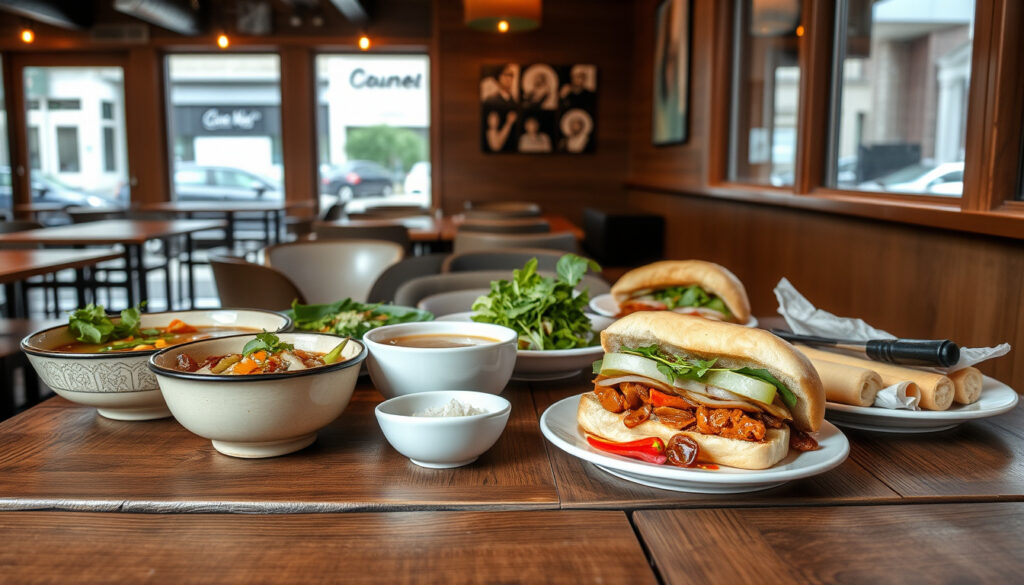
Le Saigon Vietnamese Kitchen: Authentic Saigon Cuisine in Wellington
Anyone who has spent an evening weighing up Wellington’s Vietnamese options knows the category is crowded. Le Saigon Vietnamese Kitchen is the one that keeps coming up in review threads, in part because Best Restaurants NZ points to a Southern Vietnamese menu that skips the tourist greatest hits.
Cuisine: Southern Vietnamese (Saigon-style) (Best Restaurants NZ) · Signature spring rolls: NZ$18.00 on the delivery menu (Uber Eats) · Review rating: 4.4/5 from 263 reviews (Tripadvisor)
Quick snapshot
- Food Guide NZ reviewers describe the food as authentic and delicious (Food Guide NZ).
- Some reviewers mention long wait times and possible inconsistency (Foodeist).
- HappyCow documents clearly marked vegan dishes, including curry, noodles, and spring rolls (HappyCow).
- Tripadvisor logs a 4.4/5 average from 263 reviews (Tripadvisor).
- Tripadvisor logs 262 reviews and a 4.4/5 average — a strong signal of an established operation (Tripadvisor UK).
Seven rows, one pattern: a focused regional menu, a real dietary policy, and a visible trail of prices and reviews.
| Aspect | What the data shows | Source |
|---|---|---|
| Cuisine | Vietnamese with a Southern (Saigon) focus | Best Restaurants NZ |
| Delivery menu highlights | Signature spring rolls, char-grilled pork sirloin, Vietnamese shaking beef, vegan curry | Uber Eats |
| Price reference | Signature spring rolls NZ$18.00; char-grilled pork sirloin NZ$31.00 | Uber Eats |
| Vegan options | Clearly marked dishes, including curry, noodles, and spring rolls | HappyCow |
| Review profile | 4.4/5 from 263 Tripadvisor reviews | Tripadvisor |
| Authenticity signal | Reviewers consistently praise the food as authentic and delicious | Food Guide NZ |
| Recurring concerns | Long wait times and possible inconsistency in food quality | Foodeist |
What is the best thing to order at a Vietnamese restaurant?
At Le Saigon, the official menu answers this directly: the kitchen’s signature list is built around cha gio spring rolls, goi ca ngu sac fish ceviche, com tam suon cha char-grilled pork sirloin, and banh xeo happy pancake (official menu). That is not a random selection; it is a Southern Vietnamese identity statement.
Pho: the classic choice
Pho gets the global attention, but the signature list at Le Saigon points elsewhere. Follow the menu’s own anchors if you want the kitchen’s strongest work.
Pho is the dish most travelers associate with Vietnam, and for good reason. Yet Le Saigon has chosen to lead with Southern Saigon specialties, which is a signal that it is not chasing the broadest audience.
Banh Mi: the sandwich
- Soft crunchy baguette
- Homemade pâté
- Pork
- Meat floss
- Pickled carrots
- Cucumber
- Fresh herbs
The official about page lists those components and says the kitchen makes its own pâté, garlic butter, and mayo (official about page). That is the difference between a filler sandwich and a deliberately composed one.
Spring rolls
- Cha gio: crispy fried spring rolls, a signature item on the official menu.
- Signature spring rolls are priced at NZ$18.00 on the delivery menu.
The spring roll is the menu item that bridges the restaurant’s official identity and its delivery menu — a reliable first move.
Le Saigon’s specialties
- Goi ca ngu sac: fish ceviche
- Com tam suon cha: char-grilled pork sirloin over broken rice
- Banh xeo: happy pancake, a crispy crepe
These three dishes are the clearest route into the kitchen’s identity: bright, savory, and textural, with none of the generic “Asian fusion” hedging.
The implication: order from the signature list first. Le Saigon is not hiding its strengths.
What is Saigon’s signature dish?
Saigon doesn’t have one official dish, but it has a shortlist. Hu tieu, com tam, and banh xeo all appear in the city’s food vocabulary; two of those — com tam and banh xeo — are on Le Saigon’s official signature list.
Hu tieu: the signature noodle soup
- Clear broth
- Pork or seafood
- Rice noodles and fresh herbs
Hu tieu is the Southern answer to pho: lighter, less beef-driven, and more commonly eaten in Saigon itself.
Com tam: broken rice
- Com tam suon cha: broken rice with char-grilled pork sirloin
Le Saigon lists this dish as a signature, and the delivery menu prices it at NZ$31.00.
Banh xeo: Vietnamese crepe
- Banh xeo: a crisp, turmeric-colored crepe served as a happy pancake
The version on Le Saigon’s menu is listed by name, not hidden in a “house specials” section.
The pattern: Saigon signatures are savory, textural, and built for sharing. The official menu gives diners the shortlist without the guesswork.
What is a typical Vietnamese meal?
A typical Vietnamese meal is built around rice, a protein, vegetables, and a soup, shared by the whole table.
Structure of a family meal
- Steamed rice
- One meat or fish dish
- One vegetable dish
- A light soup
The balance matters more than any single dish; everyone takes a little of everything.
Rice and shared plates
- Char-grilled pork sirloin
- Vietnamese shaking beef
- Stir-fried seasonal vegetables
Those dishes fit the family-style pattern, and the delivery menu shows that Le Saigon already cooks in this shared-plate format.
Dessert and tea
- Fruit or a light sweet
- Hot tea to close the meal
Dessert is rarely the centerpiece; the meal ends when the conversation does.
Why this matters: Vietnamese meals are not solo plates with rice and a side. The table is the format.
What do Vietnamese eat for breakfast?
Breakfast in Vietnam is savory, fast, and built on the same pantry as lunch and dinner.
Pho for breakfast
- Hot beef noodle soup
- Fresh herbs and lime
- Vietnamese coffee on the side
Pho is a common morning order, especially in the north; in the south, noodle soups like hu tieu share the street.
Banh mi and coffee
- Crunchy baguette sandwich
- Homemade pâté
- Pickled carrots and fresh herbs
Le Saigon’s banh mi uses those exact components, according to the restaurant’s about page.
Sticky rice and savory options
- Xoi: sticky rice with mung bean
- Fried shallots or pork floss on top
Sticky rice is lighter than a full noodle soup and still keeps the morning savory.
The takeaway: Vietnamese breakfast is not a sweet meal. The same flavor principles run from morning until late dinner.
What are the etiquette rules for eating Vietnamese food?
Vietnamese table manners are mostly about attention: offer food, respect the soup spoon, and don’t waste what you take.
The rules are simple, and most of them are about the group rather than formal ceremony.
Using chopsticks and spoons
- Chopsticks for noodles and shared dishes
- Spoon for soup
- Don’t stick chopsticks upright in a bowl of rice
That last rule matters most at formal tables; it evokes incense at funerals.
Sharing dishes
- Offer food to others before taking your own
- Use serving spoons rather than your own chopsticks
Vietnamese meals are communal, so the gesture of offering food is part of the meal itself.
Finishing your plate
- Serve yourself modestly
- Finish what you take
- Leaving food can be read as wastefulness
In Vietnam, a clean plate is a compliment to the cook, even in a restaurant.
The catch: etiquette is less about perfect form and more about showing respect for the people cooking and sharing the table.
What’s confirmed and what’s unclear at Le Saigon
Confirmed facts
- Located at 146–150 Featherston Street, with a signature list led by spring rolls, fish ceviche, char-grilled pork sirloin, and happy pancake (official menu).
What’s unclear
- Some reviewers mention long wait times and possible inconsistency.
The takeaway: treat the confirmed list as planning tools and the unclear list as questions to ask when you arrive.
What diners and the kitchen say
“The food is really authentic and delicious and the staff are very friendly.”
— Reviewer via Food Guide NZ
“Vegan spring rolls filled with kumara, potato, mungbean, carrots, mushroom, and taro.”
— Contributor via HappyCow
The general tone in the reviews matches the menu’s promise: a kitchen doing real Vietnamese food, with enough consistency flags that it pays to read recent reviews before you go.
The Wellington takeaway
Le Saigon Vietnamese Kitchen gives Wellington diners a Southern Vietnamese menu with a clear identity: house-made pâté, a signature list that avoids clichés, and a review trail that backs the food. For Wellington locals, the decision is clear: go for the Saigon-style signature dishes and the banh mi with homemade pâté, or keep looking for a Vietnamese kitchen this specific about where its cooking comes from.
Related reading: Food Guide NZ · Best Restaurants NZ
Frequently asked questions
What is the most famous food in Vietnam?
Pho is the dish most often named as Vietnam’s most famous. At Le Saigon, the kitchen’s signature list is more Southern: spring rolls, fish ceviche, char-grilled pork, and happy pancake.
What are popular Saigon dishes?
Popular Saigon dishes include hu tieu, com tam, and banh xeo. Le Saigon highlights spring rolls, fish ceviche, char-grilled pork sirloin, and happy pancake as its own signatures.
What is Gordon Ramsay’s favorite Vietnamese dish?
No verified statement from Gordon Ramsay naming a single favorite Vietnamese dish appears in the research behind this article. Treat listicle headlines as unverified until you find the original interview.
How to avoid stomach bug in Vietnam?
Standard travel advice is to eat freshly cooked hot dishes, avoid unpasteurized items, and drink bottled or sealed beverages. For a gluten-free request, Le Saigon’s official menu says it can cater to special diets.
What time do most Vietnamese eat dinner?
Most Vietnamese families eat dinner between 6 and 8 PM, with the evening meal often the largest of the day.
What country is it rude to not finish your food in?
In Vietnam, leaving a large amount of food on your plate can be taken as a sign that the meal was not enjoyable. The safer habit is to serve yourself less and finish what you take.
What kind of meat do Vietnamese eat?
Pork is the most common meat in everyday Vietnamese cooking; chicken and beef are also standard, and Southern coastal cooking adds plenty of seafood.
More related posts
 Silent Witness Season 28: Cast, Episodes, Viewing Guide & Renewal
 Arsenal F.C. vs Crystal Palace F.C. Timeline: H2H History
 Easter 2026 NZ Dates: Good Friday, Easter Monday & Holidays
 Recipes with Few Ingredients: Easy Quick Meal Ideas
 How to Get Rid of Bloating: Fast Relief and Causes
 Electoral Roll Search by Name in Ireland: How to Check
 New Balance 880 Sale Ireland: Deals & Comparisons
 NZ Keno Results Today Live – Check Latest Draws & Prizes