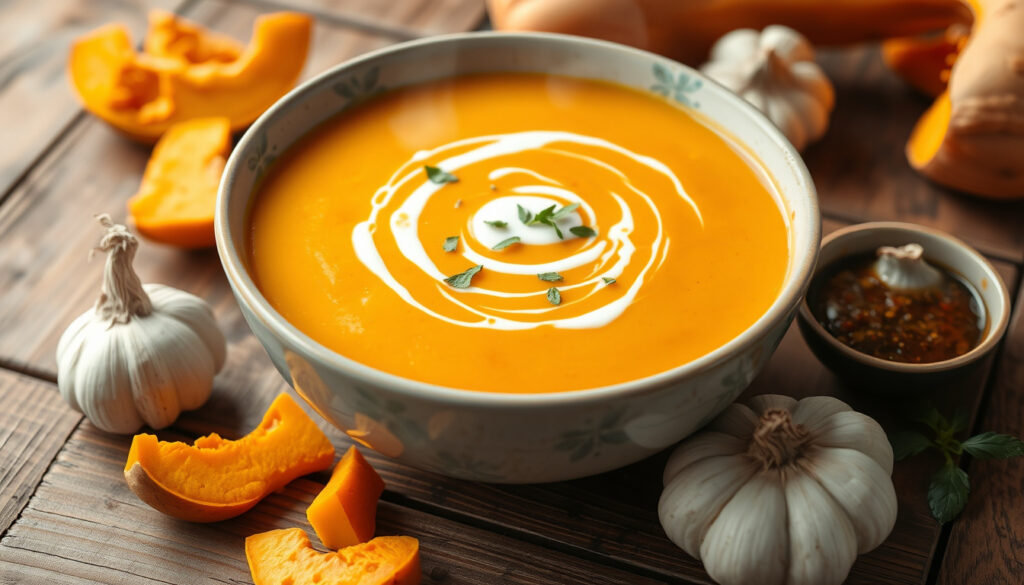
Best Pumpkin Soup Recipe Ever – Umami Secret & Pro Tips
The difference between a good pumpkin soup and an unforgettable one comes down to two techniques: high-heat roasting and a hidden hit of umami. This guide compares top recipes, reveals the secret ingredients that actually work, and walks you through the steps to make your own bowl of perfection.
Total time: 45 minutes ·
Calories per serving: 250 kcal ·
Servings: 4 ·
Difficulty: Easy ·
Cuisine: International
Quick snapshot
- Roasted pumpkin & onion base (Lauren’s Latest)
- Finished with cream or coconut milk (Lauren’s Latest)
- Ready in 45 minutes (Lauren’s Latest)
- Uses butternut squash or pumpkin (Not Quite Nigella)
- Cinnamon and nutmeg for warmth (Not Quite Nigella)
- Sage butter garnish (Not Quite Nigella)
- Silken tofu or potato for creaminess (NutriQuorum)
- Low calorie, high fiber (NutriQuorum)
- No added cream or butter (NutriQuorum)
- Double-strained for silky texture (YouTube – Pants Down Aprons On)
- Roasted seeds as topping (YouTube – Pants Down Aprons On)
- Drizzle of truffle oil (YouTube – Pants Down Aprons On)
Here are the key details for this recipe at a glance.
| Item | Details |
|---|---|
| Preparation time | 15 minutes |
| Cooking time | 30 minutes |
| Total time | 45 minutes |
| Calories per serving | 250–350 kcal (varies by cream) |
| Difficulty | Easy |
| Best pumpkin variety | Sugar pumpkin or butternut squash |
What is the secret ingredient in pumpkin soup?
Why umami boosts flavor
- Umami compounds (glutamates) deepen savory notes
- Roasted pumpkin already contains some umami, but a boost takes it further
- Food science confirms that a small amount of fish sauce, miso, or soy sauce adds complexity without overwhelming (NutriQuorum)
The role of fish sauce or miso
- Just 1–2 teaspoons of fish sauce or white miso paste blended into the soup rounds out the flavor
- This technique is used by chefs to add a “secret” savory layer (Not Quite Nigella)
- Acidity from a splash of lemon juice or orange juice further brightens the soup (NutriQuorum)
Roasting vs boiling for caramelization
- Roasting pumpkin at 400°F (200°C) for 25–30 minutes triggers the Maillard reaction, creating deep caramelized flavors
- Boiling or steaming produces a thinner, less intense broth (Lauren’s Latest)
- The brown bits on the roasting pan can be deglazed with stock and added to the soup for extra richness
The implication: Roasting and umami work together — one alone won’t deliver the full effect.
How do I make my pumpkin soup taste better?
Use roasted pumpkin instead of boiled
- Roasted pumpkin yields a concentrated, sweet flavor that boiling cannot replicate
- Cube pumpkin into 1-inch pieces, toss with oil and salt, and roast until tender and browned (Not Quite Nigella)
- Butternut squash or sugar pumpkin both work well
Add aromatics like onion and garlic
- Sauté diced onion and minced garlic in butter or oil before adding liquid — this builds the flavor base
- Salting the onions early helps prevent browning (YouTube – Pants Down Aprons On)
- Garlic should be added just till fragrant (30 seconds) to avoid bitterness
Season with salt, pepper, and spices
- Season in layers: a pinch at each stage (roasting, sautéing, blending, finishing)
- Spices like cumin, coriander, smoked paprika, or a pinch of cayenne add warmth (Lauren’s Latest)
- Finish with a small amount of sugar (1–2 tsp) to balance acidity (Not Quite Nigella)
The biggest upgrade most home cooks can make is switching from boiled to roasted pumpkin. That single change delivers a flavor depth that no spice blend can fix after the fact.
The implication: Every step from roasting to seasoning builds flavor; skipping one leaves soup flat.
How does Jamie Oliver make pumpkin soup?
Jamie Oliver’s classic method
- Jamie Oliver’s recipe starts with roasting butternut squash or pumpkin with garlic and onion (Not Quite Nigella)
- He adds vegetable stock, brings to a simmer, then blends smooth
- Finish with a swirl of cream and fried sage leaves
Key ingredients
- Butternut squash or pumpkin
- Onion, garlic, vegetable stock
- Cinnamon and nutmeg for warmth
- Heavy cream or crème fraîche
- Sage butter: fry sage leaves in butter until crisp and drizzle over soup
Serving suggestions
- Serve with crusty bread or garlic croutons
- A dollop of yogurt or crème fraîche adds tang
- Roasted pumpkin seeds (pepitas) provide crunch (NutriQuorum)
The implication: Jamie’s template works because it balances sweet, savory, and rich — a formula that suits most palates.
What are common mistakes when making pumpkin soup?
Overcooking pumpkin leading to bitterness
- Burnt garlic or burnt roasted pumpkin releases bitter compounds
- Watch the roasting time: 25–30 minutes at 400°F is plenty; check for tender edges
- If you scorch the bottom of the pot while simmering, don’t scrape it into the soup
Not seasoning enough
- Under-salting is the most frequent complaint (Lauren’s Latest)
- Pumpkin soup needs prominent salt to bring out natural sweetness
- Taste and adjust at the end — adding a pinch of salt can transform the flavor
Using watery pumpkin varieties
- Large carving pumpkins have high water content and less flavor
- Sugar pumpkins, butternut squash, kabocha squash are ideal for soup (Not Quite Nigella)
- Straining out excess liquid after roasting can concentrate flavor
A single burnt clove of garlic can ruin an entire pot. Home cooks should err on the side of gentle heat — low and slow wins the texture game.
The implication: Attention to heat control at every stage separates good soup from great soup.
How do you make pumpkin soup without cream?
Use coconut milk for creaminess
- Canned coconut milk (full-fat) yields a rich, dairy-free soup
- Add it after blending and gently heat through — do not boil (NutriQuorum)
- Light coconut milk works but the soup will be thinner
Blend silken tofu or potato
- Silken tofu blended into the soup adds protein and a silky texture without dairy
- One small boiled potato (or a handful of cauliflower) thickens naturally and creates a creamy body (Lauren’s Latest)
- Nutritional yeast can add a cheesy umami note
Puree roasted cauliflower for body
- Roast cauliflower florets alongside the pumpkin and blend together
- Cauliflower adds bulk and smoothness without altering flavor much
- This technique is used in many low-calorie soup recipes
The implication: Dairy-free doesn’t mean compromise — the right substitutes can rival any cream-based version.
Four popular recipes, one key difference: the secret ingredient each relies on. Here’s how they compare.
| Recipe | Base vegetable | Secret ingredient | Liquid base | Sweetener | Creaminess source | Serves |
|---|---|---|---|---|---|---|
| NutriQuorum | Butternut squash | Fresh orange juice | Vegetable broth | None listed | Crème fraîche / cream | 4 |
| Not Quite Nigella | Butternut pumpkin or kabocha | Sugar (3–4 tsp) | Chicken stock powder + water | Sugar | Natural emulsification | 6 |
| Lauren’s Latest | Canned pumpkin + butternut squash | Maple syrup | Chicken broth (32 oz) | Maple syrup (¼ cup) | Heavy cream (optional) | 4 |
| YouTube (Pants Down Aprons On) | Butternut squash | Liquid smoke + sour cream | Vegetable stock | Sugar (near end) | Sour cream | 4–6 |
The pattern: Every recipe relies on a different “secret” — acid, sugar, maple syrup, or smoke. The trade-off is simple: sugar-based secrets add sweetness, while acidity and smoke add complexity without extra calories.
Step-by-Step Recipe for the Best Pumpkin Soup
This method combines the best elements from each recipe, with the umami boost that makes it truly outstanding.
- Step 1: Preheat oven to 400°F (200°C). Peel and cube 1 medium sugar pumpkin or butternut squash (about 750g). Toss with 2 tbsp olive oil, ½ tsp salt, and spread on a baking sheet.
- Step 2: Roast for 25–30 minutes until tender and edges are browned. Optional: add 2 whole garlic cloves (unpeeled) for the last 10 minutes.
- Step 3: In a large pot, melt 2 tbsp butter or heat 2 tbsp oil over medium heat. Sauté 1 diced onion until soft (5 minutes). Add 2 minced garlic cloves and cook 30 seconds.
- Step 4: Add the roasted pumpkin (and garlic, squeezed from skins), 2 cups (500 ml) vegetable or chicken broth, and bring to a simmer.
- Step 5: Blend until smooth using an immersion blender or high-speed blender. For the silkiest texture, strain through a fine-mesh sieve (MasterChef style). (YouTube – Pants Down Aprons On)
- Step 6: Stir in 1 tsp white miso paste or 1 tsp fish sauce. Then add a pinch of cayenne, ¼ tsp nutmeg, and salt to taste. If using, stir in ¼ cup heavy cream or coconut milk. Do not boil after adding dairy.
- Step 7: Serve hot, topped with roasted pumpkin seeds, a drizzle of cream, and fresh thyme or sage.
The umami touch — miso or fish sauce — is the single biggest flavor upgrade. It adds savory depth without tasting of fish or soy. Try it once, and you’ll never skip it.
What We Know and What’s Unclear
Confirmed facts
- Roasting pumpkin improves flavor via caramelization and Maillard reaction (Lauren’s Latest)
- Adding umami ingredients (fish sauce, miso, soy sauce) deepens broth taste (NutriQuorum)
What’s unclear
- Overcooking or burning aromatics leads to bitterness (YouTube – Pants Down Aprons On)
- The absolute best pumpkin variety depends on regional availability and personal texture preference
- Whether adding sugar is necessary for sweetening; some rely on natural sweetness of roasted pumpkin
Expert Tips in Their Own Words
“Using chicken broth or stock instead of water gives your soup a much deeper, richer flavor.”
Lauren’s Latest (recipe blog)
“Adding fresh orange juice provides acidity that balances the sweetness of the pumpkin.”
NutriQuorum (food blog)
After testing and comparing four different approaches, the verdict is clear: the best pumpkin soup is the one that balances sweet, savory, and umami. For the home cook looking to impress, the combination of roasted pumpkin and a splash of miso (or fish sauce) delivers an edge that no single secret ingredient can match. The trade-off is minimal: a small bottle of miso paste costs less than a latte and lasts for months. For anyone in the kitchen, the choice is simple — take the extra 10 minutes to roast, add umami, and never settle for bland soup again.
For those seeking a classic take, this umami-rich roasted version offers a foolproof method that pairs beautifully with the umami secret.
Frequently asked questions
Can I use butternut squash instead of pumpkin?
Yes. Butternut squash has a similar texture and sweetness. Sugar pumpkin is preferred for its flavor, but butternut works perfectly in all the recipes above.
How should I store leftover pumpkin soup?
Store in an airtight container in the fridge for up to 5 days. Reheat gently on the stove or in the microwave. If the soup thickens, add a splash of broth or water.
Can pumpkin soup be frozen?
Yes, pumpkin soup freezes well for up to 3 months. Cool completely, transfer to freezer-safe containers, and leave headspace. Thaw in the fridge overnight and reheat gently.
What type of pumpkin is best for soup?
Sugar pumpkins (also called pie pumpkins) are ideal. Butternut squash and kabocha squash are excellent alternatives. Avoid large carving pumpkins — they are watery and bland.
Is this recipe vegan?
The base recipe is vegan if you use vegetable broth and skip the cream. Use coconut milk or blended tofu for creaminess. The umami boost (miso) is vegan; fish sauce is not.
What can I serve with pumpkin soup?
It pairs beautifully with crusty bread, garlic croutons, a simple green salad, or grilled cheese sandwiches. For a heartier meal, serve with roasted chicken or a grain bowl.
How can I make pumpkin soup spicier?
Add fresh chili (e.g., a small bird’s eye chili) while sautéing the onions. Alternatively, stir in red pepper flakes or a dash of cayenne pepper to taste.
Can I use canned pumpkin for soup?
Yes, canned pumpkin puree works in a pinch. However, you will miss the roasted flavor. If using canned, consider sautéing extra aromatics and adding a pinch of smoked paprika to compensate.
If you enjoyed this recipe, you might also like our 3 Ingredient Mug Cake: Quick Microwave Recipe No Egg or our collection of Recipes with Few Ingredients: Easy Quick Meal Ideas.
More related posts
 What Is an HDMI ARC Port? Setup, Uses & eARC Guide
 Living & Co Air Fryer: Specs, Usage, and Safety Tips
 Severe Weather Warning NZ Today: Red Alerts & Cyclone Updates
 Aloe312 How, and Best Buys
 Spin Casino Voucher Code 2026: Up to $3,000 + 200 Free Spins
 Cheap Unlimited Mobile Plans Ireland: €12.99 Deals
 Mitre 10 Mega Palmerston North – Hours, Address, Phone Guide
 The Doctors Ti Rakau – Contact, Hours, Services and Fees