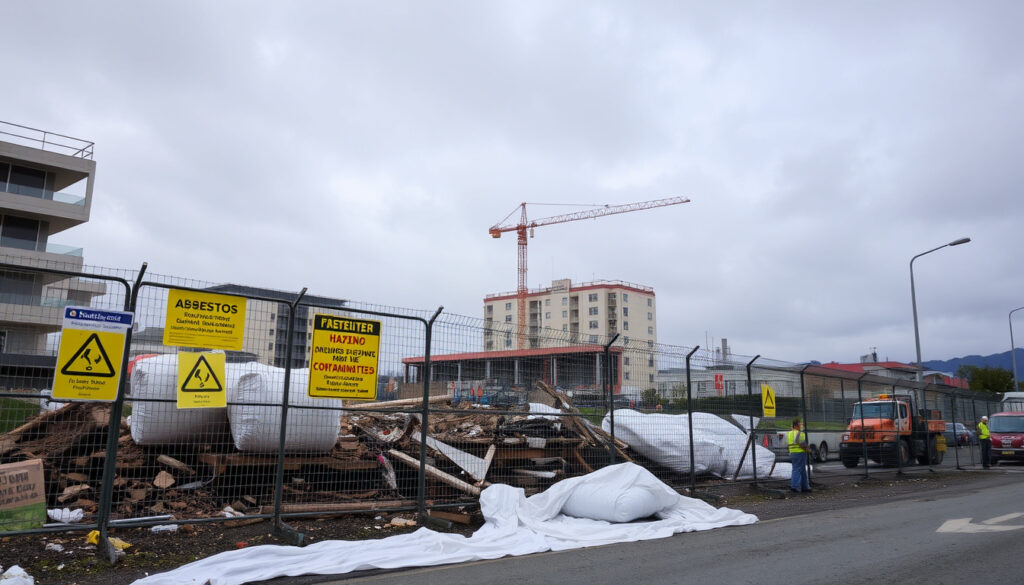
Newtown Wellington Asbestos Contamination: Incident and Cleanup
For residents of Newtown, a quiet Wellington suburb, a routine-looking cleanup operation turned into something far more worrying. Waterblasters—tools used every day across New Zealand—spread a wet asbestos slurry onto homes, gardens, and buildings, sending a ripple of concern through the neighbourhood. What happened next would reshape how locals think about property decontamination.
Location: Newtown, Wellington · Cause: Waterblasters spraying wet slurry · Date Reported: 17 Apr 2025 · Affected Areas: Gardens and buildings · Asbestos Types Found: Two types outside homes
Quick snapshot
- Two types of asbestos found outside homes (Otago Daily Times)
- Gardens dug up and buildings washed in remediation (Otago Daily Times)
- Interior areas tested clear of contamination (Otago Daily Times)
- Total number of properties affected
- Long-term health monitoring plans for residents
- Whether an official contamination map will be published
- 17 Apr 2025: Incident reported (Otago Daily Times)
- Ongoing: Remediation continues in Newtown (Otago Daily Times)
- Post-incident: Testing at owner expense for additional homes (Otago Daily Times)
- Continued decontamination of gardens and building exteriors
- Monitoring for further asbestos identification
- Resident-led tracking of cleanup progress
| Field | Detail |
|---|---|
| Primary Cause | Waterblasters during work |
| Location | Newtown, Wellington |
| Report Date | 17 Apr 2025 |
| Findings | Asbestos outside, interiors clear |
| Cleanup Method | Gardens dug, buildings washed |
What caused the Newtown Wellington asbestos contamination?
The contamination originated from waterblasters being used during building work in Newtown. These high-pressure tools dispersed a wet slurry containing asbestos onto surrounding properties—a method that safety experts specifically warn against. According to Asbestos Safe Consultancy (asbestos safety guidance), waterblasting creates the exact conditions that spread asbestos fibres into the air.
The irony is hard to miss: waterblasters were likely used to clean up something, but the technique itself became a contamination vector. New Zealand guidelines explicitly prohibit water blasting in asbestos-related work because it transforms solid contamination into airborne fibres.
Waterblasters and wet slurry details
The incident involved a “wet slurry”—a mixture of water and asbestos-containing material—applied through pressure equipment. Otago Daily Times reported that gardens and building exteriors bore the brunt of the dispersal. Unlike dry asbestos fibres that drift easily, wet slurry spreads through direct contact with surfaces, making it particularly insidious for gardens and outdoor structures.
The pattern echoes warnings from Asbestos Safe Consultancy: “DIY cleanup methods including water blasting and sweeping are warned against as they spread asbestos fibres.” The Newtown case illustrates exactly why those warnings exist.
Where is the Newtown Wellington asbestos contamination map?
No official contamination map has been published as of this reporting. The absence of a publicly available spatial record remains a significant gap for residents seeking to understand their exposure risk. According to Otago Daily Times, remediation efforts have focused on gardens and building exteriors in the immediate aftermath.
Affected properties in Newtown
Gardens are being excavated and buildings washed as part of the response, Otago Daily Times reported. The remediation has targeted the suburb of Newtown specifically, with professional teams undertaking the decontamination work. Residents have been monitoring the progress independently, creating informal neighbourhood records of which properties have been treated.
The lack of an official mapping resource means residents often rely on word-of-mouth to gauge the scope. Community members have taken to discussion platforms to share information about which streets or blocks have received attention, filling—or trying to fill—the information vacuum left by authorities.
Without a formal map, the true geographic extent of the contamination remains difficult to assess. Property owners considering sales or purchases in the area face particular uncertainty.
What cleanup efforts address Newtown Wellington asbestos?
The cleanup follows a two-pronged approach: excavation of contaminated gardens and pressure-washing of building exteriors. Otago Daily Times confirmed that two distinct types of asbestos were identified outside affected homes, while interior spaces tested clear. Testing for additional homes is being funded by the property owner responsible for the original work.
Testing and washing procedures
Professional washing techniques form the backbone of the exterior remediation. Asbestos Safe Consultancy guidance emphasises that professional assessment must precede any handling of contaminated debris. Gardens require excavation—the top layer of soil is removed and disposed of as hazardous waste—while buildings receive controlled pressure washing with containment measures.
The owner-funded testing programme means additional properties can receive screening at no cost to residents. However, the scope of that programme—and which homes qualify—hasn’t been publicly clarified in detail.
What health risks from Newtown Wellington asbestos contamination?
Asbestos fibres pose serious respiratory risks when inhaled. According to Asbestos Safe Consultancy, health risks from asbestos require immediate professional intervention in contaminated areas. The fibres become dangerous when disturbed and made airborne—which is precisely what waterblasting does.
Exposure concerns for residents
For Newtown residents, the primary concern centres on fibres potentially tracked indoors or inhaled during the initial exposure period. Otago Daily Times reported that interiors have tested clear, which provides some reassurance. However, the emotional toll of discovering asbestos on one’s property shouldn’t be underestimated.
Long-term monitoring for affected residents remains an open question. According to Regional News (September 2025 issue), specialised asbestos removal services advertised in the Wellington region include both Class A and Class B categories, indicating the scale of professional capacity required.
Whether health authorities follow up with affected residents will be a key indicator of the response’s completeness. Without systematic monitoring, latent health effects may not surface until years later.
What is the latest on Newtown Wellington asbestos response?
Cleanup operations remain ongoing in Newtown as of this reporting. Gardens continue to be excavated and buildings washed under professional supervision. Otago Daily Times confirmed that remediation efforts focus on affected properties, with residents tracking progress through informal community networks.
Resident and authority actions
Residents have become de facto monitors of the cleanup, sharing information about which properties have received treatment and what procedures were used. This resident-led monitoring fills a gap left by the absence of a comprehensive public reporting system. Red River Sun reported that the Wellington Lions Club organised a city-wide cleanup event on April 24-25, 2025, with free dump access for water bill payers—though it’s unclear whether this was directly connected to the asbestos incident.
The broader pattern of increased asbestos service advertising in Wellington during 2025, Regional News noted, suggests the industry is scaling up to meet demand for professional remediation services across the region. The broader pattern of increased asbestos service advertising in Wellington during 2025, Regional News noted, suggests the industry is scaling up to meet demand for professional remediation services across the region, and you can learn more about the Queensland digital licence setup here. Queensland digital licence setup
The Newtown incident reveals a tension: routine maintenance work like waterblasting can inadvertently create asbestos hazards. The balance between affordable property upkeep and strict asbestos protocols remains difficult to strike.
Timeline
Key dates in the Newtown asbestos incident show the progression from initial discovery through ongoing remediation.
| Date | Event |
|---|---|
| 17 Apr 2025 | Asbestos slurry blown onto Newtown homes by waterblasters |
| Ongoing | Gardens dug up and buildings decontaminated |
| 24–25 Apr 2025 | Wellington Lions Club city-wide cleanup event |
A side-by-side view of what is confirmed versus what remains uncertain helps residents separate verified information from speculation.
Confirmed facts
- Two types of asbestos found outside homes
- Wet slurry from waterblasters caused the contamination
- Gardens dug up and buildings washed as remediation
What’s unclear
- Full extent in other homes
- Long-term health monitoring plans
- Official contamination map availability
“Gardens are being dug up and buildings washed in the Wellington suburb of Newtown, after a ‘wet slurry’ of asbestos was blown onto homes.”
— Otago Daily Times, reporting on the incident
“Do not clean up debris until asbestos risk is assessed by professionals. DIY methods like water blasting can spread fibres.”
— Asbestos Safe Consultancy, safety guidelines
The Newtown Wellington asbestos contamination illustrates how routine construction practices can spiral into public health concerns. The incident—caused by waterblasters dispersing a wet asbestos slurry onto homes and gardens—has prompted remediation work that will stretch into the foreseeable future. What remains uncertain is how comprehensively authorities will monitor the long-term effects on residents, and whether the absence of an official contamination map will leave lasting gaps in public knowledge.
Related reading: Red Cross first aid certification · Heart attack symptoms in women
Residents inspecting their homes post-incident should note asbestos colors and textures to spot any lingering contamination risks effectively.
Frequently asked questions
How widespread is the Newtown asbestos contamination?
The full geographic extent hasn’t been publicly confirmed. Remediation has targeted gardens and building exteriors in Newtown, with interiors testing clear. The exact number of affected properties isn’t available in public records.
What should Newtown residents do if exposed?
Residents who believe they may have been exposed should seek professional medical advice. Asbestos Safe Consultancy recommends that asbestos risk must be assessed by qualified professionals before any cleanup attempts. Do not attempt DIY cleaning if contamination is suspected.
Is asbestos from Newtown linked to social housing upgrades?
The research notes indicate the incident involved building work, but the specific connection to social housing isn’t confirmed in available public sources. Property owners are funding tests for some neighbouring homes.
When will Newtown asbestos cleanup finish?
No official timeline for completion has been published. Remediation continues as of this reporting, with gardens being excavated and buildings washed under professional supervision.
What caused the waterblaster asbestos release?
High-pressure waterblasting equipment dispersed a wet asbestos slurry onto surrounding properties. According to New Zealand guidelines, waterblasting is prohibited in asbestos work precisely because it spreads fibres. The source of the asbestos-containing material appears to have been at the work site itself.
Are Johnsonville areas affected by Wellington asbestos?
Available reporting focuses specifically on Newtown. There is no confirmed information linking the Newtown incident to Johnsonville or other Wellington suburbs in the public domain.
What tests were done on Newtown Wellington properties?
Professional testing identified two types of asbestos outside affected homes. Interior areas tested clear, according to available reporting. The building owner is funding tests for additional homes in the area.
More related posts
 Prime Video NZ Cost: Monthly Price, Plans & Is It Worth It
 Troy: Fall of a City – Reviews, Cast, Accuracy & Worth Watching
 Nottingham Forest vs Man City Standings: Table & H2H
 Beef Short Ribs Recipe: Best Method (Oven vs Slow Cooker)
 Tina from Turners Ad: Actress, Real Name & Tina Turner Confusion
 Auckland Coast to Coast Walk: Route Map, Distance & Guide
 Learn Xero Accounting Software Free: Self-Study & Certification
 Matariki e ara e: Lyrics, Meaning, and Guitar Chords