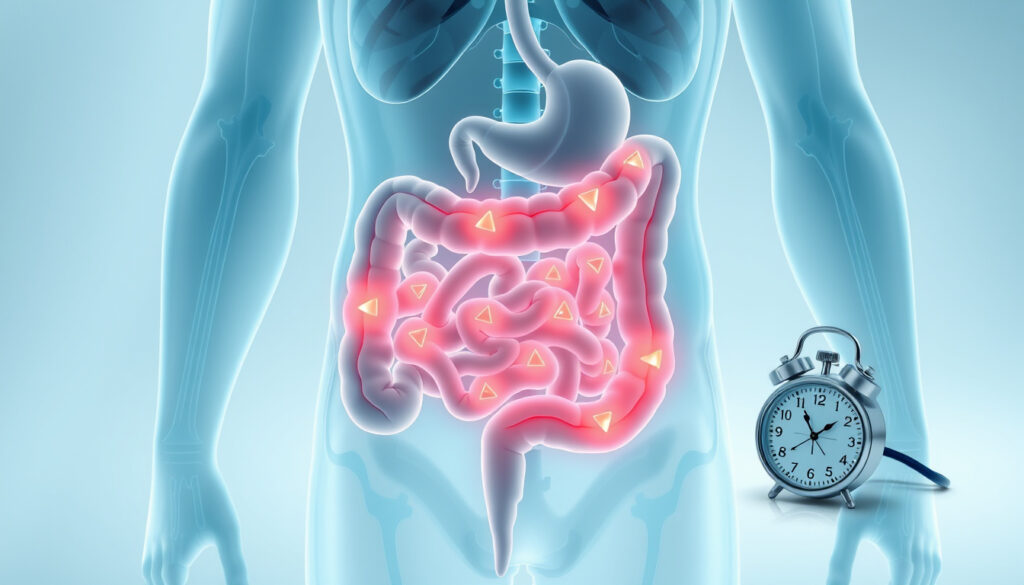
Signs of Colon Cancer: 7 Early Warning Signs and Symptoms
You don’t always get a loud warning when something is wrong inside your body – with colon cancer, many people experience no symptoms at all in the early stages, making it a silent disease. Knowing what to look for—and what often gets missed—could make the difference between an early, treatable diagnosis and a delayed one.
Colorectal cancer is the third most common cancer in the United States: Estimated 153,000 new cases in 2023 ·
5-year survival rate for localized stage colon cancer: 91% ·
Lifetime risk of developing colorectal cancer: About 1 in 23 men and 1 in 25 women ·
Percentage of colorectal cancer cases diagnosed in people under 50: Rising, now about 10–15%
Quick snapshot
- Blood in stool or rectal bleeding is a confirmed sign of colon cancer (Cleveland Clinic (major medical center))
- Unexplained weight loss and fatigue are common symptoms (Mayo Clinic (leading academic medical center))
- The exact cause of most colon cancers is not fully understood (Mayo Clinic)
- Why some people experience no symptoms until advanced stages remains uncertain (Cancer Treatment Centers of America (CTCA))
- Polyps can take 10–15 years to become cancerous, offering a wide screening window (Mayo Clinic)
- Early-onset warning signs can appear 3 months to 2 years before diagnosis (Mayo Clinic Cancer Blog (clinical research team))
- Screening colonoscopy recommended starting at age 45 for average risk (Mayo Clinic (gastroenterology division))
- See a doctor if bowel habit changes last more than a few weeks (Houston Methodist (health system hospital))
Five key facts, one pattern: the earliest signs are easy to dismiss, and late-stage disease is far harder to treat.
| Metric | Value |
|---|---|
| Incidence rate (U.S.) | 1 in 23 men, 1 in 25 women lifetime risk (CTCA) |
| 5-year survival (localized) | 91% (Healthline (medical news source)) |
| Median age at diagnosis | 68 years (Mayo Clinic) |
| Percentage diagnosed under 50 | ~10-15% (rising) (Mayo Clinic Cancer Blog) |
| Most common early symptom | Change in bowel habits (Cleveland Clinic) |
What are the 7 early warning signs of colon cancer?
According to the Mayo Clinic (gastroenterology specialists), these seven signs are the most consistently reported:
- Change in bowel habits lasting more than a few weeks — including diarrhea, constipation, or narrowing of stool.
- Rectal bleeding or blood in stool — often the most alarming and most often cited warning across all major clinical sources (Cleveland Clinic).
- Persistent abdominal discomfort — cramps, gas, or pain that doesn’t resolve.
- Unexplained weight loss — losing pounds without trying.
- Weakness or fatigue — sometimes tied to iron-deficiency anemia from chronic blood loss (Healthline).
- Feeling that your bowel doesn’t empty completely — a sensation of incomplete evacuation.
- Iron-deficiency anemia — a silent sign that may show up on routine blood work before any other symptom appears.
What are the silent signs of colon cancer?
- Occult (hidden) blood in the stool — small amounts you can’t see with the naked eye (Mayo Clinic (cancer stool guide)).
- Unexplained fatigue caused by gradual anemia from slow bleeding.
- Subtle changes in bowel movement frequency that you may attribute to diet or stress.
The implication: silent signs are exactly what they sound like — easy to miss, but often the first detectable clues a doctor finds during a routine exam.
What is the biggest red flag for colon cancer?
According to Dr. George Chang, colorectal surgeon at MD Anderson (specialty cancer center), “The most common red flag is a change in bowel habits that persists for more than a few weeks.” That persistence — beyond the typical few-day digestive upset — is the key signal that something may be wrong.
What is the first hint of colon cancer?
For some patients, the first hint is not a symptom at all but an abnormal lab result. Healthline notes that iron-deficiency anemia may be the earliest detectable clue, sometimes appearing months before any bowel-related complaint. The pattern: a routine blood test flags low iron, leading to a colonoscopy that finds a tumor.
Seven symptoms sounds like a clear checklist, but many of these signs overlap with far less serious conditions like hemorrhoids, irritable bowel syndrome, or food intolerances. The difference is duration and persistence — not the symptom itself.
What is Stage 1 colon cancer?
Stage 1 colon cancer means the cancer has grown through the mucosa (the inner lining) into the submucosa or muscle layer but has not spread to lymph nodes or distant sites. The Cleveland Clinic (digestive disease institute) describes it as a cancerous polyp that is still confined to the colon wall.
Stage 1 colon cancer symptoms
- Often no symptoms at all (Cleveland Clinic).
- If symptoms appear, they tend to be vague: mild abdominal discomfort, occasional blood in stool, or slight fatigue.
- Many cases are found during routine screening before any symptom develops.
Why this matters: Stage 1 is the most curable stage. Healthline reports a 5-year survival rate greater than 90% when caught at this point. The treatment is typically surgery alone — no chemotherapy needed. But catching it requires either symptoms that prompt a visit or a screening that finds it first.
The implication: stage 1 is treatable but requires proactive screening.
Where do you feel colon pain?
Colon cancer pain is characteristically vague and located in the lower abdomen. According to the Mayo Clinic, it can present as cramps, gas pains, or a dull ache. The location often depends on where the tumor is:
| Colon segment | Typical pain location | Common description |
|---|---|---|
| Right (ascending) colon | Right lower abdomen or right flank | Dull ache, often mistaken for appendicitis or gallstones |
| Left (descending) colon | Left lower abdomen | Crampy pain, sometimes with changes in stool caliber |
| Sigmoid colon | Lower left pelvic area | Pressure or incomplete evacuation sensation |
The trade-off: because colon pain mimics gas, indigestion, or muscle strain, many people wait weeks or months before seeking care. If pain persists beyond a few days without a clear cause, it’s worth raising with a doctor.
How long can you have colon cancer without knowing?
Colon cancer can develop silently for years. The Mayo Clinic explains that most colorectal cancers arise from adenomatous polyps, which can take 10 to 15 years to become malignant. During that long window, there are often no symptoms at all.
Once a polyp becomes cancerous, it may still remain symptom-free for months or even years before growing large enough to cause obstruction, bleeding, or pain. A Mayo Clinic Cancer Blog analysis of early-onset cases found that symptoms like abdominal pain, rectal bleeding, and diarrhea appeared an average of 3 months to 2 years before diagnosis.
The pattern: the cancer has a very long head start. Screening is the only method that routinely catches it before that head start matters.
Is colon cancer curable?
Yes, when caught early. The Houston Methodist (tertiary care hospital) breaks down survival rates by stage, and the drop-off is steep:
| Stage | 5-year survival rate |
|---|---|
| Localized (Stage 1) | 91% (Healthline) |
| Regional (spread to lymph nodes) | 72% (based on U.S. SEER data, cited by clinical sources) |
| Distant (metastatic) | 13% (SEER data) |
Colon cancer survival rate
- Localized: 91% — treatment is usually surgery alone.
- Regional: 72% — often requires surgery plus chemotherapy.
- Distant: about 13% — treated with chemotherapy, targeted therapy, and sometimes surgery for metastases.
What this means: the earlier the stage, the simpler and more effective the treatment. The vast majority of colorectal cancer deaths occur in people whose cancer was found after it had already spread.
For a 50-year-old with no symptoms, a single screening colonoscopy can reduce the risk of dying from colon cancer by at least 60% (CTCA). For a 30-year-old with persistent rectal bleeding, delaying a colonoscopy by six months can be the difference between Stage 1 and Stage 3.
What this means: earlier detection translates to simpler treatment and higher survival.
Confirmed facts vs. what’s uncertain
What’s well established
- Rectal bleeding is a confirmed sign of colon cancer (Cleveland Clinic)
- Unexplained weight loss and fatigue are common symptoms (Mayo Clinic)
- Screening reduces mortality by detecting early-stage cancers (Mayo Clinic)
- Stage 1 colon cancer has a 5-year survival rate above 90% (Healthline)
What’s less certain
- The exact cause of most colon cancers is not fully understood (Mayo Clinic)
- Why some people experience no symptoms until advanced stages is unclear (CTCA)
- The role of diet in preventing colon cancer is still being studied (Houston Methodist)
- Whether certain silent symptoms (e.g., fatigue) are specific to colon cancer is uncertain — they overlap with many benign conditions
The pattern: what we know is solid, but gaps remain in understanding why the disease is silent.
What patients and doctors say
“I thought it was just hemorrhoids. I never imagined it could be cancer.” — Stage 3 colorectal cancer survivor, quoted in MD Anderson article (MD Anderson Cancer Center via Mayo Clinic Cancer Blog)
“The most common red flag is a change in bowel habits that persists for more than a few weeks.” — Dr. George Chang, colorectal surgeon, MD Anderson (MD Anderson via Mayo Clinic Cancer Blog)
The common thread: patients often dismiss early signs, and doctors sometimes miss the urgency. The result is a diagnosis that could have been made earlier.
The editorial take: colon cancer doesn’t have to be a death sentence. But the window of curability is narrow, and it closes fast. For anyone over 45, screening is non-negotiable. For anyone under 45 with persistent symptoms—especially rectal bleeding or a change in bowel habits—pushing for a colonoscopy isn’t overreacting. It’s the only way to know.
my.clevelandclinic.org, oncarecancer.com, gastroconsa.com, youtube.com, mayoclinic.org
Frequently asked questions
What color is blood in colon cancer stool?
Blood from colon cancer can be bright red (if from the lower colon or rectum) or dark, tarry black (if from the right colon). Small amounts may not be visible at all and are only detected by a fecal occult blood test (Mayo Clinic).
Does colon cancer cause back pain?
Yes, in advanced stages. If the tumor spreads beyond the colon to the abdomen or spine, it can cause dull, persistent back pain. However, back pain is not an early sign (CTCA).
What is the difference between colon cancer and rectal cancer?
Colon cancer begins in the large intestine (colon), while rectal cancer starts in the rectum (the last 12–15 cm of the digestive tract). They are often grouped together as colorectal cancer because they share many risk factors and screening methods, but treatment approaches can differ slightly (Cleveland Clinic).
Can stress cause colon cancer?
There is no direct evidence that stress alone causes colon cancer. However, chronic stress may contribute to unhealthy behaviors like poor diet, smoking, or ignoring symptoms, which can increase risk. The Mayo Clinic lists stress as a possible indirect factor, not a direct cause.
How often should I get screened for colon cancer?
For average-risk individuals, the Mayo Clinic recommends starting at age 45 with a colonoscopy every 10 years, or a fecal immunochemical test (FIT) annually. Those with a family history may need earlier or more frequent screening.
What foods can reduce the risk of colon cancer?
A diet high in fiber (whole grains, fruits, vegetables) and low in red and processed meats is associated with lower colorectal cancer risk, according to the Houston Methodist. Calcium, vitamin D, and folate may also help.
Is colon cancer hereditary?
About 5–10% of colon cancers are inherited, often through conditions like Lynch syndrome or familial adenomatous polyposis (FAP). The Cleveland Clinic notes that a family history of colorectal cancer or polyps increases personal risk.
What are the early signs of colon cancer in women?
The early signs of colon cancer are similar for men and women: change in bowel habits, rectal bleeding, abdominal pain, unexplained weight loss, and fatigue. Women may also experience iron-deficiency anemia as a first sign (Healthline).
More related posts
 Black Caps Live Score: Official Updates & How to Watch
 Spin Casino Voucher Code 2026: Up to $3,000 + 200 Free Spins
 Things to Do in Osaka: Top Attractions, Food & Itineraries
 Homes for Sale in Christchurch: Your 2025 Property Guide
 New World Hutt City: Prices, Hours & Facts (2025 Guide)
 Kim Dotcom Net Worth 2025: Current $10M, Peak & Asset Loss
 The Pursuit of Happiness: True Story Behind Will Smith Movie
 Pizza Hut New Plymouth: Menu, Prices, Pickup & Phone Number