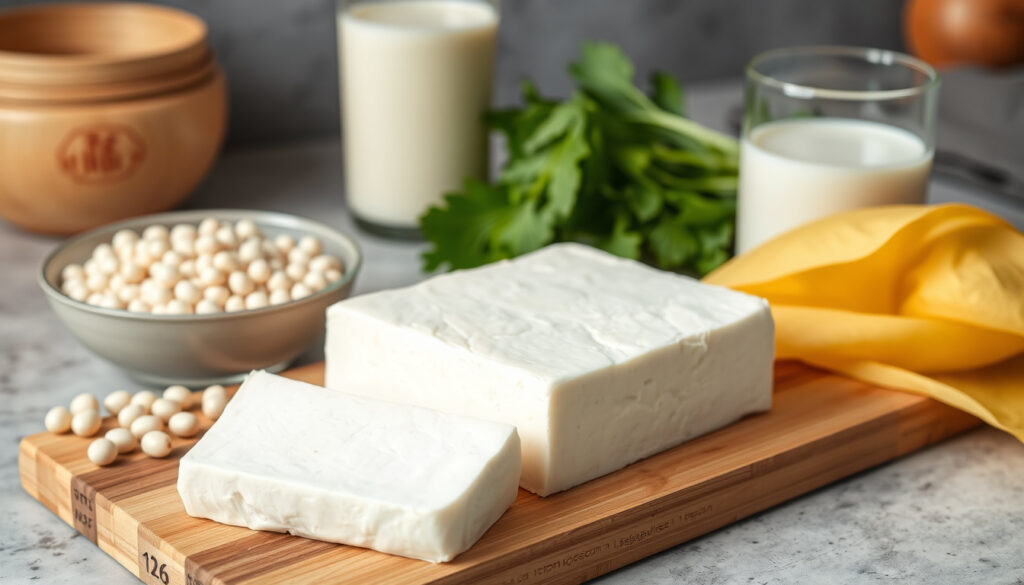
What Is Tofu Made Out Of? Ingredients, Nutrition, Health Benefits
Anyone who’s ever picked up a block of tofu knows it looks unassuming, but behind that humble appearance lies a 2,000-year history and a clever bit of chemistry: tofu is made from just three core ingredients — soybeans, water, and a coagulant. This article breaks down exactly what tofu is made of, how it goes from bean to block, and what that means for your health and kitchen.
Protein per 100g firm tofu: 8–10 g ·
Calories per 100g firm tofu: 70–80 kcal ·
Calcium per 100g (calcium-set): 350 mg ·
Tofu origin: China, over 2,000 years ago ·
Common coagulant: Calcium sulfate, nigari, lemon juice
Quick snapshot
- Made from soy milk, coagulated and pressed. (TofuWorld)
- Originated in China over 2,000 years ago. (TofuWorld)
- Comes in silken, soft, firm, and extra-firm textures. (Colorado State University)
- High in protein (8–10g per 100g firm tofu). (Harvard Health Publishing)
- Low in calories and saturated fat. (Harvard Health Publishing)
- Good source of iron and calcium (if calcium-set). (Soy Connection)
- May reduce heart disease risk when replacing red meat. (Harvard Health Publishing)
- Contains isoflavones with potential estrogenic effects. (Medical News Today)
- Excessive intake may affect thyroid function in sensitive individuals. (Harvard Health Publishing)
- Press to remove moisture for crispiness. (WeightWatchers)
- Marinate for flavor absorption. (WeightWatchers)
- Suitable for stir-fries, soups, salads, and desserts. (Healthline)
Here are the key facts about tofu.
| Attribute | Value |
|---|---|
| Origin | China, Han dynasty (approx. 200 BCE) |
| Main ingredient | Soybeans (Glycine max) |
| Texture varieties | Silken, soft, firm, extra-firm |
| Typical coagulant | Calcium sulfate, magnesium chloride (nigari), or acids |
| Average protein (firm) | 8–10 g per 100 g |
| Calories (firm) | 70–80 kcal per 100 g |
What is tofu made out of?
How is tofu made from soybeans?
- Traditional tofu starts with soybeans that are soaked, ground, and cooked to produce soy milk.
- A coagulant — typically calcium sulfate, magnesium chloride (nigari), or an acid like lemon juice — is added to curdle the soy milk (Healthline (nutrition and wellness site)).
- The curds are then pressed into blocks of varying firmness.
The process mirrors cheese‑making, but the ingredient difference is absolute: no animal milk, no dairy. The result is a plant‑based protein that is naturally gluten‑free (Medical News Today (medical news outlet)).
Is tofu made of bean curd?
- Yes — the terms are interchangeable. “Bean curd” is the English translation of the Chinese name dòufu ( ).
- Production steps: soy milk → coagulation → curds → pressed block (TofuWorld (tofu education resource)).
What is tofu made out of soy milk?
- Exactly — tofu is coagulated soy milk. No other base liquid is used.
- Whole soybeans provide the milk; the coagulant creates the curds (Colorado State University Food Source Information (academic food science resource)).
Is tofu made from milk?
- No — tofu is made from soy milk, which is plant‑based. It contains no dairy.
- It is naturally lactose‑free and vegan (WebMD (health information publisher)).
Is tofu halal?
- Tofu itself is halal because it is made from soybeans and water.
- However, if the coagulant or any added flavoring contains alcohol or non‑halal additives, the product may not be certified halal. Always check the label.
Is tofu good or bad for you?
Is there a downside to eating too much tofu?
- Moderate consumption is safe for most people. Tofu is rich in protein, calcium, manganese, copper, and selenium (Harvard Health Publishing (Harvard Medical School’s health division)).
- Excessive intake — more than several servings daily — may affect thyroid function in people with iodine deficiency due to goitrogens in soy.
- Some individuals experience digestive discomfort from soy sensitivity or the high fiber content.
Is tofu good for losing belly fat?
- Tofu is low in calories (70–80 kcal per 100g firm tofu) and high in protein, which can support satiety and weight management (WeightWatchers (weight‑management program)).
- No food targets belly fat specifically, but replacing higher‑calorie meats with tofu can reduce overall calorie intake.
Why does my tummy hurt after eating tofu?
- Possible causes: soy allergy, sensitivity to oligosaccharides (fiber that ferments in the gut), or consuming raw tofu that hasn’t been properly cooked.
- If discomfort persists, try switching to organic or sprouted tofu, or reduce portion size.
The pattern: tofu is nutrient‑dense but not perfect for everyone. For most people, one or two servings a day is beneficial; for those with thyroid concerns or soy sensitivities, moderation is key.
Is tofu basically cheese?
Is tofu a type of dairy or protein?
- Tofu is made by pressing curds from soy milk — a process similar to cheesemaking, which is why it’s often called “bean curd.”
- But tofu contains no animal milk, no lactose, and no casein. It is classified as a protein‑rich food, not a dairy product (Soy Connection (soy industry education site)).
- Its texture ranges from silken (like soft cheese) to extra‑firm (like aged cheese), but nutritionally it is closer to lean meat in protein content.
The catch: the “bean curd” nickname is accurate for process, but it misleads people into thinking tofu is a dairy alternative when it’s really a legume‑based protein.
Is tofu healthier than real meat?
What is healthier, eggs or tofu?
Six nutrition points to compare tofu, chicken breast, and eggs side by side:
Two protein sources, one plant‑based and two animal‑based, and the differences in fat and cholesterol are stark.
| Nutrient (per 100g) | Firm Tofu | Chicken Breast (cooked) | Eggs (whole, cooked) |
|---|---|---|---|
| Protein | 8–10 g | ~26 g | ~13 g |
| Calories | 70–80 kcal | ~165 kcal | ~155 kcal |
| Total fat | 4–5 g | ~3.5 g | ~11 g |
| Saturated fat | 0.6 g | ~1 g | ~3.3 g |
| Cholesterol | 0 mg | ~85 mg | ~373 mg |
| Calcium | 350 mg (if calcium‑set) | ~15 mg | ~50 mg |
Sources: Tofu data from Harvard Health Publishing and Colorado State University; chicken and egg data from USDA FoodData Central.
The trade‑off: tofu wins on cholesterol and saturated fat, but chicken and eggs provide more protein per gram. For heart health, tofu is the better choice; for maximal protein density, animal sources lead.
Upsides
- Zero cholesterol, low in saturated fat.
- Good source of calcium and iron (when calcium‑set).
- Versatile in cooking — absorbs flavors well.
- Plant‑based, suitable for vegans.
Downsides
- Lower in protein per gram than meat.
- Contains goitrogens that may affect thyroid.
- Some people experience digestive discomfort.
- Not a complete protein (lacks methionine, but fine in balanced diet).
What is the healthiest tofu to eat?
- Firm and extra‑firm tofu have the highest protein and lowest water content. They are the best choices for grilling, stir‑frying, and baking.
- Silken tofu is softer, lower in protein, and often used in smoothies, soups, and desserts. It may be fortified with calcium.
- Calcium‑set tofu (using calcium sulfate) provides significantly more calcium than nigari‑set tofu (Soy Connection).
- Organic tofu avoids GMOs and certain pesticides, though the nutritional profile is similar.
Why this matters: choosing the right tofu type depends on your goal — protein intake, calcium needs, or culinary application. For a calcium‑rich, high‑protein option, go for firm, calcium‑set tofu.
How do you eat tofu for beginners?
What is the tastiest way to cook tofu?
- Press it. Remove excess water by wrapping the block in a towel and placing a heavy object on top for 15–30 minutes. This improves texture and helps it crisp up.
- Marinate it. Tofu absorbs marinades like a sponge. Try soy sauce, ginger, garlic, and a touch of sesame oil.
- Coat and crisp. Toss cubes in cornstarch and bake at 400°F (200°C) for 25 minutes until golden and crunchy (WeightWatchers).
- Stir‑fry or scramble. Crumble firm tofu and sauté with vegetables for a scramble. Silken tofu works in smoothies or blended into sauces.
Beginner tip: Start with extra‑firm tofu for cooking. It’s the most forgiving and easiest to handle.
Raw tofu is safe to eat, but it can cause bloating in some people due to its fiber content. Cooking reduces this effect and also kills any surface bacteria. For beginners, always cook tofu unless the package explicitly says “ready to eat.”
The takeaway: pressing, marinating, and proper cooking transform tofu from bland to versatile.
Why do Chinese eat so much tofu?
- Tofu originated in China during the Han dynasty (206 BCE – 220 CE) and has been a dietary staple for over 2,000 years (TofuWorld).
- It became popular because of its affordability, long shelf life, and ability to absorb flavors. In regions where meat was scarce or expensive, tofu provided essential protein.
- Buddhist vegetarian traditions, which avoided animal products, further cemented tofu as a protein source in Chinese cuisine.
- Today it appears in dishes from mapo tofu (Sichuan) to light soups and stir‑fries across East and Southeast Asia (.15)
The pattern: tofu’s history is a story of practicality and adaptation. It filled a nutritional gap and became a cultural icon — not because it’s trendy, but because it worked.
Confirmed facts vs. what’s still unclear
Confirmed facts
- Tofu is produced from soy milk through coagulation and pressing.
- It has been consumed in China for over 2,000 years.
- Firm tofu contains about 8–10 g protein per 100 g.
What’s unclear
- Whether high consumption increases breast cancer risk — studies show mixed results.
- The exact impact of isoflavones on thyroid function in iodine‑sufficient populations.
“Tofu is a food prepared by pressing the curds of coagulated soy milk.”
“Tofu is made from soy milk and a coagulant, creating a plant‑based protein source.”
For anyone considering tofu as a regular part of their diet, the choice is less about whether tofu is “healthy” and more about how it fits your personal nutrition needs and cooking habits. For the average American consumer looking to reduce saturated fat and cholesterol without giving up protein, swapping one or two meat meals per week for tofu is a clear, evidence‑backed win. For those with thyroid sensitivities or a history of soy allergies, the alternative — moderation or alternative plant proteins like tempeh or lentils — is equally clear.
scienceinsights.org, torrinomedica.it, differencebetween.net, usatoday.com
Frequently asked questions
Is tofu vegan?
Yes — tofu is made from soybeans, water, and a coagulant. No animal products are used.
Can you eat tofu raw?
Yes, but cooking improves texture, digestibility, and safety. Raw tofu may cause bloating in some people.
How to store tofu?
Store unopened in the fridge. Once opened, keep submerged in water and change daily. Use within 3–5 days. Freeze for up to 3 months.
Is tofu gluten‑free?
Yes — tofu is naturally gluten‑free. Avoid flavored or marinated varieties that may contain soy sauce (which often has wheat).
Tofu vs tempeh: what’s the difference?
Tofu is made from coagulated soy milk; tempeh is made from fermented whole soybeans. Tempeh has more protein, fiber, and a nutty flavor.
Does tofu have estrogen?
Tofu contains isoflavones, which are plant compounds that can weakly mimic estrogen in the body. Moderate intake is safe; excessive amounts may have mild hormonal effects.
More related posts
 Auckland Suburbs Property Prices Increase [2026] Guide
 Best Pumpkin Soup Recipe Ever – Umami Secret & Pro Tips
 A5 Size in cm: Dimensions, Comparison, and Printing Guide
 NZD to INR Rate Today: New Zealand Dollar Price in India
 NZ Post Delivery Times: Schedules, Days & Targets 2024
 Leave the World Behind: Plot, Ending & Controversy Explained
 What Is Parkinson’s Disease? Symptoms, Causes & Stages
 Homes for Sale in Rotorua: Listings, Private Sales & By Owner