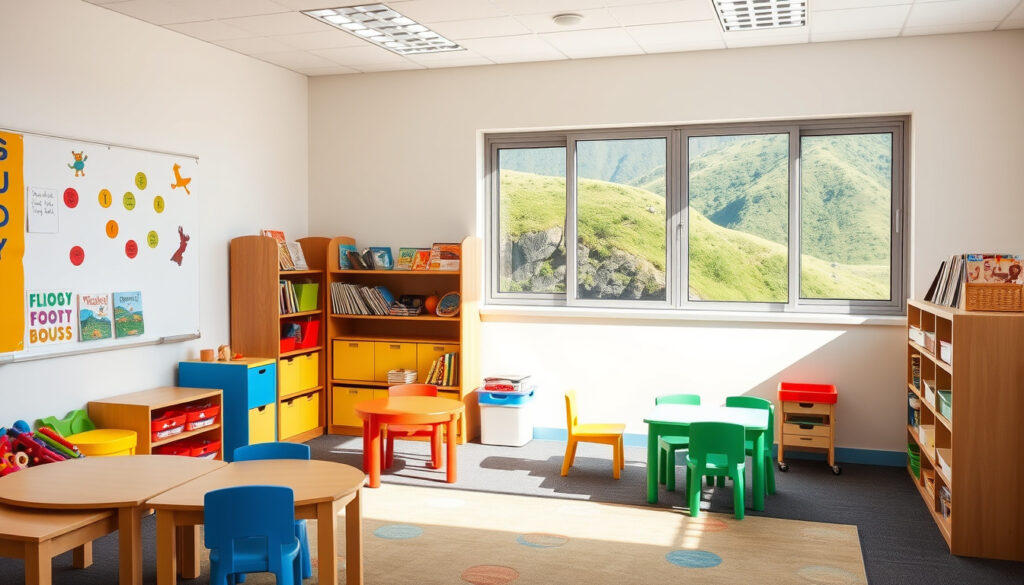
Early Childhood Education NZ: Free ECE, Courses & Salary
If you’re a parent in New Zealand, you’ve probably heard about the 20 Hours Free ECE scheme — but what does it actually cover and how do you get started? This guide walks through the costs, qualifications, and career paths that make New Zealand’s ECE sector one of the most accessible in the world.
Free ECE hours per week: 20 hours for 3–5 year olds ·
Number of ECE services in NZ: Approximately 4,500 ·
500 ·
Typical teacher qualification level: Diploma or Bachelor’s degree ·
Average ECE teacher salary (NZ$): $55-, 000–$70, 000
Quick snapshot
2>
- 20 Hours Free ECE applies to all 3–5 year olds in licensed ECE services (NZ Government policy FAQ)
- ECE is not compulsory in New Zealand (Ministry of Education overview)
- The Teaching Council requires registration for ECE teachers (Teaching Council of Aotearoa New Zealand)
- Exact salary figures vary by region and experience (PayScale survey data)
- International tuition fees are set by individual providers (Study in New Zealand official site)
- The impact of recent policy changes on funding is not fully documenteda href=”https://www.ero.govt.nz/publications/quality-of-ece-services-2023/” target=”_blank” rel=”noopener nofollow”>Education Review Office report)
<
- 20 Hours Free ECE introduced in July 2007 with advance payments of NZ$178. 2 million to services (NZ Government policy FAQ)
)
li>Funding subsidy rates set at NZ$3. 52–$3. 99 per child per hour in 2007, with annual adjustments since (same source)
- Education Review Office continues to evaluate and report on ECE quality, future policy updates (ERO report)
li>Ongoing pay parity discussions between government and teacher unions may affect salary scales (NZ Herald coverage)
| th>Attribute | Value |
|---|---|
| Age range | |
| Compulsory | No |
| Free hours | 20 hours/week for 3–5 year olds |
| Average salary (NZ$) | 55, 000–70, 000 |
What age group does ECE cover in New Zealand?”ECE in New Zealand covers children from birth to school entry age (usually age (usually age 5) (Ministry of Education definition).
Is ECE compulsory in New Zealand?
<>
What are the main types of ECE services in New Zealand?
- Services include kindergartens, childcare centres, home-based care, and kōhanga reo (Ministry of Education service types).
- The Ministry of Education oversees ECE under the Education and Training Act 2020 (New Zealand legislation).
- All children aged 3 to 5 enrolled in licensed ECE services get up to 20 hours per week free (6 hours per day). The scheme is worth up to NZ$4, 500 per year for eligible families (NZ Government policy FAQ).
- International students are generally not eligible for the 20 Hours Free ECE funding; their fees are set by providers (Study in New Zealand official site).
- The ECCE scheme is an Irish programme, not related to NZ’s 20 Hours ECE (Irish Government ECCE page).
- In New Zealand, ECT is not a standard term; the equivalent is a beginning teacher on a provisional practising certificate (Teaching Council of Aotearoa: many Benefits/h1>).
<- ECE stands for Early Childhood Education and refers to the /li>
- In the UK system, ECT /> is a probationary status; in NZ, a provisionally certificated teacher is similarly not yet fully certificated (Teaching Council).
-
What career paths are available for each?
<>
- Both roles require recognized teaching degree or diploma and registration with the Teaching Council (Teaching Council).
- Career progression includes senior teacher, lead teacher, centre manager, specialist roles such as kōhanga reo (Career Guide NZ).
- Average ECE teacher salary in NZ ranges from NZ$55, 000 to NZ$70, per year keyPayScale data).
- Hourly rate for certified early childhood teachers averages NZ$26. 72 (PayScale).
- Career Guide NZ).
- Top-paying countries for ECE teachers often include Switzerland, Luxembourg, the United States, and Australia (OECD Education at a Glance).
- New Zealand’s ECE salaries are competitive but typically lower than in the highest-paying nations ( global comparison).
- Countries with the highest ECE teacher salaries include Switzerland, Luxembourg, the United States, and Australia (OECD Education at a Glance).
- In Switzerland, experienced ECE teachers can earn over US$70, 000 equivalent, while in Luxembourg salaries are also among the globally ( href=”https://www.unicef.org/early-childhood-education/global-comparison” target=”_blank” rel=”noopener”>UNICEF).
- New Zealand ranks in the middle-to-upper tier globally, below the highest-paying nations (OECD data).
- levels depend on cost living, government funding, and union agreements (OECD).
- Top ECE ratio: access, quality, and outcomes — Finland, New Zealand, Singapore, and Canada frequently lead (UNICEF global comparison).
- New Zealand is praised for its holistic, play-based Te Whāriki curriculum and high participation rates (Ministry of Education Te Whāriki page).
- New strengths include free 20 hours ECE for 3–5 year olds, a culturally responsive curriculum, and strong regulatory oversightngMinistry of Education section).
- 20 Free ECE applies to all 3–5 year olds in licensed ECE services (NZ Government FAQ)
- ECE is not compulsory in New Zealand (Ministry of Education)
- The Teaching Council requires registration ECE registration for ECE teachers Teaching >
What remains uncertain
Exact salary figures vary significantly by region and experience (PayScale)
- International tuition fees providers individually ( Study in New Zealand))
- The full impact of recent changes on ECE funding is not yet documented (
- 97. 9% of certified early childhood teachers in NZ are female, but sample small (
parallel–19structs n1>. aret many small/
34
New Zealand’s ECE system is non-compulsory and diverse, giving families real choice — but that choice requires understanding which service type fits your child’s age and your schedule. For parents new to the system, the variety can be overwhelming; the first step visiting the Ministry’s service finder tool.
Is early childhood education free in NZ?
What is the 20 Hours ECE funding?
Is ECE free for international students?
How does the ECCE scheme relate to New Zealand?
What is the difference between ECT and ECE?
What qualifications do ECT and ECE teachers need?
Is an ECT a fully qualified
What to watch
The terminology difference between ECT and ECE matters most for job seekers: if you see “ECT” in a New Zealand job ad, it likely refers to a UK-trained early career teacher — but in NZ, the correct term is “provisionally certificated teacher”. Misunderstanding can delay registration.
Bottom line: Job seekers should use the correct NZ terminology (provisionally certificated teacher) to avoid registration delays with the Teaching Council.
What is the highest paying job in early childhood education?
“)
What is the average salary for ECE teachers in New Zealand?
What are the top-paying roles within ECE?
<>
How does New Zealand compare with other countries for ECE pay?
The trade-off
For career changers, the path to centre management can boost salary by 20 it also requires additional leadership qualifications and typically 5+ years of The payoff is real but investment is significant.
Bottom line: The highest-paying roles require additional leadership qualifications and experience, making the career progression path demanding but financially rewarding.
What country pays early childhood teachers the most?
How does New Zealand rank in global ECE pay?
What factors influence salary differences across countries?
Bottom line: New Zealand’s middle-to-upper global ranking reflects strong working conditions, but teachers seeking top pay should consider Switzerland or leadership roles.
Which country is best for early childhood education?
What criteria define the best country for ECE
What are the strengths of New Zealand’s ECE system?
line: For families seeking a balance of quality and cost,among the best globally. For teachers, the salary isn the highest, the working conditions and curriculum philosophy are strong draws. International students benefit from a well-regarded qualification.
Five ECE service types, one pattern: the choice between kindergartens, childcare centres, home-based care and kōhanga reo boils down to age group, hours needed, and cultural preference.
Service type
Age range
Typical hours
Teacher qualification requirement
Funding source
Kindergarten
<2–5 years
Sessional (e.g., 6 hours/day)
Diploma or degree
Ministry of Education + 20 Hours ECE
Full-day ( up to 10 hours)
Diploma or degree
Parent fees + 20 Hours ECE +
Home-based care
0–5 years
5 years
Flexible
Educator qualification not always required
Parent fees + government subsidy
<>
0–5 years
Variable
Māori immersion focus; vary
Government funding + whānau contributions
Playcentre
Sessional
Parent- training offer
Ministry of Education + parent fees
Bottom line: Parents looking for full-day care will likely choose a childcare centre, while those preferring hours may opt for kindergarten. Kōhanga reo offers Māori immersion environment, but availability varies by region.
Clarity check
What we know for sure
More related posts
 Homes for Sale in Christchurch: Your 2025 Property Guide
 Arsenal F.C. vs Crystal Palace F.C. Timeline: H2H History
 Hibiscus Coast Wastewater Building Restriction: What Developers Need to Know
 Milwaukee Brewers vs Dodgers Match Player Stats & Analysis
 PLS ASX Share Price – Live Data, Charts and Analysis
 Comet 3I/ATLAS: What It Heavy Water Reveal
 Phone Deals One NZ: $40 Plans & $700 Savings
 Prezzy Card Balance Check: Online Login & Phone Guide

What qualifications do ECT and ECE teachers need?
Is an ECT a fully qualified
The terminology difference between ECT and ECE matters most for job seekers: if you see “ECT” in a New Zealand job ad, it likely refers to a UK-trained early career teacher — but in NZ, the correct term is “provisionally certificated teacher”. Misunderstanding can delay registration.
What is the highest paying job in early childhood education?
“)
What is the average salary for ECE teachers in New Zealand?
What are the top-paying roles within ECE?
<>
How does New Zealand compare with other countries for ECE pay?
For career changers, the path to centre management can boost salary by 20 it also requires additional leadership qualifications and typically 5+ years of The payoff is real but investment is significant.
What country pays early childhood teachers the most?
How does New Zealand rank in global ECE pay?
What factors influence salary differences across countries?
Which country is best for early childhood education?
What criteria define the best country for ECE
What are the strengths of New Zealand’s ECE system?
Five ECE service types, one pattern: the choice between kindergartens, childcare centres, home-based care and kōhanga reo boils down to age group, hours needed, and cultural preference.
| Service type | Age range | Typical hours | Teacher qualification requirement | Funding source | ||||
|---|---|---|---|---|---|---|---|---|
| Kindergarten | Sessional (e.g., 6 hours/day) | Diploma or degree | Ministry of Education + 20 Hours ECE | |||||
| Full-day ( up to 10 hours) | Diploma or degree | Parent fees + 20 Hours ECE + | ||||||
| Home-based care | 0–5 years | Flexible | Educator qualification not always required | Parent fees + government subsidy | 0–5 years | Variable | Māori immersion focus; vary | Government funding + whānau contributions |
| Playcentre | Sessional | Parent- training offer | Ministry of Education + parent fees |
Clarity check
What we know for sure
More related posts
Homes for Sale in Christchurch: Your 2025 Property Guide
Arsenal F.C. vs Crystal Palace F.C. Timeline: H2H History
Hibiscus Coast Wastewater Building Restriction: What Developers Need to Know
Milwaukee Brewers vs Dodgers Match Player Stats & Analysis
PLS ASX Share Price – Live Data, Charts and Analysis
Comet 3I/ATLAS: What It Heavy Water Reveal
Phone Deals One NZ: $40 Plans & $700 Savings
Prezzy Card Balance Check: Online Login & Phone Guide