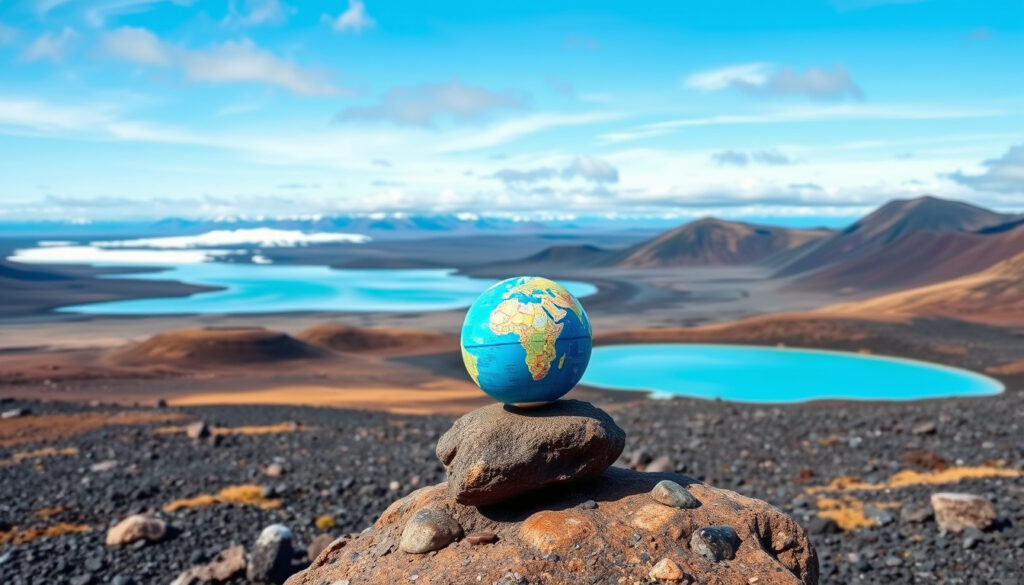
Safest Country in the World 2026: Iceland Tops GPI
Ask ten people what makes a country safe, and you’ll get ten different answers. One metric has consistently named a single winner for nearly two decades: Iceland has topped the Global Peace Index every year since 2008, and in 2026 it improved its score by 2% (BBC Travel).
No. 1 safest country: Iceland ·
No. 2 safest country: New Zealand ·
No. 3 safest country: Switzerland ·
No. 4 safest country: Slovenia ·
GPI score for No. 1: 1.161 ·
Iceland population: ~382,000
Quick snapshot
- No. 1 in GPI (BBC Travel)
- Holds the top spot since 2008 (BBC Travel)
- Population roughly 382,000 (World Population Review)
- No. 3 in GPI (BBC Travel)
- Known for neutrality
- Stable institutions
- No. 4 in GPI (BBC Travel)
- Low conflict exposure
- Central European location
The key facts about the 2026 Global Peace Index top ranking are summarized in the table below.
| Label | Value |
|---|---|
| Safest country | Iceland (BBC Travel) |
| Top spot held since | 2008 (BBC Travel) |
| Consecutive years at No. 1 in 2026 | 19 (BBC Travel) |
| 2026 GPI change | +2% improvement (BBC Travel) |
| No. 2 country | New Zealand (BBC Travel) |
| No. 3 country | Switzerland (BBC Travel) |
| No. 4 country | Slovenia (BBC Travel) |
What is the no. 1 safest country?
Iceland is the safest country in the world according to the 2026 Global Peace Index (BBC Travel). It has held the top position since 2008, a streak of 19 consecutive years. In 2026, Iceland’s GPI score improved to 1.161, a 2% gain driven largely by a sharp drop in violent demonstrations (BBC Travel).
What are the top 10 safest countries in the world?
- Iceland (1.161)
- New Zealand (1.343)
- Switzerland (1.363)
- Slovenia (1.369)
- Ireland
- Austria
- Portugal
- Singapore
- Finland
- Japan
Source: BBC Travel (2026 Global Peace Index)
Why Iceland stays at No. 1
Iceland’s small population of roughly 382,000 (World Population Review), low crime rates, and minimal military spending create a stable environment. The 2026 GPI report highlights that Iceland’s improvement came from a reduction in political instability and violent demonstrations (BBC Travel).
What the GPI score measures
The Global Peace Index measures peacefulness using 23 indicators, including levels of violent crime, militarization, and political instability (BBC Travel). It is not a crime-rate list; it captures broader societal safety and conflict risk.
Iceland’s grip on the top spot is not just a streak—it’s a structural peace that few countries can replicate. The 2% improvement in 2026, driven by a drop in violent demonstrations, shows that even the safest country can get safer.
What is the no. 2 safest country?
New Zealand is the No. 2 safest country in the 2026 Global Peace Index, with a GPI score of 1.343 (BBC Travel). The related search “second safest country in the world” matches this GPI position. However, other safety rankings—such as women’s safety or crime-rate lists—may order the runner-up differently.
New Zealand’s position at No. 2
New Zealand’s geographic isolation and low crime rates contribute to its high peace ranking. The GPI score of 1.343 places it behind Iceland by a margin of 0.182 points (WBOC).
Why “second safest” can vary by index
Different indexes rank countries differently. For example, the Women’s Peace and Security Index places New Zealand high, but countries like Denmark or Norway sometimes top those lists. The GPI measures peace, not personal safety for specific demographics.
What separates No. 2 from No. 1
The gap between Iceland and New Zealand is narrow but persistent. Iceland’s advantage comes from even lower violent crime and a more homogeneous society. New Zealand’s ranking is still excellent, but it has not matched Iceland’s continuous improvement (BBC Travel).
Calling New Zealand the second-safest country is accurate for the GPI, but if you’re a woman traveling alone or a refugee seeking asylum, the ranking may not reflect your personal risk.
What is the UK ranked in safety?
The United Kingdom is not in the GPI top 10. Its recent GPI rank has been in the 30s, according to multiple editions of the index (BBC Travel). A GPI peace rank is not the same as a crime-rate rank, so the UK’s position can shift between editions.
Where the UK lands in the GPI
In the 2025 GPI, the UK was ranked 32nd out of 163 countries. The 2026 edition has not released the full rank for every country, but the UK is not in the top 10 (BBC Travel).
Safety rank vs crime rate
The UK’s crime rate, particularly in cities like London, affects its GPI score. The index includes violent crime as one of 23 indicators. However, overall peacefulness is influenced by factors like political stability and militarization, where the UK scores lower than top-ranked countries.
How UK rank changes over time
The UK’s GPI rank has fluctuated. In 2020, it was ranked 34th; in 2023, 32nd. The country’s position depends on global trends—if other countries become more peaceful, the UK may drop even if its own situation remains stable.
The UK’s safety ranking matters for travelers and expats, but it’s not a simple measure of street crime. The GPI’s focus on conflict and militarization means the UK’s rank reflects its role in global affairs, not just domestic safety.
What rank is Dubai in safety?
Dubai is a city, not a country, so it does not have a GPI country rank. The Global Peace Index ranks countries, not cities. Dubai’s safety is often assessed through city-level surveys, such as the Economist Intelligence Unit’s Safe Cities Index, where Dubai scores high for digital security and infrastructure (Economist Intelligence Unit).
Dubai is a city, not a country
Dubai is part of the United Arab Emirates (UAE). The UAE’s GPI rank in 2026 is not in the top 10, but it sits in the lower half of the index. Country-level GPI rankings cannot be applied to Dubai directly.
City-level safety indexes for Dubai
City-level indexes like the Safe Cities Index rank Dubai high for safety. In 2025, Dubai ranked 10th globally for overall safety among 60 cities (Economist Intelligence Unit). This is a different metric from the GPI.
What the UAE rank shows
The UAE’s GPI position reflects its regional stability and low crime rates, but it is not in the top tier. The country’s small military and lack of internal conflict contribute to a moderately peaceful score.
When people ask “How safe is Dubai?” they are usually asking about tourist safety, not geopolitical peace. The answer: Dubai is very safe for visitors, but that doesn’t translate to a top GPI rank for the UAE.
Is Dubai or America safer?
Comparing Dubai and America is like comparing apples and oranges. The US does not appear in the GPI top 10; it ranked 134th in the 2026 Global Peace Index (USA Today). Dubai is a city in the UAE, so a direct comparison requires specifying whether we use city-level or country-level data.
Why you can’t compare a city and a country directly
City-level safety data for Dubai is not comparable to country-level data for the US. The US has high crime rates in some cities and low in others, while Dubai’s small geographical area allows for centralized security.
Where the US ranks in the GPI
The United States fell six places in the 2026 GPI, ranking 134th out of 163 countries (USA Today). This is due to high levels of violent crime, political polarization, and military spending.
How Dubai looks in city safety data
In the 2025 Safe Cities Index, Dubai ranked 10th globally for overall safety, with high scores for digital security and health security (Economist Intelligence Unit). This is a very different metric from the GPI.
If you’re asking about personal safety as a tourist, Dubai is arguably safer than most US cities. If you’re asking about geopolitical peace, the US is far less safe than any top-10 GPI country.
Four countries, one pattern: the GPI’s top four are all small, stable, and low in conflict. How they compare on specific safety dimensions is shown below.
| Country | GPI Rank (2026) | GPI Score | Key Safety Feature |
|---|---|---|---|
| Iceland | 1 | 1.161 | Lowest violent crime, minimal military |
| New Zealand | 2 | 1.343 | Geographic isolation, low crime |
| Switzerland | 3 | 1.363 | Neutrality, stable institutions |
| Slovenia | 4 | 1.369 | Low conflict exposure, central Europe |
| United Kingdom | ~32 | N/A | Moderate peace, higher crime in cities |
| United States | 134 | N/A | High violent crime, political polarization |
| United Arab Emirates | ~50 | N/A | Low internal conflict, but not top tier |
Sources: BBC Travel, USA Today
Where is the safest place to be if WW3 starts?
No country has a verified guarantee of safety in a world war. Switzerland and New Zealand are often mentioned in WW3 discussions because of neutrality and geographic isolation, but the GPI measures peacetime peacefulness, not wartime outcomes (Vision of Humanity).
Why no verified answer exists for WW3 safety
Hypothetical scenarios involve too many variables—nuclear fallout, supply chains, and political alliances—to produce a reliable ranking. The GPI is not designed to answer this question.
Countries often raised in WW3 scenarios
- Switzerland: historically neutral, but surrounded by NATO and EU countries.
- New Zealand: remote, but vulnerable to global supply chain disruptions.
- Iceland: small and isolated, but a NATO member.
War risk vs peacetime peace rankings
The GPI’s indicators include militarization and conflict, but they reflect current conditions, not future war outcomes. A country that is peaceful today could become a target tomorrow.
The safest country in peacetime may not be the safest in wartime. The GPI’s top countries are peaceful precisely because they avoid conflict, but that neutrality may not protect them in a global war.
Timeline signal
The GPI’s history shows a clear trend: Iceland has been the most peaceful country consistently since 2008. The timeline below highlights key milestones.
- 2008: Iceland first takes the top spot in the Global Peace Index (BBC Travel).
- 2022: GPI map shows Iceland as the most peaceful country, joined by New Zealand, Ireland, and Denmark (Vision of Humanity).
- 2025: 2025 Global Peace Index articles still name Iceland the safest country (BBC Travel).
- 2026: BBC identifies Iceland as safest for the 19th consecutive year; Iceland improves by 2% (BBC Travel).
Confirmed facts
- Iceland is the No. 1 safest country in the Global Peace Index (BBC Travel).
- Iceland has held the No. 1 position since 2008 (BBC Travel).
- New Zealand is No. 2 in the GPI table (BBC Travel).
- Switzerland is No. 3 and Slovenia is No. 4 in the GPI table (BBC Travel).
- The United States ranked 134th in the 2026 GPI (USA Today).
What’s unclear
- Full 2026 GPI ranks for every country are not included in current snippets.
- Dubai’s safety rank changes based on city-level vs country-level data.
- WW3 safety scenarios are hypothetical and cannot be verified with a ranking.
- The precise GPI scores for the United Kingdom and United Arab Emirates are not provided in the cited snippets.
- The ranking of countries after the top 10 in the GPI is not covered in this article.
Quotes from the experts
Iceland remains the world’s safest country for the 19th consecutive year and improved by 2% in 2026.
— BBC Travel (2026) (BBC Travel)
Names Iceland the safest country in the world and cites a population of about 382,000.
— World Population Review (World Population Review)
Shows Iceland as the most peaceful country, joined at the top by New Zealand, Ireland, and Denmark.
— Vision of Humanity / Global Peace Index (Vision of Humanity)
For anyone asking “where is the safest country in the world?”, the answer remains Iceland – but only if you’re measuring peace. For crime, women’s safety, or wartime risk, the question itself changes. The safest place for you depends on what you’re afraid of. For the traveler seeking low crime, Dubai or New Zealand may be a better bet. For the geopolitically anxious, Iceland’s remote stability offers a unique peace. For the UK resident comparing risks, the GPI rank is a starting point, not a full picture.
en.wikipedia.org, timeout.com, usatoday.com, moneycontrol.com, facebook.com, travelpirates.com, visualcapitalist.com, instagram.com, economicsandpeace.org
Frequently asked questions
Which country has the highest crime rate?
Venezuela, Papua New Guinea, and South Africa often top lists for crime rates. The Global Peace Index does not specifically measure crime rate; it measures peacefulness. For crime rate data, sources like the UN Office on Drugs and Crime provide separate rankings.
What is the safest country in the world for women?
According to the Women’s Peace and Security Index, the safest countries for women include Iceland, Norway, and Switzerland. The GPI does not specifically measure women’s safety, so rankings differ.
Is Iceland safe for tourists?
Iceland is consistently rated as one of the safest countries for tourists, with very low crime rates and a welcoming population. The GPI’s top ranking supports this.
How reliable is the Global Peace Index?
The GPI is produced by the Institute for Economics and Peace, using 23 indicators from reliable sources such as the UN and World Bank. It is widely cited by governments and media, but it is a composite index, not a perfect measure of personal safety.
What makes a country safe to live in?
Safety includes low crime rates, stable political institutions, low conflict risk, and strong social support. The GPI captures many of these factors, but personal safety also depends on local conditions and demographics.
Does a high peace index score mean a country is safe from crime?
Not necessarily. The GPI includes violent crime as one indicator, but a country with low peace index score could still have low crime rates in some areas. The GPI is a broad measure of peace, not a crime rate list.
The GPI rank is a tool, not a verdict. For any individual, the safest place is the one that matches their specific fears—whether that’s street crime, war, or institutional instability.
Related reading
More related posts
 Jamie Oliver Air Fryer Book: Easy Air Fryer Review
 Carterton Pub Boarding House Fire Risk: 2025 Determination
 How to Get a New Zealand Seasonal Work Visa (2026 Guide)
 Spin Casino Voucher Code 2026: Up to $3,000 + 200 Free Spins
 GoPro Hero 13: Year, Price, Waterproof & Motorcycle Use
 Chappell Roan Grammy Outfit: Prosthetic Nipples & Mugler
 Products Offered by Bunnings Warehouse Whakatāne – Full Guide
 Morris And Watson Gold Price NZ – Live Sell Rates Per Oz And Gram