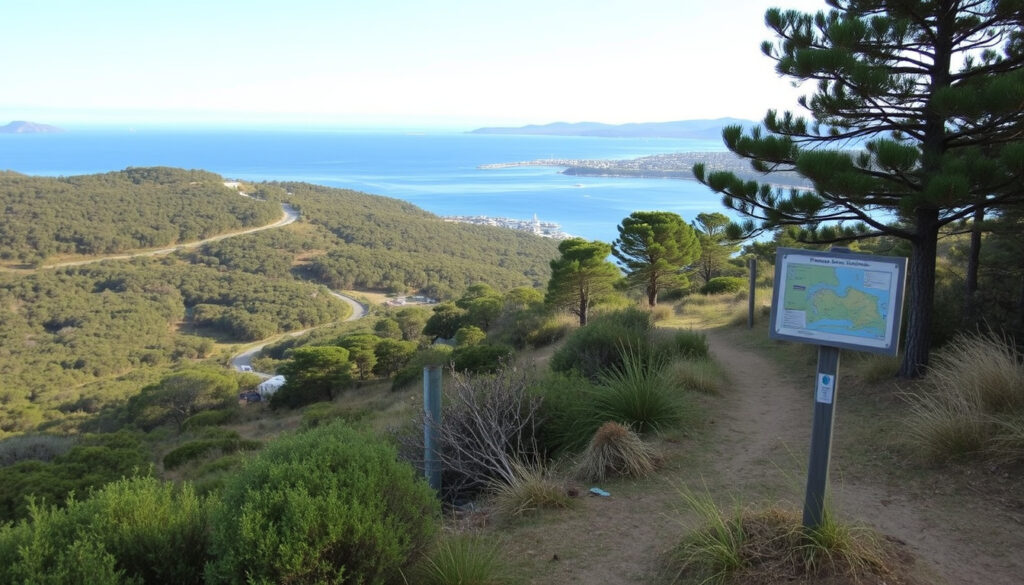
East Harbour Regional Park: Maps, Walks, Camping & More
If you’re in Lower Hutt and craving a proper escape into coastal wilderness, East Harbour Regional Park is closer than you think — with 2,020 hectares spread across three distinct areas that offer everything from gentle bush walks to historic lighthouse views. This guide covers maps, walks, camping, and practical tips so you can plan your visit with confidence.
Size: 2,020 hectares ·
Distinct areas: 3 (Northern Forest, Parangarahu Lakes, Baring Head) ·
Walking trails: 9 ·
Popular picnic spot: Butterfly Creek ·
Notable landmark: Pencarrow Lighthouse
Quick snapshot
- Park comprises three distinct areas: Northern Forest, Parangarahu Lakes, Baring Head (Greater Wellington Regional Council (regional park authority))
- Pencarrow Lighthouse built in 1841 (Wikipedia (user-contributed encyclopedia))
- Butterfly Creek is a popular picnic and camping spot (Wilderness Magazine (New Zealand outdoor publication))
- Exact number of parking spaces at each entrance
- Whether swimming is safe at all designated beaches
- Current condition of some trails after seasonal closures
- Park open daily: 8:00 AM to 6:00 PM (or sunset) (Greater Wellington Regional Council (regional park authority))
- Pencarrow Lighthouse: built 1841, oldest surviving lighthouse in New Zealand (Wikipedia (user-contributed encyclopedia))
- Plan your visit: download park map from GWRC website, check trail conditions, book camping permit if needed (Greater Wellington Regional Council (regional park authority))
Five key facts show what makes this park worth the trip.
| Location | Stretches from Baring Head along east side of Wellington Harbour, near Eastbourne |
|---|---|
| Size | 2,020 hectares |
| Opening hours | Daily from 8:00 AM to 6:00 PM (or sunset, whichever earlier) |
| Entry fee | Free |
| Managed by | Greater Wellington Regional Council |
Where can I find a map of East Harbour Regional Park?
Greater Wellington Regional Council provides a downloadable map on its official park page, along with detailed directions. The park is accessed from multiple points including Eastbourne, Days Bay, York Bay, Lowry Bay, Pt Howard, Wainuiomata Hill Road, and Wainuiomata (Greater Wellington Regional Council (regional park authority)). For a quick digital overview, Komoot (user-generated hiking platform) lists the top 9 hiking trails with interactive maps.
How to get to the park
- From Lower Hutt: drive along the coast through Eastbourne to reach the Northern Forest and Parangarahu Lakes entrances.
- From Wellington: take the State Highway 2 to the Wainuiomata turnoff, then follow signs to Baring Head.
- Public transport: bus services from Wellington to Eastbourne run regularly (check Metlink timetables).
Where to park
- Butterfly Creek: car park off Kowhai Street, Eastbourne.
- Pencarrow area: limited parking near the lighthouse walk start.
- Baring Head: roadside parking available on Coast Road.
The implication: parking is spread across multiple sites, so plan your entry point based on your chosen activity. Arriving early on weekends helps secure a spot at popular areas like Butterfly Creek.
What are the best activities at East Harbour Regional Park?
From bush walking to fishing, the park offers a wide range of recreation across its 2,020 hectares. According to Greater Wellington Regional Council (regional park authority), the park supports walking, hiking, mountain biking, dog walking, horse riding, swimming, hunting, and volunteering.
Walking and hiking
Komoot counts 9 hiking trails in the park, including the popular Butterfly Creek track. The Butterfly Creek walk is 1.66 km each way (about 1 to 1.5 hours return) and graded easy, starting from Kowhai Street off Muritai Road in Eastbourne (Wilderness Magazine (New Zealand outdoor publication)). Trailforks reports 17 mountain bike trails in the park (Trailforks (community trail database)).
Fishing and swimming
Fishing is permitted in the Parangarahu Lakes with a valid freshwater fishing licence from Fish & Game New Zealand (freshwater sports fishing authority). Swimming is possible at designated beaches, though safety conditions vary — Greater Wellington advises checking for signs and hazards before entering the water.
Camping regulations
Camping is allowed at specific sites such as Butterfly Creek and Baring Head, but requires a permit from Greater Wellington. Here is a step-by-step guide to book your campsite:
- Visit the Greater Wellington parks website and navigate to the camping page.
- Select East Harbour Regional Park and choose your preferred site (e.g., Butterfly Creek campground).
- Enter your dates and number of visitors — permit fees apply.
- Complete the online payment and receive your permit via email.
- Print or save the permit to display at the campsite.
The catch: campsite availability is limited, especially during peak summer weekends. Booking well in advance is strongly recommended.
What are the main attractions in East Harbour Regional Park?
Three distinct areas define the park’s character, each with its own appeal. The Northern Forest, Parangarahu Lakes, and Baring Head Ōrua-pouanui offer different landscapes and experiences (Greater Wellington Regional Council (regional park authority)).
Pencarrow Lighthouse
New Zealand’s oldest surviving lighthouse, Pencarrow Lighthouse was built in 1841 (Wikipedia (user-contributed encyclopedia)). It stands at the entrance to Wellington Harbour on the Baring Head peninsula. The walk to the lighthouse follows a coastal track offering views of Cook Strait and the rugged southern coastline.
Parangarahu Lakes
These two freshwater lakes at the south end of Eastbourne are important bird habitats, hosting species like pūkeko and shags. A scenic walking track circles the lakes, and the area is popular for mountain biking along the coast to Pencarrow Lighthouse (Greater Wellington Regional Council (regional park authority)).
Northern Forest
The Northern Forest spans hills from Eastbourne to Wainuiomata and is described by Greater Wellington as featuring towering northern rātā and diverse wildlife. Dense native bush walks here offer shade and birdwatching opportunities away from the coastal winds.
Why this matters: the park delivers three distinct ecosystems in a single trip — coastal, lake, and forest — giving visitors variety without long travel.
What facilities are available at East Harbour Regional Park?
Facilities are kept intentionally basic to preserve the natural character, but key amenities exist at main access points.
Picnic areas (Butterfly Creek)
Butterfly Creek is the most developed picnic spot, with tables and a BBQ stand. Wilderness Magazine (New Zealand outdoor publication) notes it has drawn Wellington walkers for generations as a reliable place for a midday stop.
Toilets and parking
Basic toilet facilities are available at Butterfly Creek, Pencarrow carpark, and Baring Head. Parking is free at all designated areas, but spaces are not marked or counted by the council.
Accessibility
Limited sections of the park are wheelchair accessible. The flat coastal track near Pencarrow Lighthouse offers the easiest access, but most walking trails involve uneven terrain. Visitors with mobility needs should contact Greater Wellington for updated information.
Are dogs allowed at East Harbour Regional Park?
Dogs are welcome but must be kept on a leash on most trails. Greater Wellington Regional Council states that dogs are allowed in the park under control, except in specifically designated wildlife areas near Parangarahu Lakes where they may be restricted to protect bird habitats.
Dog policy
- On-leash on all formed walking tracks.
- Off-leash allowed in some open areas away from wildlife zones.
- Dogs prohibited in fenced bird nesting areas around the lakes.
Camping permits
Camping at any site within the park requires a permit issued by Greater Wellington. Permits can be obtained online through the council’s parks portal. Fire regulations are strict: no open fires are permitted except in designated BBQ stands at picnic areas like Butterfly Creek.
Fire regulations
Greater Wellington prohibits all open fires outside of provided BBQ stands. During summer fire bans, even BBQ use may be restricted — always check the current fire season status before lighting anything.
The trade-off: freedom to explore with your dog comes with responsibility to protect sensitive bird habitats. Campers must balance the backcountry feel with permit requirements and fire safety rules.
Confirmed facts
- Park consists of three distinct areas: Northern Forest, Parangarahu Lakes, Baring Head (Greater Wellington Regional Council (regional park authority))
- Pencarrow Lighthouse built in 1841 (Wikipedia (user-contributed encyclopedia))
- Butterfly Creek is a popular picnic area (Wilderness Magazine (New Zealand outdoor publication))
- 9 walking trails documented on komoot (Komoot (user-generated hiking platform))
What’s unclear
- Exact number of parking spaces at each entrance
- Whether swimming is safe at specific beaches (some may be dangerous)
- Current condition of certain trails (seasonal closures possible)
- Whether all walking trails are open year-round without maintenance gaps
“The park is open to foot traffic at all times.”
— Greater Wellington Regional Council (regional park authority)
“Butterfly Creek has drawn Wellington walkers for generations.”
— Wilderness Magazine (New Zealand outdoor publication)
For Lower Hutt residents and Wellington visitors, the decision is straightforward: East Harbour Regional Park delivers genuine coastal wilderness minutes from the city, but requires advance planning for permits, parking, and trail conditions. Anyone looking for a quick escape into nature has a reliable option — just bring a map, leash, and a sense of adventure.
Frequently asked questions
Can I mountain bike in East Harbour Regional Park?
Yes. Trailforks (community trail database) lists 17 mountain bike trails in the park. Most are multi-use, so watch for walkers.
Is there a visitor center or information kiosk?
No. The park does not have a visitor centre. Information is available online from Greater Wellington Regional Council (regional park authority).
What is the best time of year to visit the park?
Spring and autumn offer mild weather and fewer crowds. Summer is busy at Butterfly Creek, while winter can bring strong coastal winds at Baring Head.
Are there guided tours of Pencarrow Lighthouse?
Not regularly. The lighthouse is open to the public via a walking track. Check Department of Conservation (New Zealand conservation agency) for occasional open days.
Is the park suitable for children and families?
Yes. Easy walks like Butterfly Creek and the coastal track to Pencarrow Lighthouse are family-friendly. Always supervise children near water and cliffs.
Do I need a permit for drone flying in the park?
Yes. Drone use requires permission from Greater Wellington Regional Council. Contact them before flying.
For Wellington residents, East Harbour Regional Park offers the closest coastal wilderness — but without a visitor centre or extensive signage, first-time visitors risk getting lost or disappointed. Downloading the map and checking conditions beforehand turns a potential hassle into a seamless outing.
The park’s minimalist facilities keep it wild and uncrowded, but also mean no cafe, no cell reception in parts, and no rescue services. Adventurous families love it; anyone wanting a manicured park experience should head to Hutt Recreation Ground instead.
Related reading: Walking Tracks Near Me · Auckland Coast to Coast Walk
More related posts
 Too Late Colleen Hoover Synopsis: Full Summary & Ending Explained
 We Wish You a Merry Christmas – History, Lyrics and Origins
 What Is an Enzyme? Definition, Function, Examples & More
 Steinlager Classic 24 Pack: Price, Buy Online & Specs
 John Tamihere Daughter Accident: Facts and Family Truth
 Catherine O’Hara Cause of Death: Pulmonary Embolism
 Latest Samsung Phone 2025: Galaxy S25 Ultra, Prices & Comparisons
 New Build Cleaning Services: Pricing & Checklist