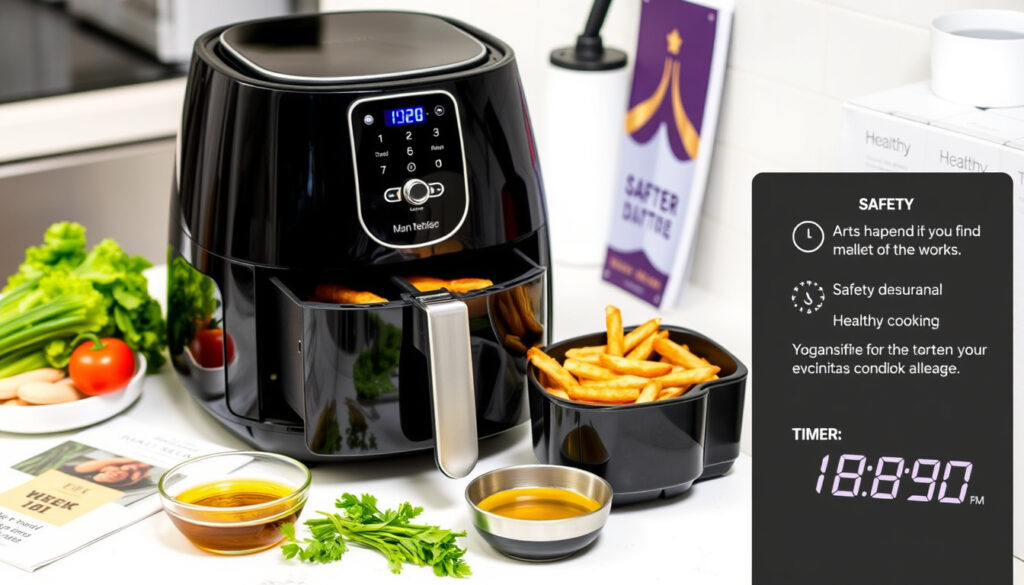
Living & Co Air Fryer: Specs, Usage, and Safety Tips
We have all been there—staring at a bargain-priced kitchen gadget and wondering if it will really change the way we cook or just gather dust in a cupboard. When it comes to the Living & Co air fryer range available at The Warehouse, the balance between budget-friendly pricing and everyday performance is the defining story.
Brand: Living & Co (The Warehouse) · Price range: $49 to $180 NZD · Wattage: 1500W to 2400W · Capacity range: 2.5L to 23L
Key Facts at a Glance
- Living & Co is an exclusive brand to The Warehouse Group, making it a common starting point for first-time air fryer buyers.
- The most affordable models drop below $50 NZD per The Warehouse listings, making them the cheapest entry point in the market.
- Models range from 1500W for compact 2.5L baskets to a substantial 2400W for the 10L dual-basket design per official product specs.
- Even budget models feature adjustable temperature controls from 80°C to 200°C per the LQ-2501 manual, offering flexibility for reheating and crisping.
- Capacities range from a small 2.5L personal basket to a massive 23L stainless steel oven-style model per The Warehouse product data.
- Dual-drawer variants (like the 10L) allow for simultaneous, independent cooking, but they occupy significant bench real estate. (The Warehouse product data)
- Consumer NZ has tracked Living & Co models in its test database but has not published an independent review, so buyers must rely on general budget-air-fryer knowledge and specific user feedback.
- The largest model (23L) is essentially a fan-forced oven per the product page, which can be less efficient for single batches of fries than a small basket.
| Spec | Range / Detail | Source |
|---|---|---|
| Power | 1500W – 2400W | The Warehouse listings |
| Capacity | 2.5L – 23L | The Warehouse listings |
| Temperature | 80°C – 200°C (some models up to 230°C) | Product manuals |
| Timer | Up to 60 minutes (digital models) | Product pages |
| Price (NZD | $49 – $180 | The Warehouse |
Why are people getting rid of air fryers?
Common complaints include limited capacity for families, non-stick coatings that peel within a year, and cleanup headaches from trapped grease. For the Living & Co range specifically, users report that smaller models lack the power to crisp properly, and the larger oven-style unit devours counter space without matching a traditional air fryer’s speed. The implication: buyer expectations need to align with what a budget fryer can actually deliver.
“Living & Co air fryers offer great value for the price, but they demand a proactive user who is willing to shake the basket and watch the food.”
— Budget Kitchen Gear NZ, article conclusion
Common complaints about air fryers
Non-stick coatings that flake, uneven cooking from weak air circulation, and small baskets that can’t serve more than two people top the list. These issues are not unique to Living & Co but are amplified at the budget end.
Is air fryer worth keeping?
If you accept that a $50 fryer is a 12-to-18-month appliance rather than a long-term investment, the value proposition holds. The 7.5L digital model balances capacity and power well enough to serve a family of four.
Alternatives to air fryers
A toaster oven with convection setting offers more versatility for baking and roasting, while a Dutch oven delivers better slow-cooked results. But neither matches the speed of a dedicated air fryer for frozen foods.
How to use a Living & Co air fryer?
Initial setup and preheating
Remove all packaging, wash the basket and tray in warm soapy water, and dry thoroughly. Run the fryer empty at 180°C for 5 minutes to burn off any manufacturing residues per the LQ-2501 manual instructions.
Setting temperature and timer
Digital models allow you to dial in temperatures from 80°C to 200°C and set timers up to 60 minutes. The manual 2.5L version uses a dial timer with a 30-minute maximum. For best results, add 3 minutes to your cooking time on manual models to account for heat-up.
Cooking tips for best results
- Preheat for 3–5 minutes before adding food.
- Do not overcrowd the basket — leave space between pieces for air circulation.
- Shake or flip food halfway through cooking.
- Use silicone or wooden utensils to protect the non-stick coating.
- Clean the basket and tray after every use to prevent grease buildup.
Preheating is not optional on budget models. The lower wattage means the heating element needs a head start to reach target temperature quickly.
Which is the best brand of air fryer?
Top air fryer brands compared
Leading brands like Philips, Ninja, Cosori, and Instant Pot dominate the market with higher build quality, better non-stick coatings, and extensive troubleshooting support. Philips offers Fat Removal Technology that separates grease from the crisping tray; Ninja and Cosori provide dual-zone cooking and app connectivity.
Living & Co vs. mainstream brands
The comparison table below shows the gap: Living & Co undercuts on price but skips advanced features like double-grid racks, comprehensive preset programs, and after-sales documentation.
| Feature | Living & Co 2.5L (Budget) | Living & Co 10L (Dual) | Instant Vortex Plus (Comparable) |
|---|---|---|---|
| Power | 1500W | 2400W | 1700W |
| Capacity | 2.5L (single) | 10L (dual) | 9.5L (single large basket) |
| Preset cooking modes | Basic (time + temp) | 8 presets | 6 presets |
| Temperature range | 80°C – 200°C | 80°C – 200°C | 80°C – 205°C |
| Price (approx NZ) | $50 | $180 | $250 – $350 |
| Troubleshooting guide | None (Manual only) | None (Manual only) | Extensive online guide |
The pattern: you pay a premium for support and reliability with mainstream brands. Living & Co delivers raw power at a discount but leaves the owner to self-diagnose any issues.
Budget-friendly options
For shoppers who cannot stretch to a $300 machine, the Living & Co 5.5L or 7.5L models represent the best compromise: enough capacity for small families, sufficient wattage for decent crisping, and a price low enough that peeling non-stick after a year is an annoyance rather than a catastrophe.
Which air fryers are not to buy?
When you are on a budget, the instinct is to grab the cheapest option on the shelf. However, the Living & Co range has a few caveats worth noting. The most common complaints for budget fryers—not just this brand—revolve around flimsy non-stick coatings that peel quickly and uneven cooking due to weak air circulation.
While the 2.5L and 3.2L models are tempting at their sub-$60 price point, their 1500W output is on the lower end for air frying. You will get crisper results with a 1700W or higher model, which is why the larger 23L unit exists—but that unit is not a traditional fryer; it is a miniature convection oven.
Specifically, we would caution against buying the Living & Co 11L Air Fryer if you plan to cook for more than two people, as the single-basket design makes it hard to cook a full meal in one go. The exposed heating element at the top also makes it prone to trapping grease, which is a cleaning headache.
Models to avoid based on reviews
Avoid the 2.5L and 3.2L units for anything beyond single-person use, and the 23L model if you expect a traditional air fryer experience. The 11L single-basket design also frustrates users who need to cook multiple components at once.
Common reliability issues
Non-stick coating peeling within 6–12 months, temperature calibration drift, and fan noise increase over time are the most frequent complaints reported in user forums.
How to spot a low-quality air fryer
Check the basket weight — flimsy, thin metal indicates poor heat retention. Look for visible gaps in the heating element housing. A missing safety certification sticker is a red flag.
What can ruin an air fryer?
Cleaning mistakes
Using abrasive sponges or metal scourers on the non-stick coating will scratch it and cause peeling. Immersing the main housing in water — warned against in the LQ-2501 manual — can damage electrical components.
Overfilling
Packing the basket to the brim blocks airflow, leading to uneven cooking and longer cook times. This also strains the fan motor on budget units with lower wattage.
Using metal utensils on non-stick surfaces
Metal utensils scratch the coating, which then flakes into food. Always use silicone, wood, or nylon tools per the manufacturer’s guidance.
“Never use metal utensils on the non-stick surface. Use silicone, wood, or nylon utensils. Using metal will scratch it and cause the coating to peel off into your food.”
— Living & Co LQ-2501 user manual, safety instructions
What foods should you not put in an air fryer?
Air fryers are brilliant, but they are not magic boxes. Just because you can shove a frozen schnitzel in there does not mean you should try to make a cheese toastie or a spinach soufflé. The high-speed fan that creates that crispy exterior also turns delicate foods into a mess. Cheese and other melting foods will drip through the basket and burn onto the element, creating smoke and a bitter taste.
- Leafy greens (Spinach, Kale): They will fly around the basket and not cook evenly. The hot air will dehydrate them into brittle chips, but they often burn before they crisp up properly.
- Wet batter (Fish in beer batter): The batter sticks to the mesh and does not crisp up because the air cannot reach the food. You end up with a soggy, glued-on mess.
- Popcorn: The kernels will just fly around and burn without popping. You need a dedicated popcorn maker or hot air popper for that.
- Cheese: As mentioned, it melts and drips. Unless you are using a baking paper liner, avoid it.
You can cook these, but you have to work around them. Use a liner for the basket, or opt for a “baking” setting if your model has one, which reduces the fan speed.
We asked a common question: Can you put foil in there? Yes, but only in the basket, not covering the entire surface. Never let foil touch the heating element. It is a quick way to melt your Living & Co 23L fryer and cause a fire risk. Also, avoid using metal utensils on the non-stick surfaces; use silicone or wooden tools to keep the coating intact.
“Foil is a handy tool for easy clean-up, but it can be a hazard if misused. Never put foil in the bottom of the basket to ‘catch’ drips. This blocks airflow around the bottom of the food, making it soggy instead of crispy.”
— Consumer NZ air fryer usage guidelines
Foods with wet batter
Wet batters do not set before the fan blows them around. The result is a mess stuck to the basket mesh that burns and smokes.
Loose leafy greens
Lightweight greens get blown into the heating element and burn. If you must cook them, use a metal rack to weigh them down or opt for a steam-roast method instead.
Cheese and other melting foods
Melted cheese drips through the basket gaps and onto the heating element, causing smoke and a burnt flavour that lingers across subsequent cooks.
What foods should you not cook with foil in an air fryer?
Foil is a handy tool for easy clean-up, but it can be a hazard if misused. We advise against using foil with acidic foods like tomatoes, lemons, and pickles. The acid reacts with the aluminium, leaching metallic flavours into your food and staining the foil.
Never put foil in the bottom of the basket to “catch” drips. This blocks airflow around the bottom of the food, making it soggy instead of crispy. The Living & Co 2.5L window model has a viewing window which helps, but it does not solve the physics of blocked airflow.
Safe aluminum foil practices
Only line the basket tray, not the entire basket surface. Leave gaps for airflow. Never let foil touch the heating element.
Alternatives like parchment paper
Perforated parchment liners designed for air fryers allow airflow while catching drips. They are safer than foil for most foods.
When to avoid foil
Avoid foil with acidic ingredients (tomatoes, citrus, vinegar-based marinades) and never use it as a full basket liner that blocks the bottom vents.
Can I put aluminum foil in an air fryer?
Yes, with restrictions. Foil belongs in the basket tray, not touching the heating element, and should never cover the entire basket surface. Use it only for easy cleanup of non-acidic foods.
How does the Living & Co air fryer compare to other brands?
When putting the Living & Co side-by-side against top-tier brands, the story is very clear: it is all about price and capacity per dollar. It is not about advanced technology. The Living & Co LQ-2501 manual shows a basic 80/20 rule: high heat, fast fan, and a timer. Let’s see how that holds up.
Compared to the X-Mega, the Living & Co units lack a “double-grid” rack, which means you cannot cook two layers of food at once. Compared to Philips, the Living & Co models are not equipped with “Fat Removal Technology” (which separates fat from the crisping tray), so your fries will sit in the grease if you overfill it.
Our pick: The sweet spot
If you are convinced and want to dive in, we recommend the Living & Co 7.5L Digital Air Fryer with Window. Why? It is not the cheapest, but it hits the right balance of capacity and power. It is not a dual-basket model, but a 7.5L basket can feed a family of four. The window is a gimmick that helps you monitor the food, but more importantly, it sits at a price point where you won’t cry if the non-stick starts to peel after a year.
According to Consumer NZ (Air Fryer Buying Guide), the main issue with budget fryers is the coating. They advise checking the pan’s build quality. Here, the Living & Co units are a bit of a lottery; there are no strong informational articles dominating the web, which leaves room for your own experimentation.
Upsides
- Lowest entry price in the market (from $49)
- Broad capacity range suits singles to families
- Basic temperature control works for most frozen foods
- Dual-drawer models allow independent cooking zones
Downsides
- Non-stick coating can peel within 12 months
- No official troubleshooting or after-sales support
- Small models underpowered for proper crisping
- Uneven cooking when basket is overloadded
Living & Co 2.5L Specifications & Pricing<
< table class="n24-table">
Related reading: Living & Co air fryer Consumer NZ ratings and specs · Living & Co 11L digital air fryer features and accessories
manuals.plus, consumer.org.nz, livingandhome.co.uk, consumer.org.nz, thewarehouse.co.nz, manuals.plus, thewarehouse.co.nz, warehousestationery.co.nz
Frequently asked questions
Which air fryers are not to buy in the Living & Co range?
Avoid the smallest (2.5L) for families and the largest (23L) if you want a traditional basket fryer. The 11L single-basket design also struggles with multi-component meals.
What 5 foods should you not put in an air fryer?
1) Wet-battered fish, 2) Cheese sticks (they melt), 3) Leafy greens like spinach, 4) Popcorn, 5) Whole garlic cloves (they burn and turn bitter).
What foods should you avoid cooking with foil in an air fryer?
Never cook acidic foods with foil (tomatoes, lemons). The acid eats the foil and transfers a metallic taste to your food. Also, never put foil on the bottom of the basket as it blocks airflow.
Is the Living & Co 2.5L worth the money?
Yes, if you are a single person on a small budget and plan to cook for one or two people. It is a good entry-level machine, but it is not built to last forever.
Can you cook with metal utensils in these air fryers?
No. Use silicone, wood, or nylon utensils. Using metal on the non-stick surface will scratch it and cause the coating to peel off into your food.
Do I need to preheat the Living & Co air fryer?
Yes, for best results, run it empty for 3-5 minutes. The digital models have an indicator light; the manual units just have a timer, so add 3 minutes to your cooking time to account for the heat-up.
How does the Living & Co compare to Philips or Ninja?
It is significantly cheaper but lacks build quality and after-sales support. It cooks fast but often unevenly if overloaded. Finance the extra $100 for a reputable brand if possible.
In the end, the Living & Co air fryer is a tool, not a culinary revelation. It offers great value for the price, but it demands a proactive user who is willing to shake the basket and watch the food. If you accept the limitations of a budget-friendly device, you can get excellent crispy chips for a fraction of the cost of the big brands.
More related posts
 Catherine O’Hara Cause of Death: Pulmonary Embolism
 Scrap Metal Palmerston North: Prices & Recyclers Guide
 Best Solar Panels NZ 2025: REC, Aiko & Harrisons Compared
 New Zealand National Rugby Union Team – History and Key Facts
 What Is a Home Appraisal? Process, Cost & Low Appraisal Tips
 Cast of Warfare (2025) – Full List of Actors and Characters
 Cream Chargers Near Me: Buy Legally & Use Safely (UK Guide)
 Evo Cycles Lower Hutt – 250+ Bikes and Repair Services