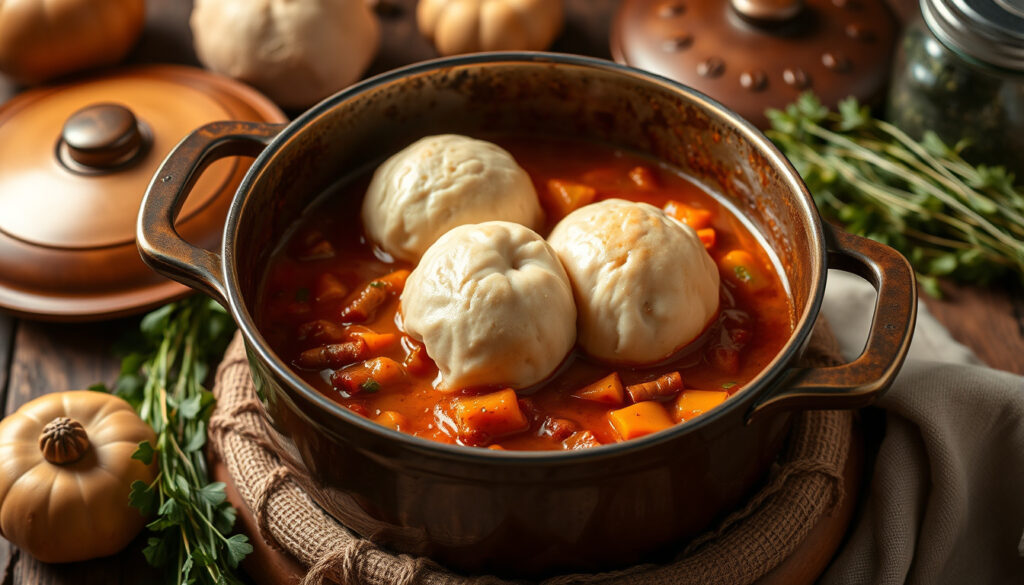
How to Make Dumplings: Fluffy Stew Dumpling Easy Recipe
If you’re standing in the kitchen wondering whether to reach for plain flour or self-raising, you’re not alone — that’s the exact question that divides home cooks. The answer depends on whether you want light, puffy dumplings or a firmer, old-fashioned bite, and the choice of fat (suet or butter) and liquid (water or milk) shifts the texture further.
Core ratio: 2 parts flour to 1 part suet/butter, plus liquid ·
Stew timing: Add with about 30 minutes left ·
No-suet dough: Flour, butter, and water ·
Fluffy flour: Self-raising flour ·
Plain flour fix: Add baking powder ·
Filled dumpling finish: Pan-fry, then steam under a lid with a thin water layer
Quick snapshot
- Self-raising flour contains baking powder and gives a lighter, fluffier dumpling (Sudden Lunch! (home cooking blog)).
- Stew dumplings are traditionally made with flour, fat (suet or butter), and liquid (Good Housekeeping UK (established home magazine)).
- Add stew dumplings with about 30 minutes left so they cook through without becoming soggy (Sudden Lunch!). (Sudden Lunch! (home cooking blog))
- The same search term can refer to filled East Asian dumplings, which use a different wrapper-and-filling method (Woks of Life (Chinese cooking specialist)).
- Whether a user searching “dumplings” wants British stew dumplings or filled East Asian dumplings depends on context (Woks of Life).
- Whether milk or water produces the better-tasting dumpling depends on the recipe and desired texture (Good Housekeeping UK; Yeo Valley Organic).
- What “best recipe” means varies by region, available fat, and whether a soft or firm dumpling is preferred (Church Times; Hint of Helen).
- Drop dumplings onto simmering stew and cover — cook for about 20 minutes (Sudden Lunch!). (Iowa Sue (US home cook blog))
- Some recipes recommend 10–15 minutes covered over medium-low heat (Iowa Sue (US home cook blog)).
- Remove lid for final few minutes to firm tops (Sudden Lunch!). (Iowa Sue (US home cook blog))
- Try the suet version for a classic rich dumpling, or the no-suet shortcut with butter and water (Church Times; Hint of Helen).
- Experiment with added herbs, cheddar, or leeks (Waitrose & Partners).
- For filled dumplings, master the pan-fry-then-steam technique (Woks of Life).
Six key facts that summarise the essentials of dumpling-making, from the core ingredient ratio to the finishing technique for filled dumplings.
| Fact | Detail |
|---|---|
| Core ingredients | Flour, fat (suet or butter), and water or milk |
| Stew timing | About 30 minutes before the stew is done |
| Fluffy flour choice | Self-raising flour |
| No-suet shortcut | Flour, butter, and water |
| Plain flour alternative | Plain flour plus baking powder |
| East Asian dumpling finish | Pan-fry, add water, cover, steam until evaporated |
How do I make fluffy dumplings for stew?
The secret to light, airy dumplings is a combination of the right flour, gentle handling, and proper steaming on top of the stew. Here’s how to nail each part.
Stew timing: when to add dumplings
Most recipes agree: place the dumplings on the bubbling stew about 30 minutes before the stew is finished (Sudden Lunch! (home cooking blog)). Drop them gently onto the surface — not submerged — so they steam rather than boil. A covered pot traps the steam, which helps them puff up.
If you add them too early, they can disintegrate; too late, and the centres stay doughy.
Covered steaming for a light rise
Keep the lid on tightly. A typical cook time is 20 minutes covered (Sudden Lunch!), though some bloggers recommend 10–15 minutes over medium-low heat (Iowa Sue (US home cook blog)). Towards the end, crack the lid for a minute or two to firm the tops.
Fixing squishy or doughy centers
Squishy dumplings usually come from one of three mistakes: undercooking, too much liquid in the dough, or overworking the dough. Keep the dough soft and even slightly sticky (No Bread Is an Island (personal blog)). Overhandling develops gluten, which makes them dense.
If your dumplings are still gluey inside after the suggested time, the stew may be too cool. Ensure a gentle simmer, not a bare bubble, for the full covered period.
The pattern: covered steam, not boiling liquid, is what makes the difference between a puffed dumpling and a doughy lump.
Should I use plain or self-raising flour for dumplings?
This is the most common fork in the road when making dumplings. The short answer: self-raising gives fluffiness; plain gives a firmer, more traditional bite — unless you add baking powder.
When self-raising flour wins
Self-raising flour already contains baking powder, which releases carbon dioxide during cooking and creates a light, puffy interior. It’s the standard choice in British-style recipes (Good Housekeeping UK (established home magazine)).
When plain flour works
Plain flour makes a denser, more old-fashioned dumpling. If that’s the texture you want, go ahead — or add your own leavening. A common conversion: 225g plain flour plus 1 rounded teaspoon baking powder to match 225g self-raising (Sudden Lunch!).
Waitrose even uses a hybrid: equal parts bread flour and self-raising flour with extra baking powder in their Cheddar dumpling stew (Waitrose & Partners (UK supermarket)).
How to make a self-raising substitute
No self-raising in the cupboard? Mix plain flour with baking powder and a pinch of bicarbonate of soda, as Jamie Oliver suggests (Jamie Oliver (celebrity chef and cookbook author)). For 125g plain flour, add 1½ tsp baking powder and ½ tsp bicarb.
Two flour choices, one pattern: self-raising is the path to fluffiest, plain is the path to firmer — and you can cross from plain with a simple pantry addition. The implication: the flour decision is really a texture decision. If you want cloud-like dumplings, don’t skip the self-raising or the baking powder.
A household with only plain flour isn’t stuck with hockey-puck dumplings. With two teaspoons of baking powder per cup of flour, you can still get that light rise that turns a stew into a meal.
What are the three ingredients needed to make homemade dumplings?
Stripped to essentials, stew dumplings need just flour, fat, and liquid. But the choices within each category change the result.
Flour, fat, and liquid
The classic trio: self-raising flour, cold butter, and a splash of water or milk (Good Housekeeping UK). Suet is the traditional fat, giving a rich, tender crumb (Church Times (Anglican weekly, cookery column)).
The no-suet version: flour, butter, water
If suet is hard to find, butter works well. Recipes like Hint of Helen’s use only flour, butter, and water for a quick weeknight version (Hint of Helen (home cooking blog)).
Why milk or water changes texture
Milk adds a slightly richer flavour and a softer crumb. Water yields a cleaner, firmer dumpling. For a tangy twist, Yeo Valley uses yogurt as the liquid (Yeo Valley Organic (dairy producer, UK)).
The trade-off: water is the neutral base; milk gives softness; yogurt adds richness and a gentle acidity that complements stews.
How to make old fashioned dumplings?
“Old fashioned” usually means suet-based dumplings, dropped by spoonfuls onto a simmering stew straight from British grandmothers’ kitchens.
Traditional suet dumplings
Mix self-raising flour, shredded suet, salt, and water into a soft dough. Drop tablespoon-sized lumps onto the stew, cover, and steam for 20 minutes (Church Times).
Plain flour vs self-raising in old recipes
Many old recipes call for plain flour and suet, which makes a denser dumpling. The shift to self-raising is a 20th-century convenience that lightened the texture. If you want authentic heft, use plain; for a more modern puff, use self-raising.
How to drop them onto stew
Don’t roll perfect balls — the charm of old-fashioned dumplings is their irregular, craggy shape. Use two spoons to scoop and drop, letting the dough rest lightly on the stew’s surface.
How to make dumplings with plain flour and milk?
This combo is a common pantry option. The result is firmer than self-raising, but still satisfying.
Plain flour and milk dough
Mix plain flour, a pinch of salt, cold butter (or suet), and enough milk to form a soft dough. The milk adds flavour and tenderness. Without a leavener, the dumpling will be dense but not tough.
Adding a leavener
To lighten the texture, add 2 tsp baking powder per 150g plain flour (Sudden Lunch!). This converts plain flour into an effective self-raising substitute.
When to use this version
Use plain flour and milk when you want a sturdy dumpling that holds its shape in a long-simmered stew, or when you’re out of self-raising and suet.
Can I make dumplings with just flour and water?
Yes — but with honest expectations about texture.
Yes, but expect a dense texture
Flour and water alone produce a chewy, dense dumpling. One recipe for self-raising flour with only water and salt works because the baking powder still provides some lift (No Bread Is an Island (personal blog)). Without any leavener, you’re essentially making a boiled dough lump.
Best texture for flour-and-water dumplings
To make them edible, keep the dough very soft and drop small spoonfuls. Cook them in a well-flavoured broth so they absorb some seasoning.
When it makes sense
This is an emergency option — when the cupboards are bare except for flour and water. For any planned dumpling-making, include at least a little fat or baking powder.
Three ingredients can make a dumpling, but the quality improves enormously with the right flour type and a fat source.
Comparison: Self-raising vs plain flour for dumplings
One decision, two outcomes: the table below shows how the flour choice affects rise, texture, and ease of making.
| Aspect | Self-raising flour | Plain flour |
|---|---|---|
| Rise | High, puffy (built-in leavener) | Minimal unless baking powder added |
| Texture | Soft, cloud-like | Firm, dense, old-fashioned |
| Best for | Fluffy stew dumplings | Firm dumplings, herb-studded versions |
| Pantry requirement | Self-raising flour only | Plain flour + baking powder (or accept dense) |
| Conversion trick | None needed | Add 2 tsp baking powder per 150g flour (Sudden Lunch!) |
The pattern: if you want puff, choose self-raising or add baking powder; if you want bite, plain flour is enough.
Step-by-step: how to make classic stew dumplings
Follow these steps for a reliable batch of light, fluffy dumplings every time.
- Mix dry ingredients: In a bowl, combine 200g self-raising flour and ½ tsp salt.
- Rub in the fat: Dice 100g cold butter (or use 100g suet) and rub into the flour until it resembles breadcrumbs.
- Add liquid: Pour in 100ml cold water (or milk) and mix with a fork until a soft, slightly sticky dough forms. Don’t overmix.
- Shape: Divide the dough into 8–12 pieces, roughly shaping each into a ball. Keep your hands lightly floured.
- Drop onto stew: Bring the stew to a gentle simmer. Drop the dumplings on top, not submerged.
- Cover and cook: Put the lid on and cook for 20 minutes without lifting. The dumplings should double in size.
- Optional crisp: Remove the lid for the last 2 minutes to crisp the tops (Sudden Lunch!).
- Serve: Spoon out dumplings with the stew. They’re best fresh but can be reheated.
If using a filled East Asian dumpling method (potstickers), the finish is different: pan-fry the dumplings in oil, then pour in a thin layer of water, cover, and steam until the water evaporates (Woks of Life (Chinese cooking specialist)).
Pros and cons: suet vs no-suet dumplings
Upsides
- Traditional rich flavour and tender texture
- Available in UK supermarkets as Atora suet
- Works in both sweet and savoury dumplings
- Vegetable suet option for plant-based diets
Downsides
- Suet can be hard to find outside UK/Ireland
- High saturated fat content
- Requires cold handling (can melt if hands are warm)
- Some people dislike the aftertaste
- Butter-based dough is simpler for many home cooks
The takeaway: suet is the traditional route with the richest crumb, but butter and water make a serviceable dumpling for most home kitchens.
Expert perspectives on dumpling technique
“Place the dumplings on top of the stew when it has about 30 minutes to go, cover with a lid, and simmer until they have risen and are firm to the touch.”
“You can make easy dumplings without suet using only flour, water, and butter — they come out light if you use self-raising flour.”
Hint of Helen (home cooking blog)
“For crisp-bottomed dumplings, pan-fry them in a little oil, then pour in a thin layer of water, cover, and steam until the water has evaporated.”
Woks of Life (Chinese cooking specialist)
“A suet dumpling with yogurt instead of water gives a lighter, tangier result that pairs beautifully with rich stews.”
Yeo Valley Organic (dairy producer, UK)
Four experienced voices, one consensus: timing and steam are the backbone of good dumplings, whether you go traditional suet or modern butter.
Why the right choice matters
Fluffy or firm, suet or butter, self-raising or plain — the dumpling you choose changes the character of your stew. A light, puffy dumpling soaks up broth at the edges; a dense one adds texture. The key is understanding the trade-offs: more fat equals more flavour and tenderness; more leavening equals more rise. And the simplest rule of all — use self-raising for fluffiness, plain flour plus baking powder for a middle ground, and plain alone only when you have no other option.
For anyone cooking a stew for the family, the choice is clear: reach for self-raising flour, cold butter, and a splash of water, drop them on with 30 minutes left, and don’t lift the lid. This gives home cooks the fastest route to dumplings that taste like they took an hour.
Related reading: How to make dumplings for stews and soups · How to make dumplings
laurenscravings.com, fyf20quid.co.uk, hintofhelen.com, easycheesyvegetarian.com
Frequently asked questions
Do dumplings need eggs?
No. Traditional stew dumplings use flour, fat, and liquid — no eggs needed. Eggs are common in filled East Asian dumpling wrappers, but not for British-style stew dumplings.
How long do dumplings take to cook in a stew?
About 20 minutes covered, plus 2 minutes uncovered to firm the tops. Add them when the stew has roughly 30 minutes left so they finish together (Sudden Lunch!).
Can I make dumpling dough ahead of time?
You can make the dough up to 2 hours ahead if kept covered in the fridge. The baking powder starts reacting, so any longer and the rise may be weaker. Best to shape and drop just before cooking.
Why do my dumplings fall apart in the stew?
The dough is likely too wet. Reduce the liquid slightly, or handle the dough less. Also ensure the stew is simmering gently — a violent boil can break them apart.
Can I freeze uncooked dumplings?
Yes. Freeze them on a tray, then bag. Drop frozen dumplings directly onto simmering stew, adding 5–10 minutes to the cooking time. Do not thaw first — they’ll become sloppy.
Can I make dumplings in a slow cooker?
Yes, but add them with about 45 minutes left on high (or 1 hour on low). The slow cooker creates more condensation, so you may get softer, less defined dumplings. Keep the lid on.
More related posts
 Bitcoin Price USD Live – Live BTC Price & Market Stats
 Top Shares to Buy Now: Trending UK/US Stocks & Picks
 Translate English to Gujarati: Free Tools Compared
 Saturday Lotto Results NZ Tonight Live – Official Draw
 Cost of NZ Passport 2025: Fees, Renewal & Application Guide
 Royal Canin Cat Food: Vet Insights and Cost Analysis
 How Is Gold Formed? From Stellar Explosions to River Deposits
 Zenless Zone Zero Characters – Full List, Tiers and Details