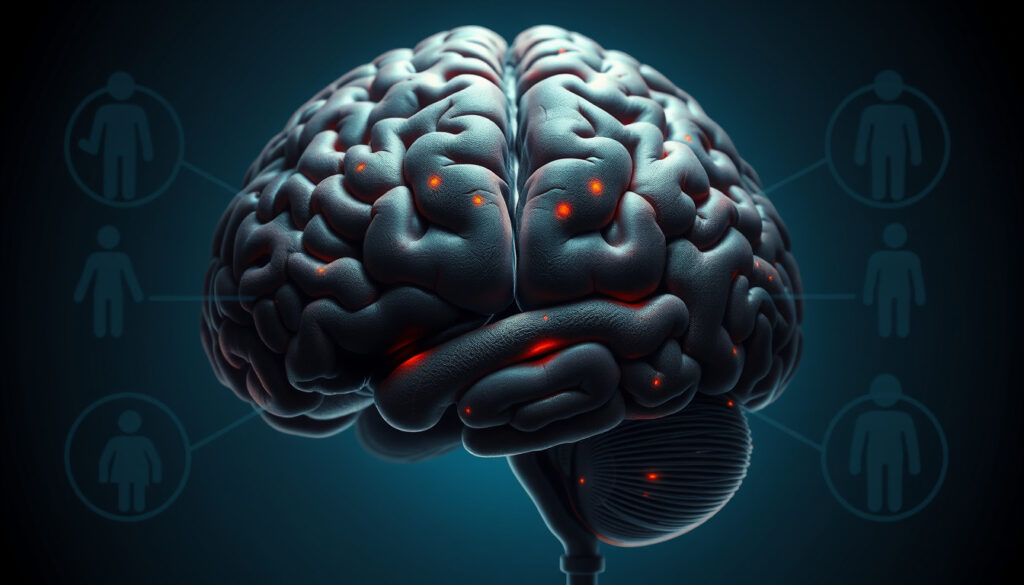
What Is Parkinson’s Disease? Symptoms, Causes & Stages
Most people first notice Parkinson’s when a hand starts trembling — a small, almost dismissible change. But behind that tremor, the brain is quietly losing a chemical messenger it desperately needs. Understanding how this unfolds, from barely noticeable early signs to the more demanding later stages, helps patients and families prepare for what’s actually ahead. Researchers have mapped out a roughly 2% annual decline in motor function, though the pace varies dramatically between individuals.
Primary Impact: Movement disorder of the nervous system ·
Key Mechanism: Damages dopamine-producing neurons ·
Main Symptoms: Tremor, stiffness, slow movement ·
Progression: Worsens over time ·
Classification: Progressive neurological disorder
Quick snapshot
- Dopamine neuron damage in substantia nigra (Cleveland Clinic)
- Movement symptoms include tremor, rigidity, bradykinesia (Mayo Clinic)
- 5 Hoehn and Yahr stages define progression (Massachusetts General Hospital)
- Exact genetic and environmental triggers remain undefined (Cleveland Clinic)
- Why progression rates differ so widely between patients (Cleveland Clinic)
- Whether disease-modifying treatments can fully halt progression (Cleveland Clinic)
- Non-motor symptoms can precede diagnosis by decades (La Jolla Institute)
- Motor fluctuations emerge 5-10 years post-diagnosis (Parkinson’s Foundation)
- Postural instability typically develops after roughly 10 years (Parkinson’s Foundation)
- No cure exists, but treatments manage symptoms (Cleveland Clinic)
- Exercise and lifestyle changes may slow progression (Massachusetts General Hospital)
- Research continues on disease-modifying therapies (Cleveland Clinic)
The Hoehn and Yahr scale organizes Parkinson’s into five distinct stages, each marking a measurable shift in disability and care needs. The table below captures the key milestones that neurologists track as the disease advances.
| Stage | Symptoms | Disability level |
|---|---|---|
| Stage 1 | Symptoms on one side only | No functional disability |
| Stage 2 | Bilateral symptoms | No balance impairment |
| Stage 3 | Bilateral symptoms with falls | Mild to moderate disability, still independent |
| Stage 4 | Severe disability | Can stand or walk alone with assistance |
| Stage 5 | Confined to bed or wheelchair | Full assistance required |
What are the very early signs of Parkinson’s disease?
Parkinson’s announces itself long before the characteristic tremor. The prodromal phase — the period before motor symptoms appear — can stretch across decades, during which non-motor signs quietly accumulate. Loss of smell, chronic constipation, and REM sleep behavior disorder (acting out dreams) frequently appear years before diagnosis.
When motor symptoms do arrive, they often start subtly. Asymmetric bradykinesia and resting tremor on one side are typical first indicators, according to Mass General Brigham. Micrographia — unusually small, cramped handwriting — is another common clue that gets overlooked.
Tremor as first indicator
The tremor that most people associate with Parkinson’s typically begins in the fingers, thumb, or hand, and it happens at rest rather than during intentional movement. This “pill-rolling” tremor (named for the gesture of rolling a pill between thumb and fingers) is often the symptom that finally prompts someone to see a doctor.
Subtle changes in movement
Beyond tremor, early movement changes include a general slowing down — not just physical speed but also a reduction in automatic movements like blinking or swinging arms while walking. Posture may gradually become more stooped, and facial expressions can flatten, a phenomenon sometimes called “masked facies.”
Non-movement signs
Depression often appears as one of the first non-motor symptoms, which makes early diagnosis challenging since it’s easily attributed to life circumstances rather than neurological disease. Dizziness from orthostatic hypotension (a drop in blood pressure when standing) can also signal early Parkinson’s.
The implication: Early recognition depends on connecting seemingly unrelated symptoms. Patients who mention persistent constipation or lost smell alongside new movement complaints give neurologists critical diagnostic clues that those symptoms alone wouldn’t provide.
The Michael J. Fox Foundation is funding international research tracking people with possible early non-motor symptoms. Participants with REM sleep behavior disorder face a particularly elevated long-term risk of developing Parkinson’s.
What causes Parkinson’s disease?
Parkinson’s disease stems from the progressive loss of dopamine-producing neurons in a brain region called the substantia nigra. Dopamine acts as a chemical messenger coordinating smooth, controlled movements. When roughly 60-80% of these neurons die, the classic motor symptoms emerge.
The cellular signature of Parkinson’s is the Lewy body — an abnormal cluster of alpha-synuclein protein that accumulates inside neurons. These clumps first develop in the brainstem, which explains why non-motor symptoms like constipation and sleep disruption appear years before movement problems, according to APDA.
Main reason for Parkinson’s
No single cause explains most cases. Mayo Clinic researchers note that loss of norepinephrine — another neurotransmitter affecting blood pressure regulation and other autonomic functions — contributes to symptoms beyond movement difficulties. Most cases are idiopathic (no identifiable cause), though genetic mutations account for roughly 10-15% of diagnoses, particularly in younger patients.
Role of dopamine neurons
Dopamine neurons in the substantia nigra communicate with the striatum, another brain region involved in movement planning. When this pathway degrades, signals become disrupted, causing the characteristic slowness and rigidity. The brain can initially compensate for neuron loss, which is why symptoms appear gradually rather than suddenly.
Genetic and environmental factors
Environmental exposures — pesticides, head trauma, rural living — have been linked to higher Parkinson’s risk in some studies. Conversely, caffeine consumers and tobacco users show somewhat lower rates in epidemiological data. However, these associations don’t establish causation and may reflect confounding factors.
The catch: Even with substantial research, the precise sequence of events that triggers neuron death in most patients remains unknown. This limits prevention strategies and explains why current treatments focus on symptom management rather than stopping disease progression.
What are the three main symptoms of Parkinson’s?
The cardinal triad of Parkinson’s motor symptoms — tremor, rigidity, and bradykinesia — represent the hallmark features neurologists look for during examination. These three symptoms, particularly their asymmetric presentation in early stages, help distinguish Parkinson’s from other movement disorders.
Tremor
Resting tremor, typically 4-6 Hz frequency, is the most recognizable symptom. It usually begins unilaterally in the hand or foot and may decrease during intentional movement. While prominent and distressing to patients, tremor alone doesn’t reliably predict disease severity or progression rate.
Stiffness
Rigidity manifests as increased muscle tone, creating resistance when a clinician tries to flex or extend a limb. Characteristic “cogwheel rigidity” — a ratchety quality to passive movement — reflects the underlying basal ganglia dysfunction rather than true spasticity seen in other neurological conditions.
Slow movement
Bradykinesia, the slowness that defines Parkinson’s, encompasses reduced movement speed, diminished automatic movements, and delayed reaction times. Mayo Clinic notes that bradykinesia is often the most disabling symptom for patients, affecting everything from buttoning shirts to walking.
Tremor is what brings most patients to the doctor, yet it has minimal impact on functional ability. Bradykinesia, which patients often describe as “just feeling slow,” is actually the symptom most strongly linked to disability and reduced quality of life.
What is the life expectancy of someone with Parkinson’s?
Parkinson’s itself is not considered fatal, but the complications it causes can shorten lifespan. Most people with Parkinson’s have a near-normal life expectancy, particularly when diagnosed at younger ages. Young-onset Parkinson’s, for example, progresses much slower — sometimes taking decades to reach advanced stages compared to faster decline in older patients.
Research from PMC documents an annual motor disability progression rate of roughly 2%. Importantly, progression moves faster during the prodromal phase and early after diagnosis, then settles into a steadier rate. One-third of patients remain in stages 1-2 for up to 10 years before advancing.
Untreated progression
Leaving Parkinson’s untreated allows symptoms to accumulate unchecked. Motor complications develop sooner without medication management. Non-motor symptoms — cognitive decline, swallowing difficulties, urinary problems — also progress more rapidly without intervention. Quality of life deteriorates substantially compared to treated patients.
Final stages before death
Stage 5 represents complete immobility — bed or wheelchair bound with full assistance needed for all activities. Stage 3, marked by the onset of falls, is a significant milestone because it correlates with reduced quality of life, according to Stanford Parkinson’s Blog. Postural instability typically develops after roughly 10 years.
Is Parkinson’s deadly?
Directly, no — neurons dying from Parkinson’s don’t immediately threaten life. Indirectly, complications like aspiration pneumonia (from swallowing difficulties), injuries sustained during falls, or cardiovascular events related to autonomic dysfunction contribute to mortality. Many patients never reach stages 4-5, dying from unrelated causes before their Parkinson’s progresses that far.
The implication: Survival with Parkinson’s increasingly reflects how well complications are managed rather than the disease itself. Fall prevention, dysphagia monitoring, and cardiac care become as important as dopamine-focused treatment in advanced stages.
What organ is most affected by Parkinson’s?
Parkinson’s is fundamentally a brain disorder, but its effects radiate throughout the nervous system. The substantia nigra, located in the midbrain, bears the earliest and most concentrated damage. However, the disease process extends beyond movement control to affect autonomic, cognitive, and psychiatric functions.
Brain regions involved
While the substantia nigra gets primary attention, Lewy pathology spreads through the nervous system over time. The brainstem, limbic system, and eventually cortical regions become involved, explaining why dementia develops in roughly 30-40% of long-term Parkinson’s patients. The enteric nervous system (governing gut function) is affected early, accounting for constipation and other GI symptoms.
Nervous system impact
Beyond dopamine, Parkinson’s involves loss of norepinephrine from neurons in the sympathetic nervous system, according to Mayo Clinic. This explains blood pressure dysregulation, bladder dysfunction, and other autonomic symptoms. The pattern of involvement helps explain why non-motor symptoms often precede and sometimes overshadow motor complaints.
Who is most likely to get it
Age is the strongest risk factor — most diagnoses occur after 60, with risk increasing substantially each decade. Men outnumber women by roughly 1.5 to 1. Diagnosis before age 50 qualifies as young-onset Parkinson’s, representing roughly 5-10% of cases. Family history increases risk modestly, though most cases occur sporadically without clear inheritance patterns.
“Parkinson’s is not just a movement disorder,” said Dr. Shprecher of Banner Health. “Patients and families need to understand that non-motor symptoms — sleep problems, depression, constipation — often precede obvious motor symptoms by years or even decades.”
Stage 3 represents a significant milestone because it is associated with a reduced quality of life. Once falls begin, patients face increased injury risk and often require mobility aids or increased caregiver support.
— Dr. Killoran, Stanford Parkinson’s Blog
For patients and families navigating a Parkinson’s diagnosis, understanding the disease’s trajectory — from those subtle early signs to the challenges of advanced stages — fundamentally changes how they approach treatment decisions and care planning. The annual 2% motor decline rate isn’t a death sentence but a planning parameter: it means that exercise interventions, medication timing, and fall-prevention strategies today determine independence levels years from now.
What we know — and what’s still uncertain
Confirmed
- Dopamine neuron damage causes core symptoms
- 5 distinct stages on Hoehn and Yahr scale
- Non-motor symptoms can precede diagnosis by decades
- Exercise and lifestyle may slow progression
- No cure exists; treatment manages symptoms
Unclear or under study
- Exact triggering mechanisms in idiopathic cases
- Why progression rates vary so widely between patients
- Whether alpha-synuclein spreading can be halted
- Optimal lifestyle interventions beyond exercise
- How to predict which patients will develop dementia
Related reading: Heart Attack Symptoms in Women · Carpal Tunnel Syndrome Symptoms
Parkinson’s manifests through tremors and stiffness that intensify over stages, as this overview on symptoms, causes and life expectancy further illuminates alongside life expectancy insights.
Frequently asked questions
How to avoid getting Parkinson’s disease?
No guaranteed prevention exists, but regular aerobic exercise — particularly activities challenging balance and coordination — shows the strongest evidence for risk reduction. Environmental toxin avoidance and Mediterranean-style dietary patterns have been associated with lower risk in observational studies, though causation remains unproven.
What is the main reason for Parkinson’s?
The main reason is progressive loss of dopamine-producing neurons in the substantia nigra, but why this happens varies by patient. Most cases are idiopathic. Genetic mutations account for roughly 10-15% of diagnoses, particularly in younger people. Environmental factors contribute but remain incompletely defined.
Who is most likely to get Parkinson’s disease?
Age is the dominant risk factor — most diagnoses occur after 60. Men are affected roughly 1.5 times more often than women. Family history increases risk modestly. Young-onset cases (before 50) represent about 5-10% of diagnoses and often have different progression patterns.
What are the final stages of Parkinson’s before death?
Stage 5 means complete immobility — bed or wheelchair bound with full care needs. Before this stage, Stage 4 involves severe disability but some independent standing or walking. Complications like aspiration pneumonia, fall-related injuries, or cardiovascular events related to autonomic dysfunction often contribute to mortality in advanced Parkinson’s.
Is Parkinson’s disease deadly?
Parkinson’s itself doesn’t directly cause death, but complications can. Aspiration pneumonia from swallowing difficulties, injuries from falls, and cardiovascular events related to autonomic dysfunction are common contributors. With good complication management, many patients maintain near-normal life expectancy.
How Long Can You Live With Parkinson’s?
Life expectancy varies widely. Young-onset patients may live decades after diagnosis with relatively preserved function. Older-onset patients face more compressed timelines. Motor fluctuations begin 5-10 years post-diagnosis on average, with postural instability typically developing around 10 years. Many patients never reach advanced stages 4-5.
What Happens If Parkinson’s Disease Is Left Untreated?
Without treatment, motor symptoms worsen more rapidly and quality of life declines faster. Non-motor complications — cognitive decline, swallowing problems, autonomic dysfunction — also progress unchecked. Medication management significantly slows functional decline, which is why early diagnosis and treatment initiation matters.
More related posts
 Gold Coast Beach Cyclone Recovery: Are Beaches Safe Now
 V8 Supercars Schedule Today – Taupō Super 440 Times and TV Guide
 Prezzy Card Balance Check: Online Login & Phone Guide
 Morris And Watson Gold Price NZ – Live Sell Rates Per Oz And Gram
 Transfer Money to Spain: Best Methods, Costs & Tax Rules
 188 cm in Feet – Convert 188 Centimeters to Feet and Inches
 ANZ Home Loan Calculator NZ – Repayments and Borrowing Guide
 St John First Aid Course 2025: Prices & Free Alternatives