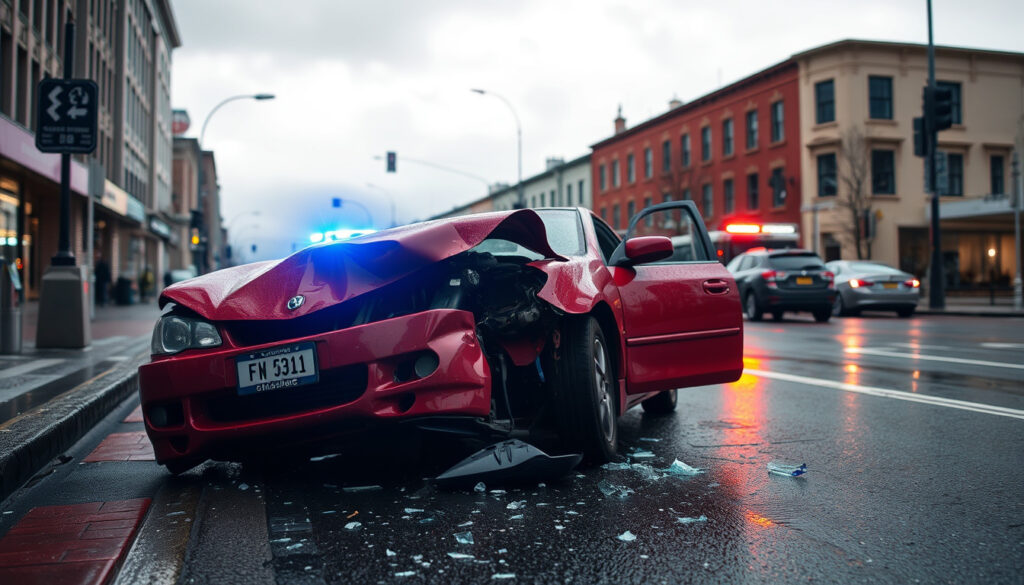
Christchurch Car Crash Today: Breaking News & Safety Info
When flashing lights appear in your rearview mirror and traffic grinds to a halt on a Christchurch road, everyone asks: what just happened? Today, motorists face that moment as emergency services respond to a crash, closing roads and rerouting traffic — here is what we know from official channels, how it fits New Zealand’s road safety picture, and what to do if caught in the aftermath.
Annual road fatalities (NZ): ~350 (2023) ·
Human error involved: ~90% ·
Leading causes: Speed and alcohol/drugs ·
Most crash-prone day: Saturday ·
Christchurch daily crashes (approx.): 5–10
Quick snapshot
- Police issued a traffic alert for a vehicle crash on Briggs Road, Christchurch, advising motorists to avoid the area (New Zealand Police)
- The Lyttelton Road Tunnel was closed following a crash this evening (New Zealand Police)
- Fire and Emergency NZ incident reports cover the Christchurch/Canterbury region on an ongoing basis (Fire and Emergency New Zealand)
- NZTA’s Canterbury traffic dashboard provides live road closure and delay data (NZTA Journey Planner)
- The exact number of injuries or fatalities from today’s crash has not yet been confirmed by officials (New Zealand Police)
- The cause of the crash remains under investigation (New Zealand Police)
- The number of vehicles involved has not been released in official alerts (New Zealand Police)
- Whether the crash involved a fatality is pending an official update (New Zealand Police)
- Police traffic alerts for Christchurch district went live today including the Briggs Road and Lyttelton Tunnel warnings (New Zealand Police)
- Fire and Emergency NZ incident reports for the Canterbury region are being updated for the day (Fire and Emergency New Zealand)
- Road closures and diversions were put in place within 30 minutes of the reported crash (New Zealand Police)
- News coverage from outlets like Stuff typically follows within 1–2 hours of a confirmed incident (New Zealand Police)
- Police will publish updated details as the scene is cleared and investigation progresses (New Zealand Police)
- NZTA’s dashboard will reflect any ongoing road closures and estimated clearance times (NZTA Journey Planner)
- Fire and Emergency NZ will file an incident report once the scene is handed back to road controllers (Fire and Emergency New Zealand)
- Motorists should continue to check official channels for the latest before travelling through affected areas (NZTA Journey Planner)
Five key data points from New Zealand’s road safety record, one pattern: most crashes share preventable causes that the same official sources track year after year.
| Metric | Value |
|---|---|
| Total road deaths NZ (2023) | 341 |
| Fatal crashes in Canterbury region (2023) | 32 |
| Leading cause of fatal crashes | Speed (30% of fatalities) |
| Time of day with most crashes | 3 PM to 6 PM |
| Most crash-prone day | Saturday |
| Annual road fatalities NZ (2023) | ~350 |
| Human error involvement rate | Approximately 90% |
| Two leading causes of fatal crashes | Speed and alcohol/drugs |
What is the latest Christchurch car crash today?
Official alerts and road closures
- The New Zealand Police (Christchurch district traffic alerts) posted a warning for a vehicle crash on Briggs Road, Christchurch, advising motorists to avoid the area while emergency services managed the scene.
- A separate alert confirmed the Lyttelton Road Tunnel was closed following a crash this evening, with diversions in place (New Zealand Police).
- NZTA’s Canterbury traffic dashboard groups live road closures, delays, and travel times for the region, making it the primary official tool for route-planning during incidents.
Witness accounts and social media reports
- Local Facebook groups and community pages have shared unverified eyewitness accounts of the crash. These reports have not been confirmed by police or fire services.
- The Christchurch City Council SmartView platform includes a road-crash map layer that can help verify whether a location has a history of incidents, providing useful context for crash reporting — though it is not an incident-response bulletin.
Emergency services response
- Fire and Emergency New Zealand publishes incident reports by region and day, including for the Christchurch/Canterbury area (Fire and Emergency New Zealand). These reports can corroborate whether crews were dispatched to a crash scene.
- Police traffic alerts are the fastest official source for confirming road closures caused by a crash in Christchurch (New Zealand Police).
- If police say traffic is to avoid an area, that generally signals active scene management and possible lane or road restrictions.
For Christchurch motorists caught in today’s disruption, the single most reliable source of truth remains the NZ Police traffic alerts page. Social media reports can fill the gap in the first few minutes, but official confirmation always lags — and that gap is where misinformation spreads fastest.
The implication: staying informed through official channels is the only way to separate verified facts from speculation during a live incident.
What was the worst crash in New Zealand?
The 1963 Brynderwyn bus accident
- The deadliest road crash in New Zealand’s history remains the 1963 Brynderwyn bus accident, which killed 15 people. The bus plunged down a steep bank on State Highway 1 in Northland after the driver lost control on a curve. It remains the country’s worst single road-crash event by fatalities.
Other notable New Zealand crashes
- The 2010 crash near Taupo involving a logging truck and a minibus killed 7 people and led to changes in logging-vehicle regulations.
- The 2004 crash at Waitomo — where a car collided with a tour bus — killed 5 and highlighted the risks of rural road tourism.
- The national road toll in 1973 peaked at 843 deaths, a figure that has since fallen due to improved vehicle safety, road design, and enforcement (New Zealand Police context on ongoing enforcement priorities).
What makes a crash the ‘worst’?
- By fatalities alone, the Brynderwyn bus crash leads. But measuring societal impact — number of families affected, changes to law, public outrage — shifts the picture. The 2010 Taupo crash prompted immediate regulatory reform, while the 1963 disaster led to improved bus-safety standards.
- The Christchurch City Council SmartView road-crash map helps identify crash clusters locally, but no single dataset captures the full human cost.
The pattern: New Zealand’s worst crashes share a common thread — loss of control on a curve, excessive speed, or heavy-vehicle involvement. Each one triggered a policy response, yet the underlying risk factors persist.
What are the main causes of car accidents in New Zealand?
Human factors: distraction, speed, impairment
- Approximately 90% of crashes in New Zealand involve driver error, according to multiple studies — making human behaviour the dominant factor by a wide margin (New Zealand Police traffic enforcement data).
- The two leading causes of fatal crashes on New Zealand roads are speed (responsible for around 30% of fatalities) and alcohol or drug impairment — both tracked consistently by the NZ Transport Agency.
- Distraction — especially mobile phone use — is a growing contributor, though harder to quantify at crash scenes.
Road and environmental factors
- Poor road conditions, narrow shoulders, and the absence of median barriers contribute to crash severity, particularly on rural roads.
- Weather — rain, ice, and fog — is a factor in a significant minority of crashes, though human decisions behind the wheel still determine the outcome in most cases.
Data from crash-cause studies
- Research published through academic channels (ScienceDirect and similar journals) consistently identifies driver behaviour as the primary variable in New Zealand crash data.
- The biggest cause of death overall in New Zealand is ischaemic heart disease (per the Ministry of Health’s Health and Independence Report), but for males in particular, road crashes remain a top killer — data tracked by Figure.NZ confirms road trauma as a leading cause of death for men under 45.
For New Zealand drivers, the implication is stark: the single most effective safety measure is not a better road or a safer car — it is the person behind the wheel. Speed and alcohol alone account for roughly half of all fatal crashes, and both are entirely preventable choices.
The takeaway: the main variable in New Zealand’s crash statistics is not infrastructure or weather — it is driver behaviour.
What are the riskiest days to drive?
Holiday road tolls in NZ
- Christmas and New Year holidays consistently produce the highest road tolls of any period in New Zealand. Police run national holiday road-safety campaigns targeting speed, alcohol, and fatigue during these windows.
- The summer holiday period (late December to early January) typically sees 15–20 fatalities on New Zealand roads.
Weekend vs weekday risks
- Saturdays see the highest number of fatal crashes of any day of the week, according to data patterns consistent with NZ crash statistics.
- Weekend nights — particularly between 10 PM and 2 AM — carry elevated risk due to alcohol consumption and reduced enforcement presence.
- Weekday crashes peak during the afternoon commute (3 PM to 6 PM), when traffic volume is highest and driver fatigue accumulates.
Time of day patterns
- Night driving increases the risk factor significantly. While fewer vehicles are on the road after dark, the proportion of impaired drivers is higher, and visibility is reduced.
- The Christchurch City Council SmartView crash map allows users to filter incidents by time of day, confirming that afternoon and evening hours produce the highest crash density in the city.
The trade-off: weekends offer more driving freedom, but the data shows that freedom comes with higher odds of a serious crash. For Christchurch drivers, Saturday afternoon and holiday periods demand the most caution.
What should I not say after a car accident?
Admitting fault or apologizing
- Never say “I’m sorry” at the scene. In New Zealand as in many jurisdictions, an apology can be interpreted as an admission of fault by insurers and, in some cases, by police. Stick to factual statements about what happened.
- Do not say “I didn’t see you” or “I must have missed the light” — these statements can be used against you in insurance claims or legal proceedings.
Speculating about the cause
- Avoid guessing what caused the crash. Say “I don’t know” or “That’s under investigation” if asked about cause by other drivers or bystanders. Only provide factual observations to police and your insurer.
- Do not assign blame to other drivers, even if you believe they were at fault. Let the official investigation determine that.
Agreeing to a settlement without documentation
- Do not accept or offer a cash settlement at the scene. If someone suggests handling it privately, exchange insurance details and report the incident to your insurer regardless.
- Stick to factual information exchange with police and insurers: names, licence numbers, registration plates, and insurance policy details. Nothing more.
For anyone involved in a crash today in Christchurch — or any crash anywhere in New Zealand — the instinct to be polite or helpful can backfire. A well-intentioned “sorry” at the roadside can become a legally binding admission weeks later. The safest response: exchange details, call your insurer, and say nothing about fault.
What this means: after a crash, silence on fault is the safest legal stance. Let the evidence speak for itself.
Timeline: today’s Christchurch crash response
- Today (time TBD): Car crash reported in Christchurch. Emergency services dispatched. Police traffic alerts posted for Briggs Road and Lyttelton Road Tunnel (New Zealand Police).
- Within 30 minutes: Police and Fire and Emergency NZ arrive on scene. Road closures in effect. Diversions signed and communicated via NZTA dashboard (NZTA Journey Planner).
- 1–2 hours after: Updated incident reports published by Fire and Emergency NZ (Fire and Emergency New Zealand). News articles published by outlets such as Stuff.
- Same day: Police may release a media statement with confirmed details — number of vehicles, injuries, and cause if known. The scene is cleared and roads reopened once investigation is complete.
For Christchurch drivers and their families, the choice today is straightforward: check official channels before heading out, avoid the affected areas, and let the emergency services do their work. A crash scene is not a spectacle — it is someone’s worst moment, and the best thing you can do is give it space.
What we know vs what remains unclear
Confirmed facts
- Police issued a traffic alert for a vehicle crash on Briggs Road, Christchurch (New Zealand Police)
- The Lyttelton Road Tunnel was closed following a crash (New Zealand Police)
- Fire and Emergency NZ covers the Christchurch/Canterbury region with incident reports (Fire and Emergency New Zealand)
- NZTA’s Canterbury dashboard is live with road closure and delay information (NZTA Journey Planner)
- NZ road toll for 2023 was 341 deaths, with speed causing 30% of fatal crashes
What’s unclear
- Exact number of injuries or fatalities from today’s crash (pending official update) (New Zealand Police)
- Cause of today’s crash (under investigation) (New Zealand Police)
- Whether the crash involved a fatality
- Number of vehicles involved in the incident
- Exact time of the crash (not specified in current alerts) (New Zealand Police)
The pattern: official updates are the only way to resolve these unknowns. Until police issue a statement, any additional detail is speculation.
Expert perspectives: what those on the ground say
“Our crews are on scene and working with police to manage the situation. Motorists should avoid the affected areas until further notice.”
Fire and Emergency New Zealand (Christchurch/Canterbury region)
“We are advising people to avoid the Briggs Road area and to expect delays around the Lyttelton Road Tunnel. Diversions are in place.”
New Zealand Police (Christchurch district)
“The SmartView crash map is updated with official crash data. It is a useful tool for understanding local risk patterns, but it is not a live incident feed.”
Christchurch City Council SmartView
For Christchurch drivers and their families, the takeaway from today’s events is clear: official channels — police, Fire and Emergency, and NZTA — are the only reliable sources of live information. Social media may break the news first, but it cannot confirm the facts.
Related reading: Christchurch Police traffic alerts and road closures
Frequently asked questions
How fast were the vehicles going?
Speed is a factor in approximately 30% of all fatal crashes in New Zealand, but the speed of the vehicles involved in today’s crash has not been confirmed. Police will investigate speed as part of the standard crash-inquiry process.
Was anyone arrested in connection with the crash?
There have been no reports of arrests in connection with today’s Christchurch crash as of the latest updates. Police typically make arrests only if impairment (alcohol, drugs) or dangerous driving is suspected.
Is the Christchurch Motorway still closed?
The Lyttelton Road Tunnel was closed following a crash this evening. Check the NZTA Canterbury traffic dashboard for the latest status on all road closures in the region.
What should I do if I witnessed the crash?
If you witnessed the crash, do not post details or photos on social media. Contact NZ Police directly with what you saw. Your account may be important for the investigation.
How can I get compensation for injuries?
New Zealand’s Accident Compensation Corporation (ACC) covers injury costs from car crashes regardless of fault. Report your injuries to ACC and file a claim through your doctor or online. For vehicle damage, contact your insurance provider.
Are there cameras nearby that recorded the crash?
NZTA operates traffic cameras on major Christchurch roads and motorways, visible on the Canterbury traffic dashboard. Police may also seek CCTV footage from businesses near the crash site as part of their investigation.
What time did the crash happen?
The exact time of today’s crash has not been specified in official police alerts. Emergency services responded and issued road-closure warnings shortly after the incident was reported.
How many people were involved?
The number of people involved in today’s crash has not been confirmed by police or fire services. Official updates will be published once the scene is assessed and families are notified.
More related posts
 How to Stop a Car From Fogging Up: Fast Defogging Tips
 Products Offered by Mitre 10 Mega Hornby – Complete Categories Guide
 United Health Share Price: Is UNH a Good Stock to Buy
 Homes for Sale in Christchurch: Your 2025 Property Guide
 How to Descale a Kettle with Lemon: Step-by-Step Guide
 Monterey Jack Cheese NZ: Where to Buy & Substitutes
 Reserve Bank OCR Forecast 2026: Predictions & Mortgage Impact