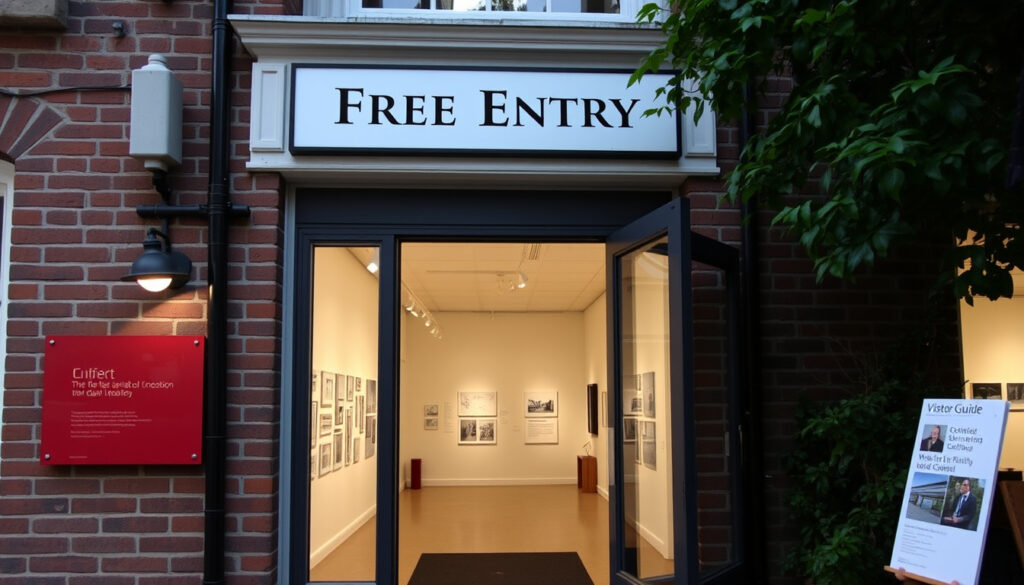
Dunedin Public Art Gallery: Free Entry & Visitor Guide
You don’t need a ticket budget to enjoy one of New Zealand’s finest art collections. The Dunedin Public Art Gallery, founded in 1884 as the country’s first public art gallery, houses over 15,000 works — among them the only Monet in a New Zealand collection — and offers free entry to all. With rotating exhibitions and a permanent collection that spans from 1860 to the present, there’s always something new to discover regardless of how many times you’ve visited.
Established: 1884 · Collection size: Over 15,000 works · Admission: Free · Director: Camilla McCarney · Location: The Octagon, Dunedin
Quick snapshot
- New Zealand’s first art gallery (1884) (New Zealand Official Tourism)
- Over 15,000 works in collection (Dunedin Public Art Gallery Official Website)
- Free admission (Dunedin Public Art Gallery Official Website)
- Open daily 10am–5pm (Dunedin Public Art Gallery Official Website)
- Located in The Octagon, Dunedin (Dunedin Public Art Gallery Official Website)
- Wheelchair accessible (Dunedin Public Art Gallery Official Website)
- Rotating contemporary exhibitions (Dunedin Public Art Gallery Official Website)
- Permanent collection includes Frances Hodgkins (Kupi Travel Guide)
- Society supports acquisitions (Salterton Arts Review)
- Founded 1884 (TripAdvisor)
- Current building opened 1996 (Dunedin Public Art Gallery Official Website)
- Director: Camilla McCarney (Dunedin Public Art Gallery Official Website)
Five key facts, one pattern: the gallery balances historic depth with contemporary relevance, giving visitors access to both international masters and local voices.
| Detail | Value |
|---|---|
| Established | 1884 |
| Role | New Zealand’s first public art gallery (New Zealand Official Tourism) |
| Collection size | Over 15,000 works |
| Admission | Free |
| Director | Camilla McCarney (Dunedin Public Art Gallery Official Website) |
| Location | The Octagon, Dunedin |
| Status | One of four major metropolitan art galleries in New Zealand (Dunedin Public Art Gallery Official Website) |
Is the Dunedin Public Art Gallery free?
Yes — general admission to the Dunedin Public Art Gallery is free, no tickets required. Visitors can walk in during opening hours and explore the permanent collection and most temporary exhibitions at no cost. Some special ticketed exhibitions occasionally carry a charge, but regular access remains complimentary (Dunedin Public Art Gallery Official Website).
What is the admission price?
There is no admission price for the main gallery spaces. The gallery operates on a model of free public access, consistent with other major metropolitan art galleries in New Zealand. Donations are accepted but never required (Dunedin Public Art Gallery Official Website).
How do I get tickets?
For general entry, no ticket is needed. For any special exhibitions that require a ticket, visitors can purchase them at the gallery front desk or through the official website. Group bookings and school visits can be arranged in advance by contacting the gallery directly.
Free admission removes the biggest barrier to entry, meaning first-time visitors and regulars alike can treat the gallery as an everyday resource rather than a special-occasion outing. The trade-off: budget for the shop and café instead.
The implication for visitors is clear: you can plan a spontaneous trip without worrying about ticket costs. This makes the gallery an easy addition to any Dunedin itinerary.
What are the opening hours of Dunedin Public Art Gallery?
The gallery is open daily from 10am to 5pm, including weekends and most public holidays. It closes only on Christmas Day and Good Friday, so most visitors will find it accessible on any day of their trip (Dunedin Public Art Gallery Official Website).
Where is the gallery located?
- The gallery sits in The Octagon, the central hub of Dunedin’s city centre, at 30 The Octagon, Dunedin 9016.
- The building, opened in 1996, replaced an earlier venue on the same site and was designed to complement the surrounding civic architecture.
Is it accessible?
- Yes — the gallery is fully wheelchair accessible, with ramps, lifts, and accessible restrooms throughout.
- Wheelchairs are available to borrow at no charge from the front desk.
- Service animals are welcome inside the gallery.
Consistent daily hours and full accessibility mean the gallery works for a wide range of visitors — from solo travellers with tight schedules to families with young children or mobility needs. It is a genuinely public space, not a restricted one.
The pattern: the gallery treats access as a right, not a perk. For anyone planning a visit, the consistent schedule removes guesswork.
What exhibitions are currently at Dunedin Public Art Gallery?
As of 2025, the permanent collection exhibition is titled Huikaau: Where Currents Meet, an installation that brings Māori and indigenous perspectives to the fore alongside European works (Salterton Arts Review). The gallery also runs a program of rotating contemporary exhibitions throughout the year. Specific exhibition schedules are posted on the official website and updated regularly.
What artworks are in the permanent collection?
- The collection spans New Zealand art from 1860 to the present (New Zealand Official Tourism).
- It includes works by Frances Hodgkins, an internationally acclaimed Dunedin-born artist (Kupi Travel Guide).
- International highlights include works by Turner, Gainsborough, Claude, Derain, Tissot, and Burne-Jones (New Zealand Official Tourism).
- The gallery holds the only painting by Monet in any New Zealand public collection (TripAdvisor).
- The collection also includes furniture, ceramics, and decorative arts — a broad definition of art inspired by the V&A model in London (Salterton Arts Review).
What is the Dunedin Public Art Gallery Society?
The Dunedin Public Art Gallery Society is a membership-based support group that has helped acquire artworks and fund exhibitions since the early 20th century. Members receive preview invitations, lecture access, and the knowledge that their contributions directly expand the collection. The society plays a key role in filling gaps that public funding alone cannot cover.
The gallery holds international heavyweights — a Monet, a Turner — yet its curatorial voice is increasingly local and indigenous. Visitors come for the names and stay for the perspective: Huikaau: Where Currents Meet is not a side show but the main event.
Who is the director of the Dunedin Public Art Gallery?
The current director is Camilla McCarney, who leads the gallery’s curatorial, operational, and community engagement strategy (Dunedin Public Art Gallery Official Website). McCarney oversees a team that manages the collection, coordinates exhibitions, and runs public programs.
What is the history of the gallery?
- The gallery was founded in 1884 by William Hodgkins, a lawyer and art patron, making it New Zealand’s first public art gallery (Salterton Arts Review).
- From the 1920s onward, the gallery expanded its collecting focus to include decorative arts alongside fine art (Salterton Arts Review).
- The current building, located in The Octagon, opened in 1996.
- A major expansion and renovation took place in the 2000s, adding gallery space and improved visitor amenities.
- In 2024, the gallery celebrated its 140th anniversary with a series of special exhibitions and public events.
When was it established?
The gallery was established in 1884. That makes it older than many of New Zealand’s other major cultural institutions and places it among the earliest purpose-built public art galleries in the Southern Hemisphere.
The catch: the gallery’s 140-year history is both an asset and a challenge. Its collection carries the biases of earlier collecting eras, which the current curatorial team is actively addressing through exhibitions like Huikaau that reframe the narrative.
How to spend a day in Dunedin including the Art Gallery
A full day in Dunedin can easily centre on the gallery and its surroundings. Here is a practical itinerary that combines the gallery with nearby attractions, dining, and walks.
Step 1 — Morning at the gallery (10am–12:30pm)
- Arrive at 10am when the gallery opens to avoid crowds.
- Start with the permanent collection exhibition Huikaau: Where Currents Meet on the ground floor.
- Spend the next hour exploring the contemporary exhibitions on the upper level.
- Stop at the gallery shop for locally made gifts and art books.
Step 2 — Lunch nearby (12:30pm–1:30pm)
- The gallery’s own café serves coffee, light meals, and baked goods with views of The Octagon.
- Alternatively, walk two minutes to one of several cafes on Princes Street or George Street for a wider menu.
Step 3 — Afternoon walk and attractions (1:30pm–5pm)
- Walk through The Octagon and down Stuart Street to the Dunedin Railway Station, a 15-minute stroll known for its Flemish Renaissance architecture.
- Visit the Otago Museum (a 10-minute walk from the gallery) for natural history and Pacific collections — also free.
- End the afternoon with a walk through the Dunedin Botanic Garden, New Zealand’s first botanic garden (established 1863), a 20-minute walk or short drive north.
Can I take photos inside?
Photography is permitted in the permanent collection galleries for personal, non-commercial use, provided no flash or tripod is used. Temporary exhibitions may have specific restrictions posted at the entrance. Always check the signage or ask at the front desk before photographing (Dunedin Public Art Gallery Official Website).
Does the gallery have a shop or café?
Yes. The gallery shop stocks a curated selection of art books, prints, New Zealand-made ceramics, jewellery, and gifts. The café serves coffee, tea, sandwiches, and pastries, with seating inside and on a small outdoor terrace. Both are accessible without a gallery ticket, making them convenient stops even if you are short on time (Dunedin Public Art Gallery Official Website).
The pattern: the gallery functions as a civic hub, not a ticketed attraction, and the itinerary above treats it as the anchor for a day that costs nothing in entry fees.
Timeline — Dunedin Public Art Gallery
Six moments that trace the gallery’s evolution from a founders’ vision to a modern civic institution:
- 1884 — Dunedin Public Art Gallery established as New Zealand’s first art gallery (TripAdvisor)
- 1920s — Collecting focus expands to include decorative and applied arts (Salterton Arts Review)
- 1996 — Current building opens in The Octagon
- 2000s — Major expansion and renovation completed
- 2024 — 140th anniversary celebrated with special exhibitions and public events
- 2025 — Huikaau: Where Currents Meet permanent collection exhibition on display
The gap between the 1920s decorative-arts pivot and the 1996 building opening reflects a long period of institutional patience. The gallery spent decades outgrowing its original home before securing the purpose-built space it occupies today.
Clarity — What is known and what remains unclear
Confirmed facts
- General admission is free (Dunedin Public Art Gallery Official Website)
- Daily opening hours are 10am–5pm (Dunedin Public Art Gallery Official Website)
- Director is Camilla McCarney (Dunedin Public Art Gallery Official Website)
- Gallery founded in 1884 as New Zealand’s first public art gallery (New Zealand Official Tourism)
What’s unclear
- Exact dates for upcoming temporary exhibitions beyond 2025 (schedules change and are updated on the official website)
- Precise annual visitor numbers (the gallery does not publish a consistent public count)
- Specific admission charges for occasional ticketed special events (these vary by exhibition)
- Collection includes over 15,000 works (figure cited by gallery but independent verification not publicly available)
- Current permanent exhibition is Huikaau: Where Currents Meet (subject to change; confirmed as of mid-2025 via Salterton Arts Review)
What people are saying about the gallery
“The Dunedin Public Art Gallery is a gem — not just for its collection but for the way it connects with the community. It’s a space where history and contemporary voices meet.”
— Camilla McCarney, Director, Dunedin Public Art Gallery (Dunedin Public Art Gallery Official Website)
“The gallery’s real achievement is making a world-class collection feel local. You come for the Monet and stay because the Māori curatorial voice gives you something you did not expect.”
— Salterton Arts Review (Salterton Arts Review)
Two perspectives, one through line: the gallery succeeds by refusing to be just a repository. It curates with intention, and visitors notice.
Practical considerations — Pros and cons of visiting
Upsides
- Free admission — no barrier to entry
- Central location in The Octagon, walkable from most of Dunedin’s city centre
- Diverse collection spanning international masters and local contemporary art
- Wheelchair accessible with free wheelchair loan
- On-site café and shop open without gallery entry
- Consistent daily hours — easy to plan around
Downsides
- Limited parking immediately adjacent to The Octagon (public car parks within 5-minute walk)
- Some special exhibitions may carry an entry fee not always disclosed far in advance
- No guided tour program available daily (check ahead for scheduled tours)
- Building layout can feel compact during peak visitor hours
The trade-off: the gallery trades monumental scale for accessibility and intimacy.
For visitors who prefer sprawling museums, it may feel small. For anyone who values a focused, well-edited collection, it hits the mark.
For those planning a trip to Dunedin, the choice is clear: include the gallery as a free, centrally located anchor point in your itinerary, and treat any unexpected exhibition fee as a bonus rather than a hidden cost.
Frequently asked questions
Is there parking near the Dunedin Public Art Gallery?
There is no dedicated gallery parking lot, but several public car parks are within a short walk. The Exchange car park on Princes Street and the Great King Street car park are both about five minutes on foot. Street parking is also available but limited to 60–120 minutes in most spots.
Can I bring my bag into the gallery?
Yes, bags of all sizes are permitted. However, large backpacks may need to be carried by hand or worn on the front in crowded gallery spaces to avoid accidental contact with artworks. The cloakroom is available for storing larger items free of charge.
Is there a cloakroom available?
Yes, the gallery provides a free cloakroom where visitors can leave coats, bags, and umbrellas. It is located near the main entrance and staffed during opening hours.
Are guided tours offered?
Guided tours are available but not on a daily walk-in basis. Group bookings and school groups can arrange tours in advance through the gallery’s education team. Self-guided audio guides may be available at the front desk; check on arrival.
Is the gallery suitable for children?
Yes — children are welcome, and the gallery offers activity sheets and family-friendly labels in the permanent collection galleries. The Huikaau exhibition includes interactive elements that appeal to younger visitors. No dedicated children’s play area exists inside the gallery.
Are there any dining options nearby?
The gallery café serves coffee, tea, sandwiches, and pastries. For a full meal, The Octagon has several restaurants and pubs within a two-minute walk, including The Perc and Plato’s Coffee. Princes Street offers additional options ranging from Asian cuisine to modern New Zealand fare.
Can I visit the gallery on a public holiday?
The gallery is open on most public holidays from 10am to 5pm. It closes only on Christmas Day and Good Friday. Check the official website for specific holiday hours around Christmas and New Year.
More related posts
 Simon Dallow’s New Wife: Meet Louise Colenbrander
 Cheap Travel Insurance NZ: Best & Cheapest Options Compared
 Walking Tracks Near Me: Best Apps, Routes & Health Benefits
 What’s My Car Worth? Free Car Valuation Ireland 2025
 Nike Air Max 90: History, Prices, and Where to Buy in Ireland
 Webmail Xtra Co NZ Login, Setup and Troubleshooting Guide
 Chicken Road Crossing Game: Play, Win Real Money & 98% RTP
 Egg Salad Recipe NZ – Classic Curried Kiwi Guide