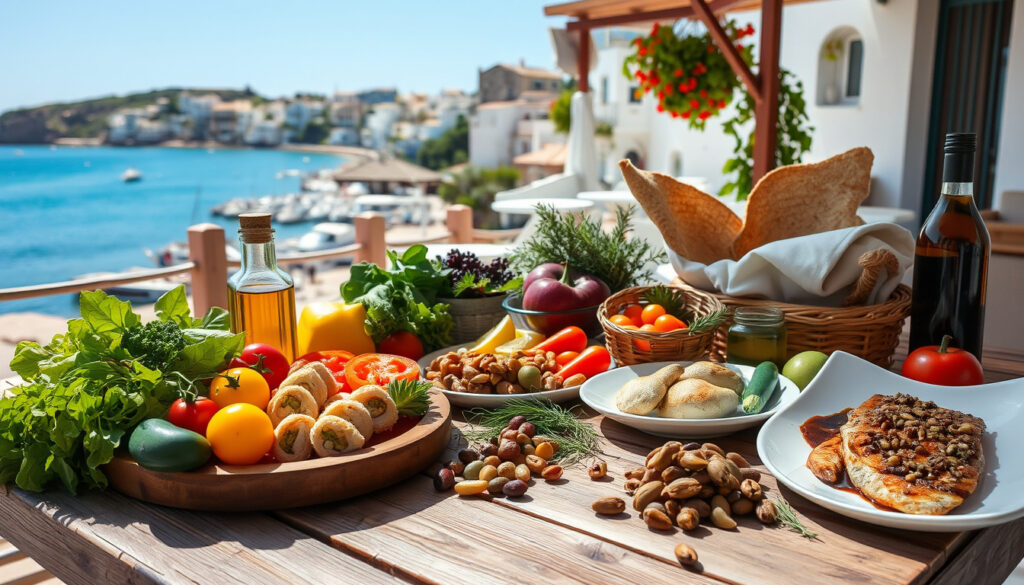
Mediterranean Diet Meal Plan: 7-Day Foods & Snacks
If you have ever stared blankly at a list of “heart-healthy foods” and wondered what a real day of eating actually looks like, you are not alone. The Mediterranean diet is widely considered one of the most flexible and flavorful ways to eat for long-term health, but turning principles into meals can feel abstract. This guide walks you through a complete 7-day Mediterranean diet meal plan, clarifies what foods actually belong on your plate, and settles common questions like whether bananas are allowed.
Primary fat source: Extra virgin olive oil ·
Recommended fish intake: At least 2 times per week ·
Red meat consumption: Limited to a few times per month ·
Daily vegetable servings: 3-4 servings ·
Key health benefits: Reduced heart disease risk, improved longevity
Quick snapshot
- The diet emphasizes vegetables, fruits, whole grains, legumes, nuts, and olive oil (American Heart Association (tier1)).
- Fish and seafood are recommended at least twice weekly (Oldways (tier1)).
- Red meat is limited to a few times per month (Cleveland Clinic (tier2)).
- The optimal percentage of calories from fat versus carbohydrates is not universally agreed upon.
- Dairy’s role is debated — some versions include moderate yogurt and cheese, others minimize it.
- Long-term adherence and sustainability outside Mediterranean regions are still being studied.
- Weekly rhythm: fish 2+ days, poultry 2-3 days, red meat 1-2 times per month (Oldways (tier1)).
- Daily habit: 3+ servings of fruit and 3+ servings of vegetables (Cleveland Clinic (tier2)).
- Nuts consumed at least 3 times per week (Cleveland Clinic (tier2)).
- Start by swapping butter for olive oil and adding one extra vegetable serving to lunch and dinner.
- Try the 7-day plan below – printable versions and meal prep tips are included.
- Use the budget-friendly tips to keep costs low while eating fresh.
Six key facts, one pattern: the Mediterranean diet is built around plants, healthy fats, and moderate animal products — not strict elimination.
| Attribute | Value |
|---|---|
| Origin | Mediterranean region (e.g., Greece, Italy, Spain) |
| Primary fat | Extra virgin olive oil |
| Fish intake | At least 2 times per week |
| Red meat | Limited to a few times per month |
| Wine | In moderation (optional, 1 glass/day for women, 2 for men) |
| Health ranking | Consistently ranked #1 in U.S. News & World Report diet rankings |
For anyone looking to reduce heart disease risk, the strongest lever is replacing butter and red meat with olive oil and fish — a swap that alone accounts for much of the diet’s cardiovascular benefit, according to the AHA (tier1).
What is an example of a Mediterranean diet meal plan?
Sample 7-day meal plan
The plan below follows the traditional Mediterranean pattern: plant-forward, with fish twice a week, moderate poultry and eggs, and red meat only once every two weeks. Each meal includes a serving of vegetables, whole grains, and a source of healthy fat.
| Day | Breakfast | Lunch | Dinner | Snack |
|---|---|---|---|---|
| Monday | Greek yogurt with berries and almonds | Chickpea and spinach salad with olive oil vinaigrette | Baked cod with roasted tomatoes, bell peppers, and quinoa | Apple slices with almond butter |
| Tuesday | Oatmeal with sliced banana and walnuts | Lentil soup with a side of whole wheat bread | Grilled chicken breast with couscous and roasted zucchini | Handful of almonds and a pear |
| Wednesday | Whole wheat toast with avocado and cherry tomatoes | Greek salad (cucumber, tomato, feta, olives) with a side of hummus and pita | Salmon with roasted asparagus and farro | Cottage cheese with pineapple chunks |
| Thursday | Scrambled eggs with spinach and mushrooms on whole grain toast | Quinoa bowl with black beans, corn, avocado, and salsa | Turkey meatballs in tomato sauce with whole wheat pasta and a side salad | Orange and a small handful of pistachios |
| Friday | Smoothie (spinach, banana, Greek yogurt, flaxseed) | Tuna salad (canned tuna in olive oil) over mixed greens with vinaigrette | Grilled shrimp with roasted broccoli and brown rice | Hummus with carrot and cucumber sticks |
| Saturday | Overnight oats (oats, almond milk, chia seeds, berries) | Caprese salad (tomato, fresh mozzarella, basil, balsamic) with whole grain bread | Lamb stew (lean lamb, potatoes, carrots, celery) – moderate portion | Frozen grapes |
| Sunday | Frittata with tomato, onion, and olives | Leftover lamb stew or a large roasted vegetable salad | Baked trout with lemon and herbs, served with roasted sweet potatoes and green beans | Dark chocolate square (70%+) and an apple |
The pattern: every day includes at least 5 servings of vegetables and fruit, a dose of fiber from whole grains or legumes, and healthy fats from olive oil, nuts, or fish. Red meat appears only once across the seven days, consistent with the AHA guideline (tier1) to limit it to a few times per month.
Breakfast ideas
- Greek yogurt (plain) topped with mixed berries and chopped walnuts – a classic start high in protein and antioxidants.
- Whole grain toast with mashed avocado, a squeeze of lemon, and a pinch of red pepper flakes.
- Oatmeal made with rolled oats (not instant), topped with sliced banana and a tablespoon of ground flaxseed.
Lunch and dinner ideas
- Lunch: Chickpea and cucumber salad with red onion, parsley, and olive oil dressing, served with a whole grain roll.
- Lunch: Leftover roasted chicken with a side of quinoa and roasted peppers.
- Dinner: Pan-seared cod with a Mediterranean salsa (tomato, olives, capers, basil) and sautéed spinach.
- Dinner: Eggplant and chickpea curry with brown rice (using turmeric, cumin, and coriander for flavor).
What this means: once you have a pantry of legumes, whole grains, and olive oil, improvising meals becomes easy. The Oldways (tier1) pyramid recommends filling the largest portion of your plate with vegetables, fruits, and grains — exactly what these meals do.
This 7-day plan demonstrates that the Mediterranean diet is not complex—each meal combines a vegetable, a whole grain, and a healthy fat. Beginners can start by following this weekly pattern, which already meets the key dietary recommendations from the AHA and Oldways.
What do I eat in a day on the Mediterranean diet?
Typical daily menu
One day of eating looks like this, drawn from the Kaiser Permanente Mediterranean diet booklet (tier2):
- Breakfast: ¾ cup cooked oatmeal with 1 tablespoon chopped walnuts and ½ cup fresh berries; coffee or tea.
- Lunch: Large salad (mixed greens, cucumber, tomato, chickpeas, bell peppers) with 2 tablespoons olive oil vinaigrette; side of 1 slice whole wheat bread.
- Dinner: 4-ounce grilled salmon; 1 cup steamed zucchini and summer squash; ½ cup brown rice; small salad with greens and vinegar.
- Snack: 1 apple plus 1 tablespoon peanut butter or a small handful of almonds.
- Optional: 5-ounce glass of red wine with dinner.
Breakfast options
- Plain Greek yogurt (6–8 oz) with ¼ cup blueberries and 2 tablespoons crushed almonds.
- Two-egg veggie scramble with spinach, tomato, and onion, cooked in olive oil.
Lunch options
- Mediterranean lentil soup with a side of carrot sticks and hummus.
- Whole wheat wrap with roasted turkey, lettuce, tomato, and a smear of hummus.
Dinner options
- Grilled chicken breast with oregano, lemon, and garlic, served with roasted eggplant and a small portion of whole wheat pasta.
- Stir-fried tofu with broccoli, red bell pepper, and cashews in a light soy-sesame sauce, served over quinoa.
Snack ideas
- 1 cup sliced vegetables (cucumber, bell pepper, carrot) with ¼ cup hummus.
- 1 medium apple or pear.
- ½ cup low-fat Greek yogurt with cinnamon.
The catch: many people overcomplicate the Mediterranean diet. In practice, it simply centers every meal around plants and uses olive oil as the primary cooking fat. The Cleveland Clinic (tier2) advises choosing fruit as a snack instead of processed options — a small habit that eliminates added sugars by default.
Portion sizes of nuts and olive oil still matter. Nuts pack about 160–200 calories per ounce, so sticking to a small handful (about 1/4 cup) prevents the diet from becoming a high-calorie one despite its healthy-fat focus (Cleveland Clinic, tier2).
A typical day on the Mediterranean diet centers on whole foods: oatmeal, a large salad, grilled salmon, and fruit. This pattern shows that you can eat satisfying meals without processed ingredients.
What is not allowed in the Mediterranean diet?
Foods to avoid
- Refined grains (white bread, white pasta, white rice) – replace with whole grain versions.
- Added sugars: sugary drinks, candy, pastries, ice cream.
- Trans fats and hydrogenated oils.
- Highly processed meats (bacon, salami, hot dogs).
- Ultra-processed foods (packaged snacks, frozen dinners with long ingredient lists).
Foods to limit
- Red meat: limit to a few times per month (AHA, tier1).
- Full-fat dairy: use in small amounts (e.g., feta or Parmesan as a flavoring, not a main).
- Poultry and eggs: moderate portions (3–4 eggs per week, 3–4 servings of poultry per week).
- Salt: limit high-sodium foods; use herbs and spices for flavor.
Beverages to avoid
- Sugary sodas, sweetened teas, fruit drinks with added sugar.
- Heavy beer and sweet liqueurs. If alcohol is consumed, red wine in moderation is preferred (AHA, tier1).
Why this matters: the Mediterranean diet is more about addition than subtraction — you are not “giving up” as much as shifting to whole, minimally processed foods. The Oldways pyramid (tier1) places sweets and red meat at the very top, meaning they are occasional treats, not daily staples.
The Mediterranean diet does not require eliminating entire food groups—it simply limits red meat, added sugars, and refined grains. Sticking to whole grains, vegetables, and healthy fats automatically reduces unhealthy ingredients.
What are the best snacks for the Mediterranean diet?
Fruit and vegetable snacks
- Apple or pear slices with a few almonds.
- Celery sticks with almond butter or peanut butter.
- Cherry tomatoes and cucumber rounds.
- Fresh strawberries, blueberries, or grapes.
Nuts and seeds
- A handful of walnuts, almonds, or hazelnuts (preferably raw or dry-roasted, no added salt). The Cleveland Clinic (tier2) specifically recommends walnuts, almonds, and hazelnuts.
- Pumpkin seeds, sunflower seeds, or a trail mix with dried fruit (no added sugar).
Dairy and plant-based snacks
- Single-serving Greek yogurt (plain) with a drizzle of honey and a pinch of cinnamon.
- Small portion of cottage cheese with sliced peach.
- Hummus with carrot and bell pepper sticks.
Savory snacks
- Olives (kalamata or green) – a few as a snack.
- Roasted chickpeas (tossed with olive oil and spices).
- Whole grain crackers with a thin slice of cheese (e.g., Manchego or feta).
The trade-off: snack bars, chips, and sugary treats are out. But you can still enjoy satisfying, crunchy options — roasted chickpeas and olives offer both texture and healthy fats without the added sugar. The Diabetes Canada (tier1) 7-day plan includes snacks like whole-wheat pita with hummus and fruit-and-feta salad, each roughly 100–150 calories.
Snacks on the Mediterranean diet are simple: fruits, nuts, seeds, hummus with vegetables, and Greek yogurt. These choices keep energy stable and avoid processed additives.
Are bananas allowed on a Mediterranean diet?
Fruit allowance in the Mediterranean diet
- Yes, bananas are allowed. The Mediterranean diet includes all whole fruits — there is no forbidden fruit list. Bananas are a rich source of potassium and fiber (AHA, tier1 includes fruit as a core food group).
- Other encouraged fruits: berries (strawberries, blueberries), citrus (oranges, lemons), apples, pears, grapes, melon.
Bananas in moderation
- Bananas have natural sugars (about 14 g per 100 g). For most people, one banana a day is fine.
- If you have diabetes or pre-diabetes, eat bananas sparingly and pair them with a source of protein or fat (e.g., banana with almond butter) to reduce blood sugar spikes (Diabetes Canada, tier1, includes banana as part of its snack options).
- Fruit as a dessert (instead of sweets) is a Mediterranean habit — the AHA (tier1) notes fruit is the common dessert.
The implication: bananas are not only allowed — they are perfectly aligned with the diet’s emphasis on whole foods. The concern about “too much sugar” applies only if you are eating multiple bananas daily or adding them to an already high-sugar diet. Stick to one medium banana and you are in good company with the Mediterranean tradition of eating fruit for dessert.
The Mediterranean diet emphasizes plant-based foods and healthy fats, with extra virgin olive oil as the main source of fat.
Cleveland Clinic (tier2)
The Mediterranean diet is consistently ranked as one of the healthiest eating patterns, with strong evidence for reducing chronic disease risk.
For beginners, the Mediterranean diet’s greatest strength — its flexibility — is also its biggest hurdle. Without strict rules, some default to “anything goes,” but the real constraint is consistency: daily vegetables, weekly fish, monthly red meat. The Oldways (tier1) pyramid provides a visual guide that makes those proportions concrete.
For anyone starting out, the choice is clear: swap one processed snack for a piece of fruit and one red-meat dinner for a fish dish each week, and you have already moved toward Mediterranean eating. The Diabetes Canada 7-day plan (tier1) offers a calorie-controlled starting point; the Oldways (tier1) free meal plan provides another. For the beginner in the United States, the payoff is concrete: lower risk of heart disease, type 2 diabetes, and cognitive decline — or simply more energy and fewer cravings tomorrow morning.
joeyzsportjeff.com, eatingwell.com, healthline.com, pharmacy.media.uconn.edu, goodhousekeeping.com, weillcornell.org, diet.mayoclinic.org
Frequently asked questions
Is the Mediterranean diet good for weight loss?
Yes, many clinical trials show it can be effective for weight loss, especially when combined with a modest calorie deficit. Its high fiber and healthy fat content help with satiety. The Diabetes Canada (tier1) plan is designed at 1,500 calories — a level that produces gradual weight loss for many women.
Can I eat dairy on the Mediterranean diet?
Yes, in moderation. Traditional Mediterranean versions include small amounts of cheese (feta, Parmesan, Manchego) and yogurt. The AHA (tier1) notes dairy products are eaten in low to moderate amounts.
Is the Mediterranean diet vegetarian?
Not necessarily. It includes fish, poultry, eggs, and occasional red meat. However, many followers adopt a mostly plant-based version and treat animal products as small additions. A vegetarian adaptation is possible by focusing on legumes and eggs.
How much olive oil should I use per day?
About 2–4 tablespoons per day is typical. Use it for cooking, dressing salads, and drizzling over vegetables. The Cleveland Clinic (tier2) recommends extra virgin olive oil as the primary fat.
What are the best whole grains for the Mediterranean diet?
Whole wheat couscous, farro, barley, quinoa, brown rice, bulgur, and whole grain bread. The Oldways pyramid (tier1) recommends whole grains daily.
Can I drink coffee on the Mediterranean diet?
Yes, coffee is fine in moderation. Traditional Mediterranean cultures drink coffee (often Greek or Turkish style). Avoid adding loads of sugar and cream; black or with a splash of milk is best.
Is the Mediterranean diet safe for people with diabetes?
Yes, it is often recommended for diabetes management because it emphasizes low-glycemic, high-fiber foods. The Diabetes Canada (tier1) provides a 7-day plan specifically designed for people with diabetes.
How do I start a Mediterranean diet on a budget?
Focus on staples: canned beans, lentils, frozen vegetables, and whole grains (brown rice, oats). Buy seasonal produce and olive oil in bulk. Sardines and mackerel are cheaper fish options. The Oldways (tier1) resources include budget tips.
More related posts
 What Is the Living Wage in NZ? Rates & Minimum Wage Difference
 Cat in the Hat Costume: DIY Guide, Sourcing, and Controversy
 Dunedin Public Art Gallery: Free Entry & Visitor Guide
 Butter Price Drop: Global Dairy Market Analysis & Trends
 South Africa vs England Rugby 2026: Channel, Score & Watch Live
 Houses in New Zealand for Sale in Auckland – 2026 Prices and Trends
 Homes for Sale in Christchurch: Your 2025 Property Guide
 State of Origin 2025 Dates: Full Schedule, Venues & Tickets