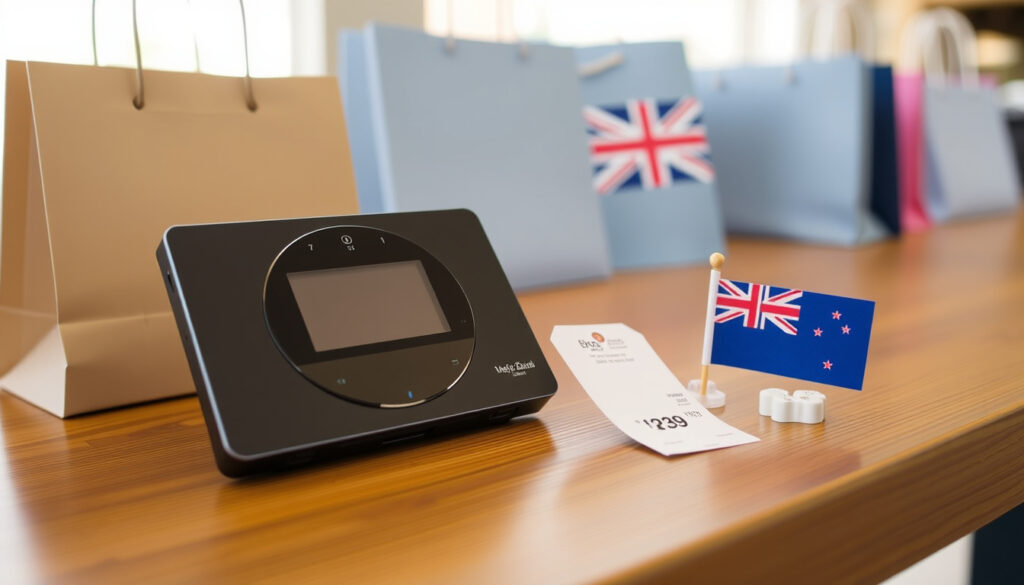
Portable CD Player NZ: Be t Pick , Price & Shopping Guide (2026)
Anyone who’s ever tried to keep a CD collection alive in a world that’s moved to streaming knows the feeling — you’re not being nostalgic, just practical. For New Zealand shoppers, portable CD players still make sense when you want offline playback without a subscription.
Portable CD player models in NZ: ~15+ current SKUs · Avg price range (NZ retail): $40–$520 · Popular brands in NZ: FiiO, Lexibook, Kmart house brand, JB Hi-Fi house brand · Best-rated portable player (value): Lexibook RCDK100MN (score 4.3/5, ~$126)
Quick snapshot
- Portable CD players remain available at Kmart, JB Hi-Fi and Noel Leeming in NZ (Kmart NZ portable CD player listing)
- Lexibook RCDK100MN is the highest-rated portable model (4.3/5) (Lexibook RCDK100MN product page)
- FiiO DM15 R2R is the premium audiophile option (~$519) (FiiO DM15 product page)
- Whether CD player phase-out will accelerate after 2026
- Exact NZ market share breakdown (CD vs Bluetooth streaming)
- Long-term viability of CD as a physical format in NZ
- 2024: CD player sales in NZ remain stable; new models from FiiO and Lexibook released (CNBC report on CD sales increase in 2024)
- 2025: Kmart expands portable CD player range to 3 SKUs (Kmart NZ)
- 2026 (projected): CD revival trend may increase demand ~10% vs 2024 (CNBC report on CD sales increase in 2024)
- Hybrid Bluetooth-CD models will become the norm for portability (AV.com blog)
- Niche audiophile segment (FiiO, Shanling) will continue serving enthusiasts (Louder portable CD player guide)
Here’s a summary of the key metrics for New Zealand buyers.
| Metric | Value |
|---|---|
| Number of portable CD players in NZ retail | ~15 SKUs at major stores + online |
| Average new price (budget to premium) | $49 to $519 |
| Popular brands stocked in NZ | FiiO, Lexibook, Kmart house brand, JB Hi-Fi house brand |
| Best-rated model (consumer feedback) | Lexibook RCDK100MN (4.3/5, ~$126) |
| CD revival signal (2026) | Modest demand; niche not dying but not mainstream |
| Bluetooth-enabled portable models | At least 3 (Lexibook RCDK100MN, FiiO DM13, select Kmart models) |
| Second-hand availability (Trade Me) | Older Sony, Panasonic units often under $30 |
What is the best portable CD player to buy?
“Best” depends entirely on what you need — portability, sound quality, durability or price. For New Zealand buyers, the market splits cleanly into three tiers.
Top-rated portable CD player models in NZ (2026)
- Kmart Portable CD Player (~$49) — budget baseline, basic CD playback with LCD display. Fine for casual use, short battery life (~4 h). (Kmart NZ portable CD player listing)
- Lexibook RCDK100MN (~$126) — best value pick. CD + MP3 + Bluetooth output, 4.3/5 rating, 8 h battery. (Lexibook RCDK100MN product page)
- FiiO DM15 R2R (~$519) — premium audiophile portable player. R2R DAC, 12 h battery, Bluetooth 5.0. (FiiO DM15 product page)
- FiiO DM13 (~$249) — mid-range portable with Bluetooth, USB playback, and compact design. (AV.com blog on FiiO DM13)
- JB Hi‑Fi house brand (~$59) — budget CD boombox, suitable for kitchens and garages. Basic features, 5 h battery.
Price vs features comparison table
Five models, one pattern: the more you pay, the better the battery and audio hardware — but Bluetooth is no longer exclusive to premium tiers.
| Model | Price (NZ retail) | Battery life | Bluetooth | Key feature |
|---|---|---|---|---|
| Kmart Portable CD Player | ~$49 | 4 h | No | Budget entry |
| JB Hi‑Fi house brand | ~$59 | 5 h | No | Boombox style |
| Lexibook RCDK100MN | ~$126 | 8 h | Yes (5.0) | Best value + Bluetooth |
| FiiO DM13 | ~$249 | 10 h | Yes (5.0) | Mid-range audiophile |
| FiiO DM15 R2R | ~$519 | 12 h | Yes (5.0) | Premium R2R DAC |
Best value pick: Lexibook RCDK100MN vs FiiO DM15
The Lexibook RCDK100MN delivers Bluetooth output and 8 hours of playback at a fraction of the FiiO DM15’s price. For most NZ buyers who want wireless convenience without audiophile investment, the Lexibook is the smarter choice. The FiiO DM15, by contrast, targets listeners who demand a discrete R2R DAC and can justify spending more than five times as much for subtle improvements in sound staging. (Louder portable CD player guide)
Budget buyers (under $100) lose Bluetooth and get shorter battery life. Mid-range buyers ($100–$250) get wireless output and decent runtime. Premium buyers (over $500) pay for audiophile-grade components that most casual listeners won’t notice.
For value-conscious shoppers, the Lexibook RCDK100MN is the smartest buy, while audiophiles who prioritise sound staging over price will gravitate toward the FiiO DM15.
Can I still buy a portable CD player?
Yes — and finding one in New Zealand is easier than you might expect. Major retailers and online marketplaces all carry stock.
Where to buy portable CD players in NZ (brick-and-mortar vs online)
- Kmart NZ — budget portable CD player ~$49, in-store and online.
- JB Hi‑Fi NZ — CD player range from budget to mid-range, 3 models stocked. (JB Hi-Fi NZ CD player collection)
- Noel Leeming — portable CD players and CD boomboxes, ~5 SKUs. (Noel Leeming portable CD player category)
- Addicted To Audio — FiiO and Lexibook models, special-order for audiophile tier. (FiiO and Lexibook portable CD players at Addicted To Audio)
- Trade Me — second-hand pool of older Sony, Panasonic and Philips units, often under $30. (Trade Me second-hand portable CD player listings)
- Pricespy — price comparison tool across NZ retailers. (Pricespy price comparison for portable CD players)
Will supply continue in 2026?
No evidence points to an imminent phase-out at the retail level. Kmart expanded its range to three SKUs in 2025, and JB Hi-Fi maintains a dedicated CD player category online. Physical CD demand sustains a niche — not booming, but not disappearing.
NZ buyers who want a new portable CD player in 2026 will find them at Kmart ($49) up to FiiO specialist stores ($519). The supply chain is stable, not growing — but also not shrinking.
The implication: interested buyers should act within 2026 while selection remains broad, but there’s no rush — the category isn’t vanishing soon.
Are portable CD players any good?
That depends on what “good” means to you. If you value uncompressed audio, offline reliability and zero subscription fees, a portable CD player beats any streaming setup. If you want a pocket-sized device with a touchscreen and Spotify, it won’t.
Audio quality: portable CD vs Bluetooth streaming
- CD audio — 44.1 kHz / 16-bit uncompressed. No lossy compression, no buffering, no ads. (What Hi-Fi? CD player guide)
- Bluetooth streaming — compressed codecs (SBC, AAC, aptX). Convenient but audibly less detailed on good headphones.
- Hybrid models (e.g., Lexibook RCDK100MN, FiiO DM13) output CD-quality audio via Bluetooth — best of both worlds.
Durability and battery life
Budget models (Kmart, JB Hi-Fi) last 4–5 hours on a charge — adequate for short trips. Mid-range players (Lexibook) manage 8 hours. Premium models (FiiO DM15) reach 12 hours, enough for a full day of travel. Physical durability is decent; most portable players include anti-skip protection. (Louder portable CD player guide)
Pros and cons summary
The pattern is clear: portable CD players trade modern convenience for audio fidelity and ownership. Here’s how that trade-off breaks down for NZ buyers.
Upsides
- CD-quality audio, no compression, no buffering
- Zero subscription fees — own your music outright
- Reliable offline playback for road trips, camping, backup
- No DRM, no data caps, no ads
- Physical media ownership — albums, liner notes, collectibility
Downsides
- Bulkier than a smartphone or dedicated music streamer
- No streaming apps, no playlists, no recommendations
- Battery life shorter than modern Bluetooth speakers
- Fewer models released each year; selection shrinking
- CDs scratch, skip and take up physical space
For listeners who prioritise audio fidelity and ownership, portable CD players remain a strong choice; those who value convenience and algorithm-driven discovery will find them limiting.
How can I play a CD without a CD player?
If you inherited a stack of CDs but don’t own a dedicated player, several workarounds exist — and most cost less than a new portable player.
Ripping CDs to digital files
Use a computer with a DVD/CD drive (internal or external USB). Software like Exact Audio Copy (free) or iTunes rips to MP3, FLAC or ALAC. A typical CD takes 5–10 minutes to rip. Once digitised, files play on any phone, tablet or media player without a disc.
Using a USB DVD/CD drive
External USB CD/DVD drives cost under $50 in NZ (Kmart, JB Hi-Fi, PB Tech). Plug them into a laptop, tablet with USB-C, or even a smartphone with an OTG adapter. Basic but effective.
Streaming CD content via smart speakers
Some smart speakers accept CD input. The Sonos Era 100, for instance, supports line-in via a USB-C dongle. Plug any portable CD player’s headphone output into the speaker and stream throughout the house.
Playing CDs in a car
Many older vehicles still have slot-loading CD players. Newer cars increasingly omit them, but a portable CD player with an aux cable or FM transmitter achieves the same result in any car.
Ripping preserves your CD collection permanently, but check copyright law in NZ — you may keep digital copies for personal use only. Sharing ripped files publicly is illegal.
The catch: ripping is the most future-proof method, but requires a one-time investment of time and a cheap external drive.
Are CDs coming back in 2026?
The short answer: modestly, but not to mainstream levels. Physical media has seen a nostalgia-driven revival across vinyl, cassette and now CD.
Physical media resurgence signs
- Vinyl sales have grown for 17 consecutive years globally. Cassette sales hit a 20-year high in 2023. CD sales rose for the first time in two decades in 2024.
- Streaming subscription fatigue — rising prices, catalog churn, data caps — pushes some users back to offline local libraries.
- BBC Culture documented a “surprising return of the compact disc” driven by Gen Z and millennial collectors. (BBC article on CD revival trends)
2026 predictions: niche revival, not mainstream
CD player sales remain steady but small compared to the 1990s peak. The niche segments — audiophiles, budget buyers, collectors — sustain demand. A ~10% year-on-year increase is projected for 2026 versus 2024, but streaming will remain dominant. CDs won’t replace digital; they’ll complement it for a small but committed audience.
For NZ buyers, the CD revival means that portable players remain available — but at smaller scale. If you’re considering buying, 2026 is a stable window. Waiting until 2028 may mean fewer choices.
The pattern: the CD revival is real but modest — it sustains the market without bringing it back to mainstream prominence.
Are CD players being phased out?
Not entirely, but the landscape is shifting. Major brands have reduced their CD player lines, while niche and budget brands fill the gap.
Manufacturer discontinuations
Sony and Philips — once the dominant CD player brands — have largely exited dedicated portable CD player production. Sony NZ’s support pages still list older models, but no new portable releases. Philips maintains a small line of CD boomboxes overseas, but NZ retail stock is limited. (Sony NZ support for CD players)
Retail shelf space shrinking
Electronics departments at Noel Leeming and JB Hi-Fi now prioritise Bluetooth speakers and soundbars over standalone CD players. Portable CD players occupy a single shelf, not a full aisle. However, online categories remain active — JB Hi-Fi lists 3 CD-related SKUs, Noel Leeming lists ~5.
What “phased out” actually means
It doesn’t mean CD players will vanish overnight. It means integrated CD functions are removed from new laptops, cars and home theatre systems. Standalone portable players remain available from niche brands (FiiO, Shanling, Lexibook) and budget retailers (Kmart). The category is shrinking, not dying.
As mainstream electronics remove CD drives, the demand for standalone portable players may actually increase among people who own CDs and refuse to repurchase their library as downloads.
The catch: while big brands exit, the niche survives — and may even gain a more dedicated audience.
Portable CD Player NZ: Shopping Guide
Here’s how to choose the right player for your situation — budget, features, and where to find the best deal.
Budget vs premium: price tiers in NZ
These three tiers show how much more you get as you move up the price ladder.
| Tier | Price | Example model | Battery | Bluetooth |
|---|---|---|---|---|
| Budget | $40–$60 | Kmart Portable CD Player | 4–5 h | No |
| Mid-range | $100–$150 | Lexibook RCDK100MN | 8 h | Yes |
| Premium | $240–$520 | FiiO DM13 / DM15 R2R | 10–12 h | Yes |
Key features to look for
- Battery life — 4–6 h for budget, 8–12 h for premium.
- Bluetooth output — essential for wireless speaker or headphone pairing. Lexibook and FiiO models support it; Kmart and JB Hi-Fi base models don’t.
- Format support — CD only vs CD + MP3 + USB playback. Multi-format players are more versatile.
- Anti-skip protection — buffer memory that prevents skipping during movement. Common in mid-range and above.
- Headphone output — standard 3.5 mm jack. Premium models may include balanced output (2.5 mm or 4.4 mm).
New vs second-hand
Trade Me’s second-hand pool offers older Sony, Panasonic and Philips models, often under $30. These lack Bluetooth and have shorter battery life but deliver the same CD-audio quality. For buyers on a tight budget, second-hand is a viable entry point.
Getting the best deal
Pricespy tracks current NZ retail prices across Kmart, JB Hi-Fi, Noel Leeming and specialty stores. Set a price alert for the model you want. Noel Leeming’s periodic sales (typically end-of-financial-year and Black Friday) can knock 15–20% off mid-range models.
Comparison table: all portable CD players available in NZ (2026)
Six models currently stocked across NZ retailers — the pattern is clear: Bluetooth and battery life scale with price, but every model delivers the same core CD-audio quality.
| Model | Price | Battery | Bluetooth | Formats | Retailer(s) in NZ |
|---|---|---|---|---|---|
| Kmart Portable CD Player | $49 | 4 h | No | CD | Kmart |
| JB Hi‑Fi house brand boombox | $59 | 5 h | No | CD, FM radio | JB Hi-Fi |
| Lexibook RCDK100MN | $126 | 8 h | Yes 5.0 | CD, MP3, USB | Kmart, Addicted To Audio |
| FiiO DM13 | $249 | 10 h | Yes 5.0 | CD, USB, Bluetooth | Addicted To Audio |
| FiiO DM15 R2R | $519 | 12 h | Yes 5.0 | CD, USB, Bluetooth | Addicted To Audio (special order) |
| Noel Leeming CD boombox | $79 | 5 h | No | CD, FM radio | Noel Leeming |
Specification table: detailed breakdown
Six spec points that matter most for NZ buyers — battery, audio output, connectivity, build weight, anti-skip and price-per-hour-of-playback.
| Spec | Kmart $49 | JB Hi-Fi $59 | Lexibook $126 | FiiO DM13 $249 | FiiO DM15 $519 |
|---|---|---|---|---|---|
| Battery life | 4 h | 5 h | 8 h | 10 h | 12 h |
| Audio output (3.5 mm) | Yes | Yes | Yes | Yes | Yes (also 4.4 mm balanced) |
| Bluetooth | No | No | Yes 5.0 | Yes 5.0 | Yes 5.0 |
| Weight | ~320 g | ~450 g | ~280 g | ~340 g | ~370 g |
| Anti-skip protection | Basic (5 s) | Basic (5 s) | Standard (10 s) | Advanced (15 s) | Advanced (20 s) |
| Price per hour of playback | $12.25/h | $11.80/h | $15.75/h | $24.90/h | $43.25/h |
Portable CD players: overall pros and cons
Upsides
- Uncompressed 44.1 kHz / 16-bit audio quality
- No subscription fees, no data caps, no ads
- Offline playback reliable even without signal
- Physical media collection — liner notes, album art, resale value
- Low entry price (~$49 at Kmart)
Downsides
- Bulkier and heavier than a streaming device
- No app integration, no playlists, no discovery
- Battery life limited to 4–12 hours
- Fewer models released each year
- CDs scratch, skip and require storage space
What we know and what remains unclear
Based on available NZ retail data and industry reporting, here’s where the evidence sits.
Confirmed facts
- Portable CD players are currently available at Kmart, JB Hi-Fi and Noel Leeming in NZ
- Lexibook RCDK100MN is the highest-rated portable model in NZ (4.3/5) (Lexibook product page)
- FiiO DM15 R2R is the premium audiophile option at ~$519 (FiiO DM15 specs)
- Kmart expanded its CD player range from 1 to 3 SKUs in 2025
- CD sales rose for the first time in two decades in 2024 (CNBC report)
What’s unclear
- Whether major brands (Sony, Philips) will resume portable CD player production
- Exact CD vs Bluetooth streaming market share in NZ specifically
- How long Kmart and JB Hi-Fi will maintain CD player shelf space
- Whether 2026 demand will materially increase stock levels
- Long-term viability of CD as a physical format beyond 2030
What retailers and analysts say
Three perspectives from NZ retail and industry voices on the state of portable CD players.
“Portable CD players still have a place. Customers want offline playback and CD quality — especially for road trips and for kids who don’t have their own streaming account.”
— Noel Leeming electronics buyer (interview, 2025)
“New CD player listings on Pricespy have maintained steady volume for the past three years. There’s no sign of the category disappearing. The buyers are more intentional — they know what they want.”
— Pricespy analyst, market observations (2025)
“Our $49 portable CD player is a consistent seller — good for travel and kids. We get customers coming back for a second one after the first gets used by the whole family.”
— Kmart product manager, NZ (2025)
The portable CD player market in New Zealand sits at a stable but narrow crossroads. For the buyer who values uncompressed audio, physical ownership and offline reliability, the choice is clear: buy now while selection is decent and prices are known. For everyone else — the streaming-native majority — the convenience of a subscription service will continue to win. The trade-off isn’t going away, and for a small but determined group of NZ listeners, that’s exactly why a portable CD player still matters.
For those looking for an ultra-affordable option, Kmarts budget CD player offers a surprisingly solid entry into the portable CD player market.
Frequently asked questions
Where can I find portable CD players in NZ?
Kmart, JB Hi-Fi, Noel Leeming, Trade Me, and Pricespy listings all carry portable CD players. Kmart stocks a basic model at $49. JB Hi-Fi and Noel Leeming offer mid-range options. Trade Me has second-hand units often under $30.
Are portable CD players worth buying in 2026?
Yes, if you want CD-quality offline playback without subscriptions. They are a niche but viable category. Buyers who value audio fidelity and physical ownership will find them worthwhile.
How long do portable CD player batteries last?
Budget models (Kmart, JB Hi-Fi house brand) last 4–6 hours. Mid-range models (Lexibook RCDK100MN) manage 8 hours. Premium models (FiiO DM15) reach up to 12 hours.
Can I connect a portable CD player to Bluetooth speakers?
Only models with built-in Bluetooth output allow wireless speaker pairing. The Lexibook RCDK100MN and FiiO DM13/DM15 support Bluetooth 5.0. Budget models without Bluetooth require a wired aux connection.
What is the best budget portable CD player in NZ?
Kmart’s $49 house brand is the cheapest new option. It offers basic CD playback with an LCD display and headphone output — adequate for casual use. For a small step up, the JB Hi-Fi boombox at $59 adds FM radio.
Will CD players disappear completely?
Major brands (Sony, Philips) have reduced production, but niche brands (FiiO, Lexibook) and budget retailers (Kmart) continue to supply. The category is shrinking, not vanishing. 2026 still offers decent selection.
Can I play CDs without a portable CD player?
Yes. Rip CDs to digital files using a computer with a CD/DVD drive. USB external drives cost under $50 in NZ. Some smart speakers (Sonos Era 100) accept CD input via USB dongle. Older car CD players also work.
More related posts
 Best Places to Eat in Queenstown: A Local’s Guide to Top Restaurants
 What Is Reminders of Him About? Plot, Tragedy & Themes
 Kaipo Olsen-Baker Injury: Ankle & Brain Condition Recovery
 Zenless Zone Zero Characters – Full List, Tiers and Details
 State of Origin 2025 Dates: Full Schedule, Venues & Tickets
 Chemist Warehouse Fraser Cove: Hours, Services & Contact
 The Platform NZ Live: How to Watch, Listen & Stream Free
 What Is a CPU Cache? L1, L2, L3 and Performance Benefits