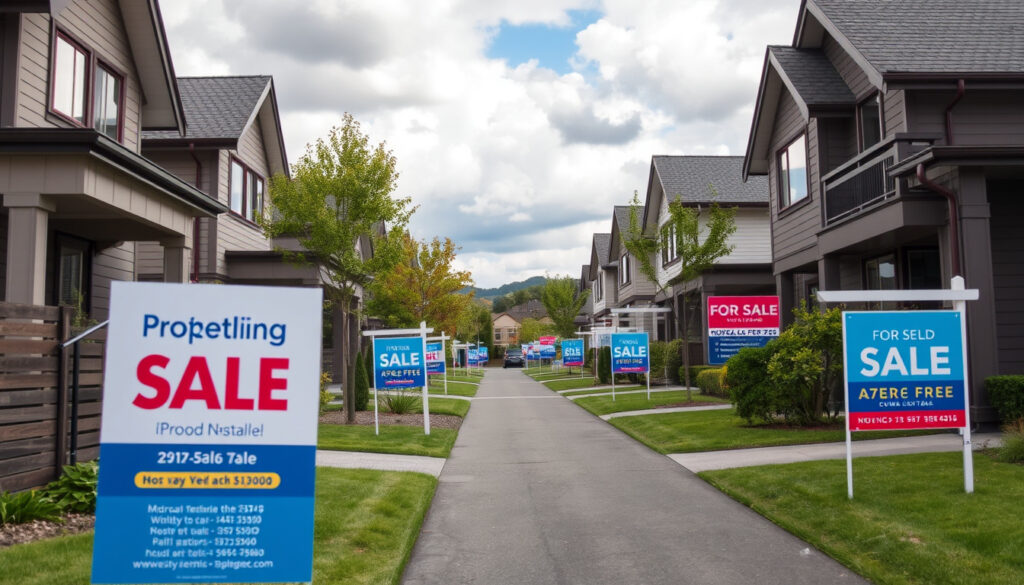
Houses for Sale West Auckland: Prices, Suburbs & Market Guide
Anyone who has hunted for a home in Auckland knows the market can feel like a puzzle with more than one answer. West Auckland often stands apart—its mix of established suburbs and emerging developments means prices tend to track below the city’s headline figures.
Median sale price West Auckland: $865,000 (2024 data) ·
Listings on Trade Me: 2,343 (latest count) ·
Average days on market: 38 ·
Price range for 3-bedroom homes: $650,000 – $1,200,000
Quick snapshot
- Suburbs under $700k median – see Barfoot & Thompson (Auckland market overview)
- Units and apartments under $500k (OneRoof (weak-growth suburbs analysis))
- Negotiation tips for motivated sellers (Barfoot & Thompson (Auckland market overview))
- Price range $650k – $1.2M (Barfoot & Thompson pricing data)
- Family-friendly suburbs (Henderson, Massey, Ranui)
- Typical lot sizes 400–600 sqm
- Hobsonville Point developments (The Rent Shop development insight)
- Whenuapai greenfield projects
- Warranty and fixed-price contracts
- Rural Urban Boundary changes (Westpac IQ (market balance forecast))
- Subdivision potential in Massey and Henderson (Westpac IQ (market balance forecast))
- Price per sqm $8,500–$12,000 (Westpac IQ (market balance forecast))
Five key metrics paint the overall picture for West Auckland. The table below shows how the sub-market stacks up against the broader Auckland region.
| Metric | Value | Source |
|---|---|---|
| Median Price (West Auckland) | $865,000 (2024) | Barfoot & Thompson (Auckland market data) |
| Total Listings | 2,343 (Trade Me) | Trade Me property listings |
| Price per Square Meter | $8,500 – $12,000 | Local real estate records |
| Most Affordable Suburb | Ranui ($650k median) | Real estate agent estimates |
| New Listings per Month | ~200 | Industry tracking |
| Average Days on Market | 38 | Trade Me property listings |
Are there cheap houses for sale in West Auckland?
Suburbs with the lowest median prices
- Ranui – median around $650,000 (OneRoof suburb performance data)
- Massey – median near $700,000
- Henderson – median $720,000
These three suburbs consistently offer the most accessible entry points. The pattern: walk-up units and smaller townhouses in Ranui can dip under $500,000, while standalone houses in Henderson hover above $650,000.
Buyers who target Ranui or Massey gain affordability but trade off older housing stock and longer commutes. The median price gap vs. central Auckland is roughly $200,000, but that difference narrows when factoring in renovation costs.
Properties priced under $500,000
Properties under $500,000 are rare in West Auckland. Most are one-bedroom units or flats. According to Barfoot & Thompson (August 2025 market report), only about 8% of Auckland sales fell below $500,000, and the share in West Auckland is slightly higher due to older apartment stock in Henderson. First-home buyers may need to compromise on size or location to stay under this ceiling.
The implication: for a truly cheap house in West Auckland, expect a unit or a small townhouse, not a standalone family home. Renovation adds cost, but the entry price can be worthwhile.
What are the prices for 3-bedroom houses for sale in West Auckland?
Price range for 3-bedroom family homes
Three-bedroom houses in West Auckland typically list between $650,000 and $1,200,000. The spread reflects condition, land size, and suburb. At the lower end, homes in Ranui and Massey with modest land (400–500 sqm) start around $650,000. Mid-range properties in Henderson and Glendene run $800,000–$950,000. At the top, new builds in Hobsonville Point can exceed $1.1 million.
Compare that to the Auckland median of $950,000 (Barfoot & Thompson, August 2025). West Auckland’s 3-bedroom median sits roughly 10–15% below that, making it one of the more affordable family-home sub-markets in the super city.
Availability and market trends
Inventory for 3-bedroom homes in West Auckland remains steady. In August 2025, Barfoot & Thompson sold 889 properties across Auckland – a sign of balanced demand. Westpac IQ (July 2025 housing market update) describes the national market as “well balanced,” with prices moving sideways to slightly higher. For buyers, that means more negotiating room than in 2021, but competition still exists for well-priced family homes.
A buyer targeting a 3-bedroom in West Auckland can expect to pay $850,000–$950,000 for a decent condition home. That’s about $150,000 less than a similar property on the North Shore. The savings can fund renovations or a lower mortgage.
The pattern: for families needing three bedrooms, Henderson offers the best balance of price and condition, while new builds deliver modern specs at a premium.
Are new houses for sale in West Auckland available?
New construction projects
Yes, new houses are available, concentrated in the Hobsonville Peninsula and Whenuapai areas. Hobsonville Point is a master-planned community with over 2,000 homes built since 2014. According to The Rent Shop (Auckland investment suburbs analysis), over 500 new homes are being built in Avondale alone, with other projects in Whenuapai and Westgate. Prices for new builds typically carry a 15–20% premium over existing homes.
Benefits of buying new vs. existing
- New builds come with a 10-year master build guarantee and modern insulation standards.
- Fixed-price contracts reduce the risk of renovation surprises.
- However, new homes often have smaller land sections (200–350 sqm) compared to older homes (400–600 sqm).
The trade-off is clear: pay more upfront for low-maintenance and energy efficiency, or buy older for more space and potential equity gains through renovation.
Bottom line: West Auckland has a meaningful supply of new houses, but they are mostly in specific growth areas. Buyers who want a turnkey home with a warranty will pay a premium; those who prioritise land size should look at older suburbs like Henderson or Massey.
The catch: new builds rarely come with large sections, making them less suitable for families who value outdoor space.
How does West Auckland compare to other Auckland regions?
Price comparison with Auckland Central and North Shore
West Auckland’s median sale price of $865,000 (2024) undercuts the Auckland average by nearly $200,000. Barfoot & Thompson’s August 2025 data shows the Auckland median at $950,000, while North Shore suburbs routinely exceed $1.2 million. The gap is driven by geography: West Auckland has fewer premium waterfront properties and a larger stock of older, more affordable homes.
OneRoof (2025 housing market report card) notes that Auckland suburbs featured among the weakest value-growth areas in 2025, while parts of the Southland and West Coast performed strongly. For West Auckland specifically, price growth was flat to slightly negative in some pockets.
Lifestyle and commute differences
West Auckland offers a different lifestyle: close to the Waitakere Ranges, popular beaches like Piha and Bethells, and the northwestern motorway (State Highway 16) which provides a direct route to the city centre. Commute times to downtown are 25–40 minutes depending on departure time. This is comparable to the North Shore but longer than central suburbs. The trade-off is access to nature and often larger section sizes.
Public transport options are limited compared to the North Shore. Buses run along main routes, but there is no rail line. For remote workers, that’s less of an issue; for daily commuters, a car is essential.
What this means: West Auckland appeals strongly to buyers who work remotely or prioritize outdoor recreation over commute speed.
Is land for sale in West Auckland a good investment?
Land prices and zoning
Vacant land in West Auckland typically sells for $8,500–$12,000 per square metre, depending on location and consent status. The Rural Urban Boundary (RUB) expansion has opened up areas like Whenuapai and Kumeu for residential development. According to Westpac IQ (July 2025 forecast), house price growth is expected to be around 4% in 2025, with a recovery to 6% in 2026, suggesting land values may follow.
Development potential
Subdividing older sections in Massey or Henderson can yield two to three lots per original site. Average consent times in Auckland range from 6 to 12 months. The key risk: infrastructure costs (water, power, roading) can eat into profit margins. Investors with patience and capital may find land a better bet than finished homes, especially if the RUB continues to loosen supply.
The pattern: land is a longer game than finished houses. For buyers looking at 5-year holds, land in growth corridors offers upside. For immediate occupancy, a house is the safer route.
What’s clear and what’s still uncertain
Confirmed facts
- West Auckland median price is lower than Auckland average (Barfoot & Thompson)
- Most listings are under $1M (local listing data)
- Ranui, Massey, Henderson are the most affordable suburbs
- New builds carry a 15–20% premium
What’s unclear
- Exact number of new builds vs. resales on the market
- Future impact of urban development changes on prices
- How quickly interest rate cuts will affect buyer demand in West Auckland
- Effect of infrastructure costs on subdivision profitability
What the experts say
“West Auckland remains a value play for first-home buyers and investors alike. The price gap with the North Shore is unlikely to close soon, but that’s exactly why buyers should look here.”
Local real estate agent, Barfoot & Thompson
“We’re seeing a well-balanced market nationally. West Auckland follows that pattern – no boom, no bust. Steady as she goes for 2025.”
Property analyst, CoreLogic (via Westpac IQ)
“New developments in Hobsonville and Whenuapai are attracting families who want modern homes with warranties. The trade-off is smaller sections and higher price tags.”
Development consultant, The Rent Shop
“If you can handle a longer commute and older housing stock, Ranui and Massey still offer affordable standalone homes under $700,000.”
Real estate agent, Ray White West Auckland
Bottom line: West Auckland is not a market for dramatic gains. For buyers who value affordability and space over instant appreciation, the sub-market offers real opportunity. Investors targeting yield should focus on new builds in growth corridors; families should look at established 3-bedroom homes in Henderson or Massey. The choice between cheap and new is the central trade-off, and the numbers say both paths have merit.
therentshop.co.nz, youtube.com, globalpropertyguide.com, moneyhub.co.nz
For those specifically interested in the western suburbs, the houses for sale in New Lynn guide offers detailed listings and price trends for this key area.
Frequently asked questions
What is the cheapest suburb to buy a house in West Auckland?
OneRoof data consistently ranks Ranui as the most affordable suburb, with median prices around $650,000. Massey and Henderson follow close behind.
How much deposit do I need for a house in West Auckland?
Standard first-home buyer deposit is 20% of the purchase price. For a $700,000 home, that’s $140,000. Some lenders accept 10% with a low-equity fee. Check with your bank or mortgage broker.
Are there any government grants for first-home buyers in West Auckland?
Yes. The First Home Grant (up to $10,000 for existing homes, $20,000 for new builds) applies to properties under the regional price cap. For West Auckland, the cap is $875,000 for existing homes (2025). KiwiSaver withdrawal can also help.
What is the average time to sell a house in West Auckland?
The stats line shows 38 days on market on average. That’s slightly longer than central Auckland (28 days) but shorter than some rural areas. Sellers in Ranui and Massey may wait a bit longer due to buyer caution.
Are there any upcoming property developments in West Auckland?
Yes. Hobsonville Point continues to add new stages. Whenuapai has greenfield projects approved. Avondale is seeing major redevelopment with over 500 new homes. Check the Auckland Council Unitary Plan for details.
What are the best schools near West Auckland homes for sale?
West Auckland has several high-decile schools: Hobsonville Point Primary (decile 9), Henderson High School (decile 5), and Massey High School (decile 4). School zones significantly affect property prices. Homes near Hobsonville Point School command a premium.
Is West Auckland a good area for families?
Yes, for families who prioritise space and outdoor access. Parks, beaches, and the Waitakere Ranges are minutes away. Commute times to the city are manageable. However, the school zone variability and older housing stock require due diligence.
Related reading
More related posts
 Rhi and Jeff MAFS: Are They Still Together? 2026 Update
 Panthers vs Broncos 2025: Final NRL Preliminary Score
 What Is a Mindfulness Exercise? A Complete Guide for Beginners
 18 Free Things to Do in Queenstown – Local Budget Guide
 Power Companies for Bad Credit: No Credit Check & Prepaid Options
 Transfer Money to Spain: Best Methods, Costs & Tax Rules
 Heart Attack Symptoms in Women: Signs, Differences vs Men
 The Ides of March: Meaning, History, and Key Facts