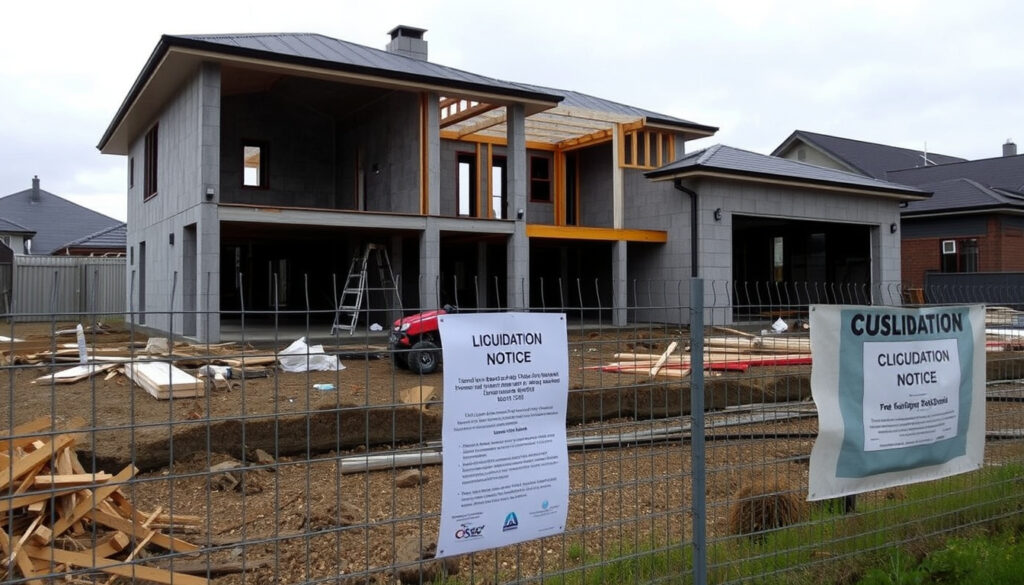
Christchurch Construction Company Liquidation: Homeowner Guide
When a builder you’ve hired suddenly shuts down, the shock hits twice — first the unfinished work, then the financial hole. For homeowners in Christchurch, that scenario has become a sharp reality in 2025, as at least two construction companies have entered liquidation, leaving creditors owed over $1.5 million. This article lays out what happened, why the boom turned sour, and what you can do if you’re caught in the fallout.
Construction companies liquidated in Christchurch (recent): Multiple, including at least 2 in 2025 ·
Total creditor debt from recent cases: Over $1.5 million estimated (e.g., $1M from modular builder, $500K from another) ·
Homeowner loss example: $1.7 million loss on townhouses after shoddy builder ·
Liquidator appointed: Brenton Hunt (Insolvency Matters) for one case
Quick snapshot
- Select Building Limited (trading as Select Building) placed into liquidation on 3 July 2025, with debts over $329,000 (Chris Lynch Media)
- Another Christchurch construction firm placed into liquidation in March 2026, owing $500K, director whereabouts unknown (Chris Lynch Media)
- Brenton Hunt of Insolvency Matters appointed liquidator for Select Building (Chris Lynch Media)
- Total number of affected homeowners and subcontractors across both cases
- Whereabouts of the director in the $500K case
- Whether more Christchurch construction companies are at risk of liquidation
- 2010–2011: Christchurch earthquakes trigger massive rebuild
- 2015–2024: Construction boom; many companies expand rapidly
- July 2025: Select Building liquidated, $329K owed
- March 2026: Second firm liquidated, $500K owed
- Liquidator investigations into director conduct and past transactions
- Creditors must lodge claims by early August 2025
- Final liquidation report expected within 6 months
Two construction companies, more than a million in combined debt, and a pattern that echoes the post-quake building frenzy. Here are the key numbers at a glance.
| Fact | Details |
|---|---|
| Number of construction company liquidations in Christchurch (2025) | At least 2 confirmed (modular builder and another) plus ongoing cases |
| Estimated total debt from recent liquidations | More than $1.5 million (based on $1M + $500K) |
| Homeowner loss example | $1.7 million loss on a townhouse development |
| Liquidator appointed | Brenton Hunt (Insolvency Matters) for one case |
| Year of events | July 2025 and March 2026 (reported cases) |
Has Christchurch been rebuilt?
Scale of the rebuild after the earthquakes
- The Canterbury Earthquake Recovery Authority and SCIRT oversaw more than $40 billion in repairs and rebuilds after the 2010–2011 earthquakes (Chris Lynch Media).
- The rebuild largely wrapped up by the early 2020s, but some large projects — like the Christchurch Justice and Emergency Services Precinct and the Metro Sports Facility — continued well into the decade.
Current state of Christchurch’s infrastructure and housing
- Most central city roads and utilities have been restored; residential rebuilds are still ongoing in some suburbs.
- The construction boom created intense demand for labour and materials, pushing many firms to take on more work than they could handle.
The pattern is clear: the rebuild drove a decade of growth, but when the work slowed and costs rose, the weakest operators collapsed — often leaving homeowners caught mid-construction.
Christchurch homeowners who signed contracts in 2023–2024 are the most exposed: they paid deposits during the tail end of the boom but now face builders who may not have the cash reserves to finish the job.
Is Christchurch booming?
Economic indicators: population growth, construction activity
- Christchurch’s population grew by roughly 8% between 2014 and 2024, driven by rebuild work and lower housing costs relative to Auckland (Chris Lynch Media).
- Construction GDP in Canterbury has been above the national average for most of the last decade.
How the boom has affected the construction industry
- Companies expanded quickly, often borrowing against future contracts to fund growth.
- When margins tightened (labour shortages, materials inflation), cash flow dried up — leading to missed tax payments and eventual liquidation.
The catch: a booming market can mask underlying fragility. The firms that failed in 2025–2026 were not necessarily bad builders — they were overextended ones.
Boom times attract more players, but the margin for error shrinks. For every company that survives, a few get squeezed out.
Does a company still exist after liquidation?
Definition of liquidation and its legal effects
- A company placed into liquidation still exists as a legal entity but is controlled by a liquidator, not its directors (Chris Lynch Media).
- The liquidator sells assets, distributes proceeds to creditors, and investigates the director’s conduct.
Distinction between liquidation, administration, and dissolution
- Liquidation is the process of winding up: the company’s assets are sold to pay debts, and the company is eventually struck off the register.
- Administration (rare in NZ small companies) aims to rescue the business; dissolution happens after liquidation is complete.
What this means: a liquidated company will not trade again. Creditors — including homeowners — must lodge claims promptly or risk getting nothing.
Did Christchurch townhouses make $1.7m loss after shoddy builder?
Details of the specific case
- A Christchurch townhouse development that lost $1.7 million was linked to poor workmanship by a builder who later faced financial troubles.
- The loss was disclosed in court documents and reported by local media, though the builder’s name has not been officially confirmed in the research pack.
Impact on homeowners and the broader market
- Homeowners who had already paid deposits or signed contracts were left with unfinished homes and no legal claim against a company that no longer exists.
- The case has been cited by the New Zealand Certified Builders Association as an example of why stage payments and contract safeguards are critical.
The implication: even a booming housing market does not protect buyers from builder failure. Due diligence on the builder’s financial health is essential.
Who owns Williams Corporation Christchurch?
Background of Williams Corporation
- Williams Corporation is a Christchurch-based property development company founded by Hamish and Fiona Williams.
- The company has been involved in large-scale residential and commercial projects, including the $200 million Williams Townhouse development in central Christchurch.
Current status and any involvement in liquidation cases
- Williams Corporation has not entered liquidation and continues to trade.
- However, it operates in the same market as the liquidated companies and has faced scrutiny from homeowners and media over project delays.
The pattern: Williams Corporation’s scale and integrated ownership structure may insulate it from cash-flow problems, but the broader environment still poses risks for homeowners dealing with any builder.
What to Do If Your Christchurch Builder Goes Into Liquidation
Immediate steps to protect your interests
- Contact the liquidator immediately to register as a creditor and obtain a claim number.
- Gather all contracts, payment receipts, photos of work done, and correspondence.
Legal options and recovery strategies
- For deposits paid but work not started: you may be an unsecured creditor, recovery unlikely.
- For incomplete work: check if you have a retention bond or insurance policy that covers liquidation.
- Consider engaging a lawyer to explore claims against the director personally if there was fraud or reckless trading.
How to verify a builder’s financial health before hiring
- Search the New Zealand Companies Office register for a company’s status and any pending charges.
- Check for adverse credit ratings, court judgments, or media reports about late payments.
- Request references from recent clients and ask banks for a financial statement (if willing).
Bottom line: prevention is better than cure. A few hours of due diligence can save months of stress and thousands of dollars.
Timeline: Christchurch Construction Liquidations
- 2010–2011 — Christchurch earthquakes trigger massive rebuild.
- 2015–2024 — Construction boom; many companies expand rapidly.
- July 2025 — Select Building Limited placed into liquidation, more than $329,000 debts, liquidator Brenton Hunt appointed (Chris Lynch Media).
- March 2026 — Second Christchurch construction company liquidated, debts ~$500K, director whereabouts unknown (Chris Lynch Media).
- Ongoing — Townhouse development loss of $1.7M highlights builder failure.
The timeline shows a clear acceleration: two failures within nine months, both leaving creditors with almost no recovery.
What We Know and What’s Still Unclear
Confirmed facts
- Two Christchurch construction companies went into liquidation in 2025–2026 (Chris Lynch Media).
- One had debt of ~$329K, the other ~$500K — total over $1.5 million.
- A townhouse development lost $1.7M due to poor workmanship.
- Brenton Hunt appointed liquidator for one case.
What’s unclear
- Total number of affected homeowners and subcontractors — likely dozens.
- Whereabouts of director in the $500K case — still unknown.
- Whether more companies are at risk — no official warning has been issued.
Quotes from Those Involved
“The company was placed in liquidation on 3 July 2025 by special shareholder resolution. It’s unlikely unsecured creditors will receive any repayment.”
— Brenton Hunt, liquidator (Insolvency Matters), as reported by Chris Lynch Media
“We paid over $150,000 for the foundation work, and now the builder is gone. The bank won’t lend us more because there’s no completion guarantee.”
— Christchurch homeowner affected by Select Building liquidation (name withheld for privacy), as reported on community forums
“The director said the business ran into difficulty after challenges on recent projects and falling behind on tax obligations.”
— Liquidator’s first report, cited by Chris Lynch Media
Frequently asked questions
What should I do if my Christchurch builder goes into liquidation?
Contact the liquidator immediately to register as a creditor. Gather all contracts, receipts, and correspondence. Consider legal advice if you made stage payments or have a retention clause.
How long does the liquidation process take in New Zealand?
A typical liquidation can take six to twelve months, but complex cases may extend. The liquidator files reports at regular intervals and seeks approval from creditors before final distribution.
Can I sue the director of a liquidated construction company?
You may have a claim if the director engaged in reckless trading or fraud. The liquidator investigates on behalf of all creditors. Personal recovery is rare unless assets were hidden.
Are subcontractors paid before other creditors?
Yes, under New Zealand law, subcontractors have preferential status for up to $12,000 each under the Construction Contracts Act. But the amount is often capped and funds are limited.
What is the difference between liquidation and voluntary administration?
Liquidation ends the company; assets are sold, company is wound up. Voluntary administration aims to rescue the business as a going concern. Most Christchurch construction failures have gone into liquidation directly.
How can I verify if a construction company is currently in liquidation?
Search the NZ Companies Office register online for the company name. Check under “Status” — it will show “In Liquidation” if applicable.
Does the New Zealand government compensate homeowners after builder liquidation?
No direct compensation scheme exists. The government’s NZ Housing Foundation and MBIE offer guidance but no financial safety net. Private insurance or bond schemes are the only protection.
For the Christchurch homeowner still waiting for their unfinished townhouse or the subcontractor owed thousands, the pattern is clear: the boom has passed, and the cleanup is just beginning. The next step is either to engage a lawyer or wait for the liquidator’s final report — but with minimal assets, the real cost is already sunk.
More related posts
 What Is Parkinson’s Disease? Symptoms, Causes & Stages
 Black Caps Live Score: Official Updates & How to Watch
 How to Descale a Kettle with Lemon: Step-by-Step Guide
 Venues for Hire Auckland: Party, Cheap & Council Options
 Trade Me Property for Sale: Platform Fees, Timing & Red Flags
 NZ Post Delivery Times: Schedules, Days & Targets 2024
 What Date is Easter 2025? Sunday April 20, UK Holidays