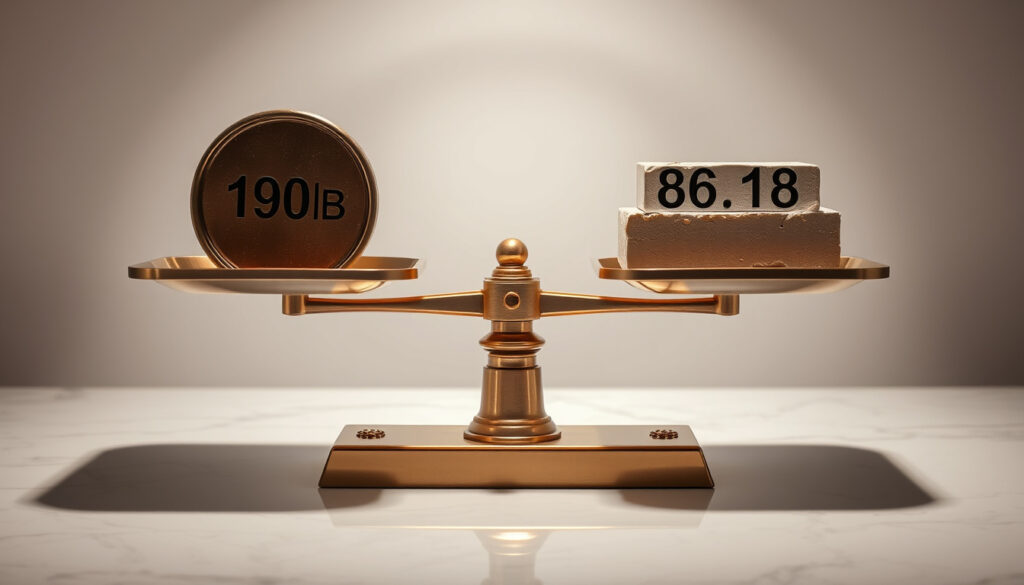
190 Pounds in KG – Exact Conversion to 86.18 kg
Converting weight measurements between imperial and metric systems is a common requirement in fitness, international travel, healthcare, and commerce. Understanding precisely what 190 pounds translates to in kilograms involves applying the internationally recognized conversion factor defined by the National Institute of Standards and Technology. This article provides the exact conversion, explains the mathematical basis, and explores practical contexts where this conversion matters.
The avoirdupois pound, the standard weight unit used throughout the United States and in most everyday contexts, is defined as exactly 0.45359237 kilograms. This definition, established by international agreement, ensures consistency across all conversions regardless of context. Applying this factor to 190 pounds yields a result that serves as a reliable reference point for anyone working across measurement systems.
According to conversion tables maintained by RapidTables, the precise conversion follows the established NIST standard, making 190 pounds equivalent to 86.1825503 kilograms when calculated to full decimal precision. This level of accuracy is essential in scientific, medical, and industrial applications where rounding errors can compound into significant discrepancies.
What Is 190 Pounds in Kilograms?
The answer to the primary question is straightforward: 190 pounds equals 86.1825503 kilograms. This value represents the exact mathematical result of multiplying 190 by the international conversion factor of 0.45359237. The calculation follows the formula mass (kg) = mass (lb) × 0.45359237, which produces results traceable to the official avoirdupois pound definition maintained by the National Institute of Standards and Technology.
For practical purposes, this conversion is often rounded to 86.18 kilograms or even 86.2 kilograms, depending on the required precision. Fitness equipment and gym weights in the United States frequently use this weight class, making the metric equivalent relevant for international athletes and travelers who need to communicate weights in kilograms.
The exact conversion of 190 pounds to kilograms is 86.1825503 kg when calculated to seven decimal places. For everyday use, 86.2 kg provides sufficient accuracy, while scientific and medical contexts typically require the full precision figure to avoid compounding rounding errors.
To estimate conversions mentally, remember that one pound is slightly less than half a kilogram. At 190 pounds, the metric equivalent falls just under 86 kilograms, which aligns with the commonly used 2.2 pounds per kilogram approximation.
| Pounds | Kilograms (Exact) | Kilograms (Rounded) |
|---|---|---|
| 180 | 81.6466266 | 81.65 |
| 190 | 86.1825503 | 86.18 |
| 200 | 90.7184740 | 90.72 |
Breaking down the metric equivalent further, 190 pounds converts to 86,182.5503 grams, which places it at approximately 86.2 kilograms on standard metric scales. In other imperial measures, this equals 3,040 ounces or 13.57 stone, providing context for those familiar with non-metric weight systems. The conversion factor of 0.45359237 ensures consistency across all these related calculations.
How to Convert Pounds to Kilograms
The conversion process follows a simple mathematical formula that produces reliable results for any weight expressed in pounds. The formula mass (kg) = mass (lb) × 0.45359237 derives from the official definition of the avoirdupois pound, which has been internationally standardized to ensure uniform conversions across all applications.
To perform the conversion manually, multiply the weight in pounds by 0.45359237. For 190 pounds, this calculation yields 86.1825503 kilograms. Digital conversion tools like the calculator available at LBS to KG automate this process, though understanding the underlying formula helps verify results and perform conversions for weights not readily available in reference tables.
The reverse conversion also holds importance: one kilogram equals approximately 2.20462262185 pounds. This bidirectional relationship allows conversions in either direction using the same standardized factor. According to Conversion.org, the avoirdupois pound contains exactly 7,000 grains, further anchoring the measurement system within traditional British Imperial units before the adoption of metric standards.
The formula mass (kg) = mass (lb) × 0.45359237 applies universally to all pound-to-kilogram conversions. This factor originates from the official definition where 1 pound = 0.45359237 kg exactly, as established by international agreement and maintained by NIST standards.
Understanding the Avoirdupois Standard
The avoirdupois pound serves as the foundation for weight measurements throughout the United States and in most commercial contexts globally. This system distinguishes between the avoirdupois pound (16 ounces, 7,000 grains) and other historical pound variations like the troy pound used for precious metals. The international avoirdupois pound was formally defined as exactly 0.45359237 kilograms in 1959, ending previous minor variations between countries.
Precision Considerations
When precision matters significantly, the full decimal expansion of the conversion factor ensures accuracy. Using the rounded figure of 0.4536 introduces a tiny error margin of approximately 0.00001 kg per pound, which compounds over large weights. For medical, scientific, or legal documentation, the complete factor guarantees consistency with official standards and verifiable calculations.
Is 190 Pounds Overweight?
Determining whether 190 pounds represents an overweight classification requires calculating Body Mass Index, which incorporates both weight and height. BMI divides weight in kilograms by height in meters squared to produce an index value that places individuals into categories ranging from underweight to obese. The same weight of 190 pounds can fall anywhere from the healthy range to the overweight or obese categories depending entirely on the individual’s stature.
A person measuring 5 feet 10 inches (178 centimeters) weighing 190 pounds would have a BMI of approximately 27.3, placing them in the overweight category. The same weight on someone 6 feet 2 inches (188 centimeters) tall yields a BMI of approximately 24.4, which falls within the normal range. This illustrates that absolute weight alone provides insufficient information for health assessments.
BMI has known limitations as a health metric. It does not distinguish between muscle mass and body fat, meaning athletes with high muscle density may register as overweight despite low body fat percentages. Additionally, BMI categories may require different thresholds for certain ethnic groups. For personalized health guidance, consulting healthcare professionals who can interpret weight in context of overall health, activity level, and individual factors produces more meaningful assessments than BMI alone.
Weight classification depends on height, not absolute numbers. The same 190 pounds (86.18 kg) that indicates overweight for a shorter individual may fall well within the healthy range for someone taller. BMI provides a starting point for assessment, but individual health evaluations require professional interpretation considering body composition and other factors.
Related Weight Conversions Near 190 Pounds
Understanding conversions for weights near 190 pounds provides useful reference points for tracking progress, comparing against standard weight classes, or estimating body composition changes. Each of these conversions applies the same factor of 0.45359237, maintaining consistent mathematical relationships across the conversion table.
| Weight in Pounds | Kilograms (Exact) | Kilograms (Rounded) |
|---|---|---|
| 175 | 79.3786648 | 79.38 |
| 180 | 81.6466266 | 81.65 |
| 185 | 83.9145884 | 83.91 |
| 190 | 86.1825503 | 86.18 |
| 195 | 88.4505121 | 88.45 |
| 200 | 90.7184740 | 90.72 |
| 205 | 92.9864358 | 92.99 |
Converting 180 pounds to kilograms yields 81.65 kg, while 200 pounds equals 90.72 kg. These benchmark values create a practical range for understanding where 190 pounds (86.18 kg) falls within the spectrum. Fitness enthusiasts often track weight changes across these common benchmarks, and international athletes competing in weight classes use these conversions to ensure compliance with metric-standard divisions.
Conversion Accuracy and Standards
The precision of weight conversions depends entirely on the conversion factor used and the decimal places retained in calculation. The internationally recognized definition establishing 1 pound as exactly 0.45359237 kilograms provides the foundation for all accurate conversions.
The exact conversion: 190 × 0.45359237 = 86.1825503 kg, verified against the official NIST avoirdupois pound standard. This value is mathematically certain and internationally recognized.
While the mathematical conversion is exact, contextual interpretation requires additional information. Body composition, height, and individual health factors affect how 190 pounds applies to specific situations. The conversion value remains constant, but its meaning varies by context.
When and Why Convert 190 Pounds to Kilograms
Multiple practical scenarios require converting 190 pounds to kilograms or understanding the relationship between these units. International travel presents immediate needs, as most countries outside the United States measure baggage allowances, body weight for medical purposes, and product weights exclusively in metric units. Tourists managing health conditions or fitness programs often need accurate conversions to communicate effectively with international healthcare providers.
Fitness and nutrition represent another major application area. Recipes, training programs, and nutritional guidelines frequently originate in countries using metric measurements, necessitating conversions for ingredients, target weights, and training loads. Olympic weightlifting and boxing competitions use kilogram-based weight classes, making accurate conversions essential for athletes competing internationally or training alongside athletes from metric-using countries.
Commercial shipping and logistics require metric weight declarations for international cargo, customs documentation, and carrier agreements. Medical and pharmaceutical applications demand metric precision for dosages, device specifications, and patient records. These professional contexts highlight why understanding the precise conversion matters beyond casual estimates.
Official Standards and Sources
The conversion factor of 0.45359237 originates from the official definition of the avoirdupois pound maintained by the National Institute of Standards and Technology. This value represents a legally binding international agreement that ensures all weight measurements can be traced to a common standard regardless of location or measurement system in use.
According to international standards, the avoirdupois pound was formally standardized as exactly 0.45359237 kilograms in 1959, when the United States and United Kingdom agreed on a common definition to eliminate minor discrepancies that had existed between their respective pound definitions. This agreement created the consistent conversion factor used worldwide today for all commercial and scientific weight measurements.
The international avoirdupois pound is defined as exactly 0.45359237 kilograms, a value that serves as the official conversion standard maintained by NIST and recognized internationally for all pound-to-kilogram conversions.
National Institute of Standards and Technology
Next Steps
For those needing to apply this conversion in practical contexts, several resources support accurate calculations and further conversions. BMI calculators that incorporate height provide personalized health context for the weight. Currency conversion applications become relevant for international purchases, while NZ Shoe Size to US Charts offers practical conversion guidance for travelers purchasing footwear internationally.
Converting additional weights follows the same formula, allowing expansion of the conversion table for personal tracking or comparison purposes. Airline baggage policies and international shipping services typically require metric weight declarations, making the 86.18 kg equivalent of 190 pounds useful for compliance verification.
Frequently Asked Questions
How many kilograms is 200 pounds?
200 pounds equals approximately 90.72 kilograms using the conversion factor of 0.45359237. This places 200 pounds about 4.5 kilograms above the 190-pound equivalent of 86.18 kg.
What is 180 pounds in kilograms?
180 pounds converts to approximately 81.65 kilograms. This places 180 pounds roughly 4.5 kilograms below the 190-pound equivalent of 86.18 kg.
Is 190 pounds considered overweight for a man?
Whether 190 pounds qualifies as overweight depends entirely on height. For an average-height male (approximately 5 feet 9 inches), this weight approaches or enters the overweight BMI category. A taller individual at the same weight may fall within the healthy range. Height-specific calculations are necessary for accurate assessment.
What does 190 pounds look like visually?
Visualizing 190 pounds varies significantly based on body composition. The same weight appears differently depending on muscle density, height, and fat distribution. Inanimate comparisons like ten standard dumbbells or a mid-sized adult human reference provide approximate physical references.
How do I calculate pounds to kilograms without a calculator?
To estimate without a calculator, divide pounds by 2.2 for an approximate result. For 190 pounds, dividing by 2.2 yields approximately 86.4 kg, which is close to the exact value of 86.18 kg. For greater accuracy, multiply by 0.45 and add 2 percent of the original value.
Why is the conversion factor 0.45359237?
This specific decimal represents the international definition of the avoirdupois pound as exactly 0.45359237 kilograms. The value was established by international agreement in 1959 to standardize all conversions between imperial and metric systems.
More related posts
 North vs South Island Population Growth: Key Trends
 First Home Grant NZ 2025: What First-Home Buyers Need
 ANZ Online Banking App: Login, Setup & Overseas Guide
 Flights to Dunedin from Auckland: Airlines, Prices & Flight Time
 Tottenham vs Bodø/Glimt: History, Stats & Key Facts
 Takeaways Near Me Open Now: Best, Healthiest & Cheapest Options
 Whakataka te Hau Karakia: Meaning, History & Usage
 Map of USA States: 50 States, Capitals & Free Printable Maps