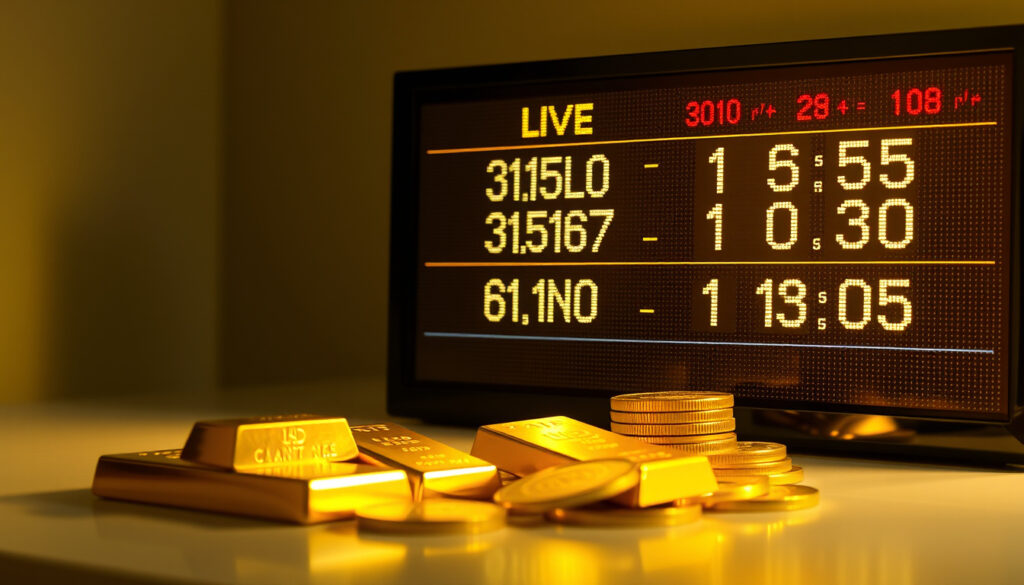
Morris And Watson Gold Price NZ – Live Sell Rates Per Oz And Gram
Morris & Watson stands as one of New Zealand’s established bullion dealers, offering cast gold and silver bars to investors and collectors throughout the country. Their live sell prices are published directly on their website, with updates reflecting current market conditions. Understanding how these prices relate to global spot rates and what premiums apply requires careful examination of the dealer’s pricing structure.
For anyone considering a gold purchase or sale through Morris & Watson, the relationship between their quoted prices and international benchmarks like the London Bullion Market Association (LBMA) spot rate forms the foundation of informed decision-making. This guide examines the current pricing landscape, the factors driving costs, and how frequently updates occur.
What is the Current Morris and Watson Gold Price in NZ?
Morris & Watson publishes sell prices for their cast bars, which typically carry .9999 purity certification. These prices incorporate premiums over the underlying spot rate, accounting for refining, minting, distribution, and handling costs that dealers add to cover their operational expenses.
Spot prices fluctuate continuously based on global market activity, with rates quoted per troy ounce (31.1035 grams). The New Zealand dollar price derives from the USD gold spot multiplied by the current NZD/USD exchange rate, plus local market factors.
- Global spot prices are driven by supply and demand dynamics, currency movements, and geopolitical developments
- The USD/NZD exchange rate significantly influences the final NZD price paid by local buyers
- Dealer premiums typically range from 1–3% over spot for standard cast bars
- Purity certification (.9999) adds assurance but contributes to the premium structure
- Real-time updates from LBMA, NYMEX, and other exchanges feed into local pricing systems
- Competitor prices among NZ dealers remain closely aligned with shared market benchmarks
| Unit | Spot Price (NZD) | M&W Sell Price (NZD) | Last Updated |
|---|---|---|---|
| Per Ounce | ~NZ$8,096–8,101 | NZ$8,243 | Varies |
| Per Gram | ~NZ$260 | ~NZ$264 | Varies |
| Per Kilogram | ~NZ$263,000+ | NZ$263,322 | Varies |
| 25g Cast Bar | ~NZ$6,500 | NZ$6,707 | 3:15 AM NZST |
| 50g Cast Bar | ~NZ$13,000 | NZ$13,413 | 3:15 AM NZST |
| 100g Cast Bar | ~NZ$26,000 | NZ$26,436 | 3:15 AM NZST |
| 200g Cast Bar | ~NZ$52,000 | NZ$52,872 | 3:15 AM NZST |
| 250g Cast Bar | ~NZ$65,000 | NZ$66,090 | 3:15 AM NZST |
| 1kg Cast Bar | ~NZ$260,000 | NZ$263,322 | 3:15 AM NZST |
How Do Morris and Watson Gold Buy and Sell Prices Compare?
The distinction between buy and sell prices represents a fundamental aspect of bullion dealing that affects every transaction. When Morris & Watson sells gold bars to customers, their published prices reflect what buyers pay. The reverse transaction—what the dealer will pay when buying back gold—involves a different calculation.
Understanding the Sell Price Structure
Morris & Watson’s sell prices for cast bars incorporate multiple cost components beyond the raw spot value. These include refining charges to achieve .9999 purity, minting or casting fees for bar production, distribution logistics, secure storage and insurance during holding periods, and dealer margins. For example, their 1oz bar sell price of NZ$8,243 represents approximately NZ$147 above the spot rate of around NZ$8,096, accounting for these incorporated costs.
The Buy-Back Consideration
Publicly available results do not include explicit Morris & Watson buy-back prices. Industry practice typically means dealers offer lower rates when purchasing gold back from customers, with the spread designed to cover resale costs and maintain profitability. Competitors like BullionStar, who also sell Morris & Watson bars, may provide indications of market buy-back ranges, though direct verification with the dealer remains advisable before any transaction.
Bullion dealers generally maintain spreads between buy and sell prices ranging from 2–5%, varying by product size, purity, and current market volatility. Smaller bar sizes often carry proportionally higher premiums due to fixed production costs being distributed across less gold.
What Factors Affect Morris and Watson Gold Prices?
Multiple interconnected factors shape the gold prices available through Morris & Watson. Understanding these elements helps explain why quotes change and how market conditions translate into specific dollar amounts for New Zealand buyers.
Global Market Influences
International gold markets operate continuously, with the London Bullion Market Association setting twice-daily benchmark prices that serve as the foundation for retail pricing worldwide. The New York Mercantile Exchange (NYMEX) and other commodity exchanges contribute to real-time price discovery. When USD gold prices move—whether due to central bank policies, inflation expectations, safe-haven demand, or mining supply disruptions—these shifts flow through to NZD quotes via the exchange rate mechanism.
Currency Exchange Effects
The NZD/USD exchange rate acts as a primary multiplier in determining local gold prices. A NZD gold price of approximately NZ$8,100 assumes a USD gold spot around US$4,776, combined with prevailing exchange rates. Currency fluctuations can either amplify or dampen international price movements for New Zealand buyers, meaning gold can become relatively more or less expensive in NZD terms even when USD prices remain stable.
Local Premium Components
Morris & Watson’s pricing reflects costs specific to the New Zealand market, including import duties, freight insurance, secure storage requirements, and compliance with local financial regulations. The Reserve Bank of New Zealand oversees monetary policy and exchange rate stability but does not directly set gold prices. Dealers must also account for the Goods and Services Tax implications discussed below.
Investment-grade bullion meeting certain thresholds—typically 99.5% purity or higher with minimum quantities—may qualify for GST exemption when stored in approved vaults or exported. Standard retail purchases without such arrangements generally attract the standard 15% GST rate. Specific circumstances should be confirmed with Morris & Watson or professional tax advice.
How Often Are Morris and Watson Gold Prices Updated?
Price update frequency represents a practical consideration for anyone timing a purchase or sale. The mechanisms feeding Morris & Watson’s pricing operate at multiple levels, each with different refresh rates.
- Global exchange feeds: Major markets update gold spot prices continuously or every minute, providing the foundational data that flows downstream to dealers
- Currency market updates: FX rates between NZD and USD refresh throughout trading hours, with the NZD/USD pair among the more actively traded currency combinations
- Dealer system integration: Morris & Watson’s live price lists incorporate these feeds into their published rates, with periodic synchronization timestamps visible on their website
- Last confirmed update: Published data showed Morris & Watson prices updated at 3:15 AM NZST, though daytime updates occur more frequently during market hours
- Historical tracking: Sites like goldprice.org and MyGold.co.nz offer historical charts spanning daily, weekly, and monthly periods
For investors seeking current quotes, checking Morris & Watson’s website directly provides the most accurate reflection of their live pricing. Third-party monitoring services like GoldBroker.com compile LBMA-based historical data in NZD that can indicate recent trends. For the most up-to-date pricing, Morris & Watson’s website offers a direct view, and you can also explore Oz Wheels diecast models value for historical trends.
Clarifying What Is Known and What Remains Uncertain
Gold prices can move significantly within short timeframes. The figures cited reflect conditions at specific moments in time—the data available showed updates at 3:15 AM NZST—and market conditions may have shifted since the most recent recorded values. Always verify current pricing directly with Morris & Watson before making transaction decisions.
The following distinctions help set appropriate expectations for anyone reviewing Morris & Watson pricing information:
| Established Information | Information Requiring Verification |
|---|---|
| M&W publishes sell prices for cast bars on their website | Current buy-back prices (not publicly listed in available data) |
| Spot prices derive from LBMA benchmarks converted to NZD | Minimum purchase amounts (not specified in available sources) |
| Bar purities typically reach .9999 standard | Phone or contact availability for price confirmations |
| Prices include premiums for refining, minting, and distribution | Storage fee structures or vaulting arrangement details |
| Competitors include NZ Mint, BuyBullion.nz, BullionStar, GoGold | Specific buy/sell spread percentages for each product size |
| GST exemption may apply under certain storage conditions | Exact eligibility criteria for individual purchase scenarios |
The Broader Context: NZ Bullion Market Dynamics
Morris & Watson operates within a relatively concentrated New Zealand bullion market where major participants share access to similar pricing data sources. The London Bullion Market Association provides benchmark prices that all local dealers reference, creating a high degree of price convergence at the spot level. Differences between dealers manifest primarily in their premium structures, product range, and service offerings rather than fundamental price advantages.
For New Zealand investors, the practical significance of this market structure means comparing dealers requires attention to total transaction costs—including any applicable GST—rather than simply comparing quoted prices. Those interested in broader financial planning alongside precious metals investment may find our ANZ Home Loan Calculator NZ – Repayments and Borrowing Guide useful for integrating gold investment into overall asset allocation strategies. The choice between providers may hinge more on convenience, storage options, and reputation than on marginal price differences.
Sources and Official References
The pricing information presented draws from multiple verified sources operating in the New Zealand bullion market. Each contributes specific data points to the overall picture.
Morris & Watson provides live sell prices for their cast gold and silver bars, including premium rates above spot for various weight categories from 25g through to 1kg bars.
— Morris & Watson Official Price List, morrisandwatson.com
Supporting market data comes from established reference sources including the LBMA’s official pricing publications, the Reserve Bank of New Zealand’s exchange rate statistics, and competitor monitoring services that track real-time NZD gold pricing. For authoritative current rates, Morris & Watson’s website at morrisandwatson.co.nz/gold/ remains the primary reference point.
Summary
Morris & Watson gold prices in New Zealand reflect the interplay between global spot rates, currency exchange dynamics, and dealer-specific premium costs. Their published sell prices for .9999 cast bars include allowances for refining, production, and distribution, with current 1oz bar pricing around NZ$8,243 against spot rates near NZ$8,100. Price updates occur periodically throughout the trading day, with confirmed timestamps visible on their live price lists. Understanding these relationships helps buyers assess whether current pricing aligns with their investment objectives. For those exploring related financial planning tools, our guide to ANZ Home Loan Calculator NZ – Repayments and Borrowing Guide offers complementary resources for broader financial decision-making.
Frequently Asked Questions
Does Morris and Watson offer the best gold price in NZ?
Major NZ bullion dealers like Morris & Watson, NZ Mint, and BuyBullion.nz reference similar spot benchmarks, so price differences tend to be marginal. Competitiveness depends on total transaction costs including any applicable premiums or GST considerations.
What is the minimum gold purchase at Morris and Watson?
Available sources do not specify minimum purchase amounts for Morris & Watson directly. Competitors like BullionStar sell individual 1oz bars, suggesting smaller quantities are generally available.
Can I get Morris and Watson gold prices by phone?
Contact phone numbers were not included in available data sources. Checking their official website or contacting them directly through their listed channels would provide this information.
How does GST apply to Morris and Watson gold sales?
Investment-grade bullion meeting purity thresholds (typically 99.5%+ and minimum 1g) may qualify for GST exemption when stored in approved vaults or exported. Standard retail purchases without such arrangements generally attract the standard 15% GST rate.
What bar sizes does Morris and Watson offer?
Available pricing data shows Morris & Watson offers cast bars ranging from 25g through to 1kg, with weights including 25g, 50g, 100g, 200g, 250g, and 1kg, plus fractional ounce sizes like 1oz, 2oz, 5oz, and 20oz.
How is the NZD gold price calculated from USD spot?
The NZD gold price equals the USD spot price multiplied by the current NZD/USD exchange rate, then adjusted for local dealer premiums. For example, a USD spot around US$4,776 combined with prevailing exchange rates produces approximately NZ$8,100 per ounce.
Are Morris & Watson gold bars pure?
Morris & Watson cast bars typically carry .9999 purity certification, meaning 99.99% fine gold content. This high purity level meets standard investment-grade specifications used by major bullion dealers globally.
More related posts
 Countdown Te Atatu South Hours & Last Rebrand
 Marble Coffee Table NZ: Buying Guide & Top Retailers
 Taupō District Council Pensioner Eviction: Rights & Process
 The King of Kings (2025): Biblical Accuracy & Streaming Guide
 Age of Empires IV Worth It? AoE II Comparison & PS5 Guide
 Cat in the Hat Costume: DIY Guide, Sourcing, and Controversy
 Houses for Sale West Auckland: Prices, Suburbs & Market Guide
 Whakataka te Hau Karakia: Meaning, History & Usage