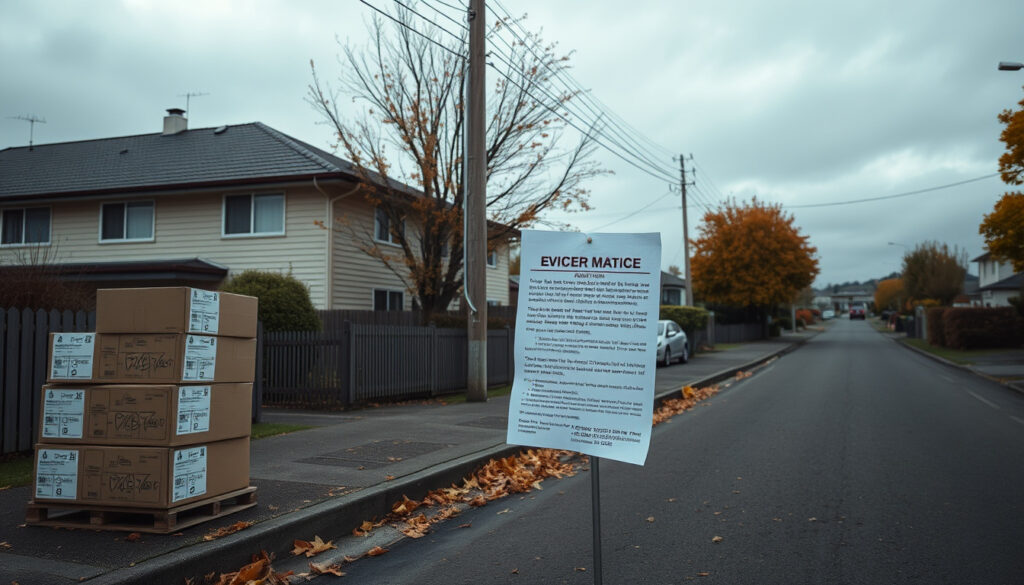
Taupō District Council Pensioner Eviction: Rights & Process
A pensioner living in a cold, damp flat. A council ordered to pay $4,127 in compensation. Then an eviction for unpaid rent. The Taupō District Council case is not a simple story of a bad tenant or an absent landlord—it is a clash between the right to warm housing and the law on rent arrears. This article breaks down what happened, what the rules say, and what tenants in similar situations need to know.
Pensioner unit weekly rent: $180.00 ·
Compensation for healthy homes breach: $4,127 ·
Eviction order date: 25 October 2025 ·
Duration of unhealthy conditions: 2 years
Quick snapshot
- Elderly tenant lived in freezing, damp council unit for two years (Tenancy Services)
- Council paid $4,127 compensation for Healthy Homes breach in May 2025 (Tenancy Services)
- Eviction order issued 25 October 2025 for rent arrears (New Zealand Legislation)
- Exact amount of rent arrears that triggered the eviction
- Whether the tenant received adequate support to manage arrears
- Whether the council had warned the tenant about eviction earlier
- Tenant’s current housing situation after the eviction order
- 2023–2024: Pensioner lives in unit described as freezing and damp (Taupō District Council)
- May 2025: Tenancy Tribunal rules unit breached Healthy Homes standards, orders $4,127 compensation (Tenancy Services)
- 25 October 2025: Tribunal evicts tenant for rent arrears (Tenancy Services)
- Landlord can apply to District Court for bailiff-enforced eviction (Tenancy Services)
- Tenant may face additional costs and adverse credit outcome (Tenancy Services)
- Council’s handling raises questions about pensioner support gaps (Tenancy Services)
Looking at the numbers side by side reveals a pattern:
| Fact | Value |
|---|---|
| Weekly rent for single pensioner unit (Taupō Council) | $180.00 |
| Compensation awarded for unhealthy conditions | $4,127 |
| Date of compensation order | May 2025 |
| Date of eviction order | 25 October 2025 |
| Healthy Homes standard breach found | Yes |
Can the council evict me for rent arrears?
Legal grounds for council eviction
- A landlord, including a local authority, can apply to the Tenancy Tribunal for possession after a valid 14-day notice for unpaid rent (New Zealand Legislation (Residential Tenancies Act)).
- The law does not distinguish between council and private landlords in this process.
- The Tenancy Tribunal must issue a possession order before any eviction can take place (Tenancy Services).
The Taupō case specifics
- In May 2025, the Tribunal found the unit breached Healthy Homes standards and ordered the council to pay $4,127 in compensation (Tenancy Services).
- Despite the breach, the council proceeded with an eviction for rent arrears, granted on 25 October 2025.
A tenant can be evicted for non-payment even when the landlord has failed its own obligations. The duty to pay rent exists independently of the quality of housing.
What this means: a valid grievance over housing conditions does not suspend the duty to pay rent. The two issues run on parallel legal tracks.
What is a 14-day rent arrears notice and what are its consequences?
What a 14-day notice contains
- A formal demand for unpaid rent, specifying the amount owed and the date it must be paid under the Residential Tenancies Act 1986.
- The notice must be in writing and delivered to the tenant (New Zealand Legislation).
Consequences of ignoring the notice
- If the tenant does not pay the full arrears within 14 days, the landlord can apply to the Tenancy Tribunal for a possession order (Tenancy Services).
- The tenant loses the automatic right to stay in the property once the 14 days pass without payment or a formal dispute.
How to respond to a 14-day notice
- Pay the full arrears within the 14-day window.
- If the rent is not actually owed, file a dispute with the Tenancy Tribunal within the 14 days (Tenancy Services).
- Contact a community law centre or Tenancy Services for urgent advice.
Waiting to dispute a 14-day notice until after the deadline gives the landlord direct access to a possession order.
The pattern: a 14-day notice is a procedural speed bump, not a stop sign. Missing the window shifts leverage entirely to the landlord.
How long does it take to evict someone in NZ?
Standard eviction timeline
- 14-day notice served.
- Application to Tenancy Tribunal (1–2 weeks for a hearing).
- Tenancy Tribunal order issued.
- Possession order from District Court if tenant refuses (1 week).
- Bailiff enforcement (1 week).
- Total: roughly 6–8 weeks (Tenancy Services).
Expedited eviction for non-payment
- Rent arrears cases can be processed faster, often in 2–3 weeks from the notice expiry to tribunal order.
Factors affecting duration
- Tenant disputes, adjournments, or delays in serving documents can stretch the process to 12 weeks or more.
Why this matters: a council tenant with a small arrears can lose their home in the time it takes to receive a single fortnightly pension payment.
What if a tenant refuses to move out in NZ?
Landlord options after tribunal order
- The landlord cannot remove the tenant themselves. They must apply to the District Court for a possession order.
- The court can order bailiffs to enforce the eviction (New Zealand Legislation (District Court enforcement powers)).
Involvement of bailiffs
- Bailiffs are authorised to physically remove the tenant and their belongings if the possession order is ignored.
- The tenant must bear the costs of the bailiff action.
Consequences for tenant
- Adverse credit listing, making future rentals difficult.
- Liability for the landlord’s additional enforcement costs.
- Loss of any positive rental history (Tenancy Services).
Refusing to leave a council property triggers mounting costs and enforcement action. It does not pause the legal clock.
The trade-off: refusing a lawful eviction order adds costs and a permanent mark, but tenants who genuinely cannot find alternative housing often have few good options.
Can a landlord walk around your house without permission?
Tenant privacy rights
- Tenants have a right to “quiet enjoyment” of their home, including privacy from the landlord (Tenancy Services).
Notice requirements for inspections
- Landlords must give at least 24 hours written notice before inspections or repairs, entering only at a reasonable time.
Emergency entry exceptions
- In a genuine emergency, such as a burst water pipe or fire, the landlord can enter without notice.
- Entry for routine maintenance or casual visits never falls under emergency rules.
The implication: in the Taupō case, the lack of proper maintenance access procedures likely contributed to the compensation award. Privacy breaches often accompany broader tenancy failures.
What is confirmed and what remains unclear
The public record provides a firm picture on some details, while leaving others unanswered.
Confirmed facts
- Taupō District Council paid $4,127 in compensation in May 2025 for a Healthy Homes breach (Tenancy Services).
- Pensioner unit weekly rent is $180.00 (Taupō District Council).
- Eviction order issued 25 October 2025 (Tenancy Services).
- Conditions were described as “freezing” and “damp” by the tribunal.
What’s unclear
- Exact amount of rent arrears that triggered the eviction.
- Whether the tenant received adequate support to manage arrears.
- Whether the specific unit’s insulation was ever upgraded after the Healthy Homes complaint.
- Tenant’s current housing situation after the eviction order.
Voices in the case
The living conditions described by the tenant were freezing and damp, falling well short of what a reasonable tenant should expect in a rental home.
Tenancy Tribunal adjudicator
We accept the Tenancy Tribunal’s finding and have begun addressing the issues identified at the property to ensure full compliance with the Healthy Homes standards.
For a pensioner on a fixed income, the Taupō case is a stark demonstration that eviction can happen quickly, even when the landlord has failed them. The two tracks—housing quality and rent payment—did not merge. For Taupō District Council, the case is a warning that Healthy Homes standards are enforced, and that failing on those standards while pursuing arrears creates exactly the kind of public accountability no council wants. The choice for tenants facing similar conditions is clear: document everything, pay what you can, and seek help before a 14-day notice arrives.
taupodc.govt.nz, tauponews.co.nz, justice.govt.nz, justice.govt.nz, forms.justice.govt.nz, taupodc.govt.nz, online.taupo.govt.nz
Frequently asked questions
What are pensioner flats?
Subsidised rental units offered by local councils to people aged 65 and over who meet specific income and asset thresholds. Taupō District Council runs 57 such units in the district.
How do I apply for a pensioner unit in Taupō?
Applications are open to those 65 or older receiving NZ Superannuation or an eligible benefit, with assets under $15,000 for a single applicant. Applications can be submitted to the council a year before turning 65.
What is the Healthy Homes standard?
New Zealand’s minimum standards for rental properties covering heating, insulation, ventilation, moisture ingress, and draught stopping. All rentals, including council housing, must comply.
Can the council evict me without going to the Tenancy Tribunal?
No. A council must follow the same legal process as any private landlord: a valid notice, followed by a Tenancy Tribunal hearing and a possession order.
What should I do if I receive a 14-day notice?
Pay the full arrears within 14 days if you can. If you believe the notice is wrong, file a dispute with the Tenancy Tribunal immediately. Contact a community law centre for urgent help.
How can I get help with rent arrears?
Contact Work and Income for a possible hardship grant, speak to your local Citizens Advice Bureau, or apply for a payment plan through your council’s tenancy services.
What are my rights as a council tenant regarding maintenance?
You have the right to a warm, dry, and healthy home under the Healthy Homes standards. The council must give 24 hours notice for inspections and repairs. Breaches can be taken to the Tenancy Tribunal.
More related posts
 Nike Air Max 90: History, Prices, and Where to Buy in Ireland
 What Is a Home Appraisal? Process, Cost & Low Appraisal Tips
 Pacific Language Weeks 2025: Dates, Theme, & New Language
 Southland Times Death Notices: How to Find Recent Obituaries
 Webmail Xtra Co NZ Login, Setup and Troubleshooting Guide
 Lucinda Riley Books in Order: Complete Reading Guide (2025)
 What Happens When We Die? Medical & Spiritual Perspectives
 De Facto Relationship NZ: 3-Year Rule and Property Rights