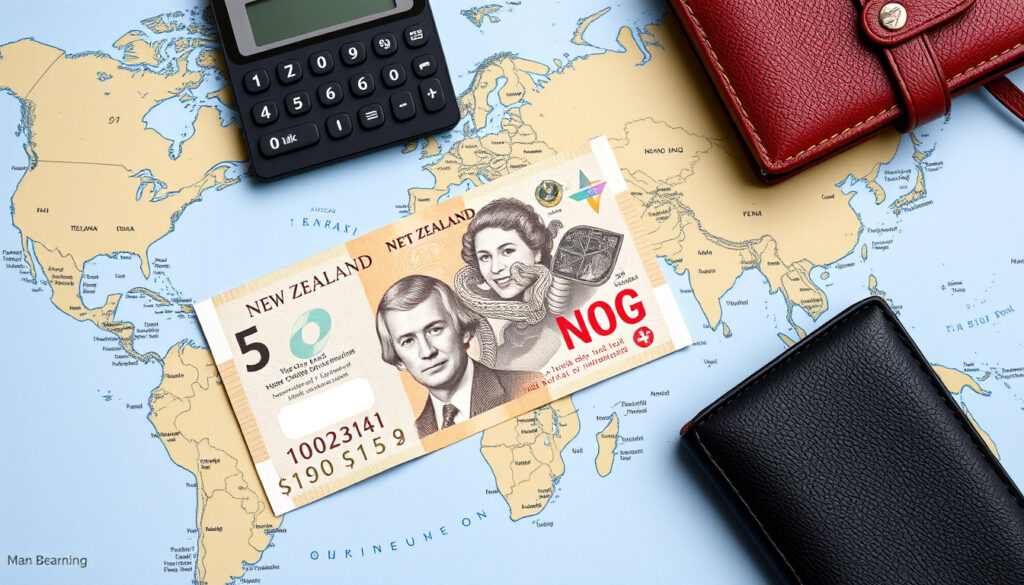
NZD to Vietnamese Dong: Exchange Rate & Spending Tips
You’ve booked the flights, sorted the travel insurance, and now you’re staring at a currency converter wondering how many zeros you’ll be dealing with. That’s the moment most New Zealanders planning a trip to Vietnam hit the NZD to VND conversion — and this guide cuts through the numbers to show you what your New Zealand dollar actually buys on the ground, where to get the best rates, and how to avoid costly mistakes with your money.
Current mid-market rate: 1 NZD = 15,016.7 VND ·
100 NZD in VND: 1,499,360 VND ·
1 million VND in NZD: ≈ 66.6 NZD ·
Average daily budget (backpacker): $30–50 NZD
Quick snapshot
- Mid-market rate: 1 NZD = 15,016.7 VND (XE live converter)
- Rate updated daily (XE live converter)
- Check live rate before converting (XE live converter)
- Street food: 20,000–50,000 VND (Vietnam National Authority of Tourism)
- Beer: 10,000–20,000 VND (Vietnam National Authority of Tourism)
- Hostel: 200,000 VND/night (Vietnam National Authority of Tourism)
- Travelex NZ – buy VND online (Travelex NZ)
- ATMs in Vietnam – best rates (Travelex NZ)
- Currency exchange counters at airports (Travelex NZ)
- Carry small denominations
- Use cards in cities
- Avoid exchanging at hotels
Six quick reference facts to ground your expectations before we dive into the nitty-gritty.
| 1 NZD | 15,016.7 VND (mid-market) |
|---|---|
| 100 NZD | 1,499,360 VND |
| 1,000,000 VND | ≈ 66.6 NZD |
| 20,000 VND | Bottle of water or small snack |
| Average daily budget | $30–50 NZD backpacker / $80–150 NZD mid-range |
| ATM withdrawal fee in Vietnam | 22,000–33,000 VND per transaction |
How much is $100 NZ in dong?
If you’re planning a trip to Vietnam, the first calculation you’ll likely make is how many dong you get for a $100 New Zealand note. The answer depends on where and when you exchange, but the mid-market benchmark gives a clear starting point.
How much is 1 million dong in NZ dollars?
- At the current mid-market rate, 1,000,000 VND converts to approximately 66.6 NZD (XE converter).
- That’s about the cost of a casual lunch for two back in New Zealand — but in Vietnam it can cover a full day of eating and transport.
How much is 10 NZD in VND?
- 10 NZD converts to roughly 150,167 VND at the mid-market rate.
- In practical terms: enough for three bowls of pho from a street stall or a round of local beers for friends.
The trade-off: exchange counters and banks typically add a margin of 3–8%, so the actual amount you receive will be lower than the mid-market figure. For example, Travelex NZ’s rate for $100 NZ yielded about 1,262,494 VND at the time of research — a noticeable gap.
Is $100 a lot of money in Vietnam?
One hundred New Zealand dollars transforms into roughly 1.5 million Vietnamese dong. In a country where street food costs 20,000–50,000 VND and a hostel bed runs 200,000–400,000 VND a night, that sum stretches surprisingly far — but it’s not infinite.
What can you buy with 20,000 dong in Vietnam?
- A bottle of water or a sidewalk coffee — the national tourism board notes that a street-side coffee costs about 25,000 VND (Vietnam National Authority of Tourism).
- 20,000 VND equals about 1.30 NZD, which puts everyday items into perspective.
Is $1000 enough for 2 weeks in Vietnam?
- A budget traveler spending $30–50 NZD per day — roughly 450,000–750,000 VND — can manage two weeks on $1000 NZ, especially outside major tourist hubs.
- Travel Money NZ suggests budget travelers may need 3–5 million VND (≈ $200–335 NZD) for a week; moderate spenders about 7–10 million VND (≈ $470–670 NZD).
- Mid-range travelers (hotels, sit-down restaurants, tours) should budget $80–150 NZD daily, which would make $1000 NZ tight for two weeks.
For a Kiwi backpacker, $100 NZ is a solid daily budget. For a mid-range traveler, it covers a night in a decent hotel and a couple of meals — not much else. The gap between backpacker and mid-range spending in Vietnam is wider than most new visitors expect.
What is a good NZD to VND exchange rate?
A “good” rate means getting as close as possible to the mid-market benchmark without excessive fees. Here’s what the current landscape looks like across major providers.
Four providers, one pattern: the mid-market rate is the target, but margins vary widely.
| Provider | Rate snapshot (1 NZD to VND) | Comments |
|---|---|---|
| Mid-market (XE) | 14,930 VND | XE live benchmark |
| Wise | 15,111 VND | Wise mid-market with low transfer fee |
| OFX | 14,883 VND | OFX quote for transfers |
| Travelex (cash) | ~12,625 VND | Travelex NZ cash rate for $100 NZ |
Why is the NZ dollar so weak?
- The NZD has faced pressure from the Reserve Bank of New Zealand’s monetary policy stance, softening commodity prices, and global risk sentiment.
- No single event drives the weakness — it’s a combination of domestic and international factors that analysts track through economic data.
NZD to VND forecast
- Currency forecasting is inherently uncertain; the only reliable approach is to monitor official sources like the RBNZ and international economic reports.
- For travel planning, focus on current rates and avoid speculating on future movements — hedge by exchanging gradually if you’re concerned.
The pattern: digital services like Wise and XE offer rates within 1–2% of mid-market, while physical cash providers like Travelex add a much larger spread. For large transfers, OFX is competitive; for small amounts, an ATM in Vietnam often beats any pre-departure cash purchase.
Is it better to exchange VND or NZD?
You can’t use New Zealand dollars in Vietnam — they simply aren’t accepted (Travel Money NZ). The real question is whether to convert your NZD before leaving or after arrival. Each method has its own cost and convenience trade-offs.
Four methods, one pattern: the more middlemen you add, the more you lose.
| Method | Rate vs mid-market | Convenience | Best for |
|---|---|---|---|
| ATM withdrawal in Vietnam | Near mid-market + local fee (22,000–33,000 VND) | High (widely available) | Small to medium amounts |
| Prepaid travel card (Wise, Revolut) | Mid-market + small fee | High | Digital-first travelers |
| Cash exchange in NZ (Travelex, NZ Post) | 3–8% margin | Low (plan ahead) | Small cash needed on arrival |
| Exchange at Vietnamese bank or gold shop | Near mid-market (no ATM fee) | Moderate (need bank/branch) | Larger cash amounts |
Upsides
- ATMs give the best rates for most travelers — widely available in cities and tourist areas
- Prepaid cards let you lock in a rate and avoid carrying large cash
- Cash exchanged in Vietnam often beats NZ rates for larger amounts
Downsides
- ATMs charge a flat fee (22,000–33,000 VND) per withdrawal — frequent small withdrawals add up
- Cash exchanged in NZ gives the worst rates — avoid unless you need emergency dong
- Not all Vietnamese businesses accept cards; cash is still king in rural areas and markets
The implication: for most New Zealand travelers, the smartest play is to bring a small amount of VND cash for immediate needs (purchased via Wise or Revolut at near mid-market), then rely on ATMs in Vietnam for the bulk of your spending. Avoid airport exchange counters — they offer the worst margins.
Do I need toilet paper in Vietnam?
It sounds like an odd question, but it’s one of the most practical things a first-time visitor asks. The short answer: public restrooms in Vietnam almost never provide toilet paper (Vietnam National Authority of Tourism). Carry a small pack of tissues with you at all times. Your hotel or homestay will provide toilet paper, but street stalls and local markets will not.
How do I convert NZD to VND?
- Use a conversion app: Wise, XE, and Revolut offer live mid-market rates. For a quick mental trick, Vietnamese tourism officials suggest removing three zeros from the VND amount to get an approximate figure in NZD (25,000 VND ≈ 25 NZD mentally, though the real rate is about 1.30 NZD) — just note it’s not precise.
- Online transfer: Wise and Revolut let you convert NZD to VND and hold the balance on a card or transfer to a Vietnamese bank account.
Where can I exchange NZD for VND in New Zealand?
- Travelex NZ allows you to order VND online and pick up at airports or have it delivered.
- NZ Post offers currency exchange at some branches — check availability in advance.
- Major banks (ANZ, Westpac, BNZ) can order VND, but rates are often less competitive than specialist services.
Prosegur Change NZ advises that carrying some VND cash is mandatory — card acceptance is not universal. Even if you plan to use cards, have enough dong for street vendors, local markets, and transport where cash is the only option (Prosegur Change NZ).
What we know for sure
- The Vietnamese đồng (VND) is the official currency, with notes from 10,000 to 500,000 dong and no coins in circulation (Vietnam National Authority of Tourism).
- New Zealand dollars are not accepted in Vietnam — you must convert (Travel Money NZ).
What remains unclear
- Future NZD to VND exchange rate direction — forecasts are speculative.
- Exact ATM surcharges vary by bank and location; fees of 22,000–33,000 VND are common but not universal.
- Public restrooms generally lack toilet paper — come prepared.
“Many budget travelers report spending $30/day comfortably — that’s enough for a hostel dorm, three street meals, a few beers, and local transport.”
— Travel blogger sharing Vietnam cost data
“Mid-market rates are the fairest benchmark for currency conversion. Any provider charging significantly above that is effectively an expensive convenience fee.”
— XE currency expert
For a New Zealand traveler heading to Vietnam, the choice is clear: use a digital multi-currency card for the best rates, carry a small amount of emergency VND cash purchased online, and always pack a packet of tissues. Your budget will go further than you think — but only if you know how to move your money smartly.
xe.com, tonkintravel.com, wage.is, hvgtravel.com, tradingeconomics.com, paritydeals.com
For the best deals on transfers, be sure to compare NZD to VND exchange rates from different banks and money services available in New Zealand.
Frequently asked questions
How much is 50 NZD in VND?
At the mid-market rate of 15,016.7 VND per NZD, 50 NZD equals approximately 750,835 VND. Exchange providers will offer slightly less after fees.
What is the best way to carry money in Vietnam?
For most Kiwis, a combination works best: a Wise or Revolut card for daily spending, plus a small stash of VND cash for markets, street food, and rural travel.
Should I tip in Vietnam?
Tipping is not expected in most settings, but rounding up or leaving a small amount (5–10% at nicer restaurants) is appreciated. Street vendors and drivers do not expect tips.
Can I use Australian dollars in Vietnam?
No. Only Vietnamese dong is accepted. Some hotels may quote prices in USD, but they will require payment in dong or US dollars at their own rate.
Is it safe to use ATMs in Vietnam?
Yes, in cities and tourist areas ATMs are generally safe. Use machines attached to bank branches during daylight hours. Skimming risk is lower than in some other Southeast Asian countries, but stay alert.
How much cash should I carry per day in Vietnam?
Budget travelers can manage on 500,000 VND (≈ 33 NZD) per day for food, transport, and incidentals. Mid-range travelers may prefer 1–2 million VND daily.
What is the official currency of Vietnam?
The Vietnamese đồng (VND) is the sole legal tender. Notes range from 10,000 to 500,000 and no coins exist. A good mental trick is to remove three zeros for a rough NZD equivalent (but remember it’s not exact).
How do I avoid high exchange fees?
Use a digital card (Wise, Revolut) that converts at mid-market with a small transparent fee. Avoid airport exchange counters and hotel currency exchanges. Withdraw larger amounts in one go to minimize ATM flat fees.
Related reading
More related posts
 Alligator vs Crocodile: 5 Key Differences Explained
 Rule of Thirds Photography: How to Use and Break It
 Rhi and Jeff MAFS: Are They Still Together? 2026 Update
 18 Free Things to Do in Queenstown – Local Budget Guide
 What Does 444 Mean? Angel Number, Bible & Love Guide
 Easter 2026 NZ Dates: Good Friday, Easter Monday & Holidays
 S&P 500 futures – Levande pris, analys och handelsguide
 Net Pay Calculator NZ 2026: Take-Home Pay After Tax & ACC