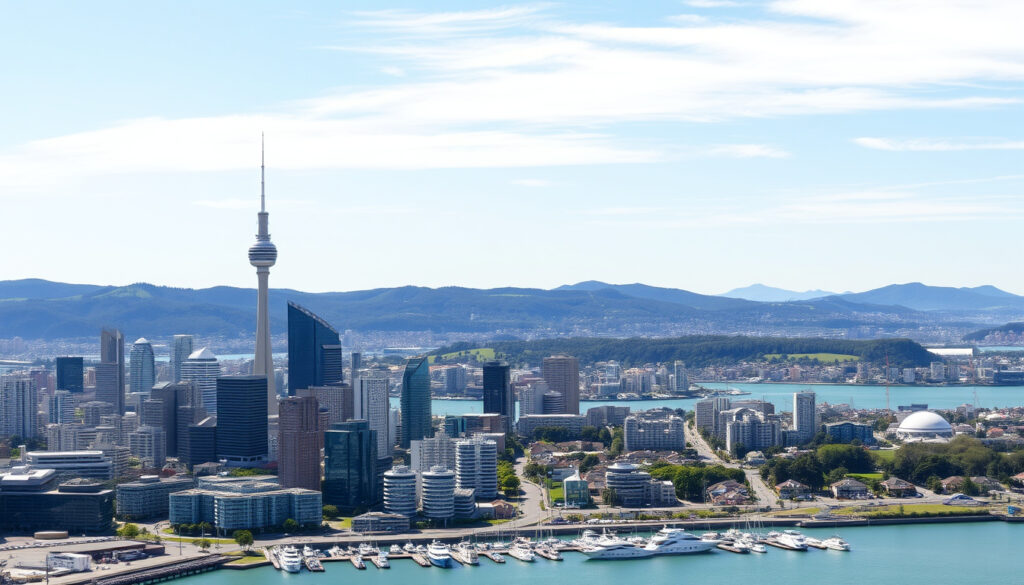
How Many People Live in Auckland? Population & Demographics
Anyone who has tried to pin down Auckland’s population has probably noticed the same thing: the number shifts depending on whether you count the city proper, the wider region, or the latest census. The 2023 Census counted nearly 1.66 million usual residents in the Auckland region — roughly one in three New Zealanders live here (Infometrics, economics research consultancy).
Auckland region (2023 Census): ~1.66 million ·
Auckland city proper: 1,536,416 ·
Share of NZ population: ~1 in 3 ·
Largest ethnic group: European (825,144)
Quick snapshot
- Auckland is New Zealand’s largest city by population and area (Simple Wikipedia, plain-language reference)
- The region grew 5.4% between the 2018 and 2023 censuses (Stats NZ, 2023 Census counts)
- The city proper is home to about 1.5 million people (World Population Review, population tracker)
- The exact count depends on whether you use the city proper, the urban area, or the wider region
- Age-by-ethnicity breakdowns for Auckland are not yet prominent in quick-reference sources
- Cost-of-living figures vary by source and date
- Auckland’s 2023 census categories don’t map cleanly onto London’s 2021 census categories
- Asian population grew 17.1% between the 2018 and 2023 censuses (Knowledge Auckland, census analysis)
- The 2023 count followed a 5.4% rise from the 2018 census (Stats NZ, official census agency)
- New Zealand’s next national census is expected in 2028 (Wikipedia, encyclopaedia entry)
- Between censuses, Stats NZ will update resident population estimates
- Independent trackers will keep updating city-proper and regional numbers
- The next census will show whether Auckland’s one-in-three share keeps growing
Six rows of census data, one pattern: whichever boundary you choose, Auckland accounts for around a third of New Zealand’s population.
| Measure | Value | Source |
|---|---|---|
| Auckland city population (city proper) | 1,536,416 | World Population Review, population tracker |
| Auckland region population (2023 Census) | Nearly 1.66 million | Stats NZ, official census agency |
| Auckland region population (independent estimate) | 1,739,300 | Simple Wikipedia, plain-language reference |
| Share of New Zealand’s population | Roughly one in three | Infometrics |
| Residents of Māori descent | 227,898 | Stats NZ, official community profile |
| Largest ethnic group | European (49.8%) | 2023 Census |
How many people live in Auckland by race?
The quick answer: the Auckland region is home to nearly 1.66 million people, while the city proper sits closer to 1.5 million. One clarification matters before the ethnic breakdown: the New Zealand Census counts ethnicity, not race, and respondents can select more than one group (Stats NZ, official community profile).
What is the total population of Auckland city proper?
- Auckland region, 2023 Census: nearly 1.66 million usual residents (Stats NZ, official census agency)
- Auckland city proper, estimate: 1,536,416 (World Population Review, population tracker)
- Auckland region, independent estimate: 1,739,300 (Simple Wikipedia, plain-language reference)
Three numbers, one explanation: each counts a different boundary. The official census figure covers the Auckland region, World Population Review tracks the tighter city proper, and the independent estimate updates the region between censuses. None of them is wrong; they answer slightly different versions of the same question.
What are the major ethnic groups in Auckland?
- European: 825,144 residents (49.8%) (Figure.NZ, data visualisation platform)
- Asian: 518,178 residents (31.3%) (Knowledge Auckland, census analysis)
- Pacific peoples: 275,079 residents (16.6%) (Figure.NZ, data visualisation platform)
- Māori: 203,544 residents (12.3%) (Knowledge Auckland, census analysis)
- MELAA (Middle Eastern, Latin American, and African): 44,718 residents (Figure.NZ, data visualisation platform)
Because ethnicity is self-reported and multi-tick, the percentages add up to more than 100%. That is why there is no single majority group: European is the largest at 49.8%, while Asian, Pacific, Māori, and MELAA identities are each represented by major communities.
Auckland has no majority ethnic group. The largest category, European, sits at 49.8% — just below the halfway mark — because the census counts overlapping identities rather than exclusive ones.
Auckland’s Asian population is the fastest-moving part of this picture, growing by 75,504 people (17.1%) between the 2018 and 2023 censuses, with Chinese and Indian communities accounting for the largest shares of that group (Knowledge Auckland, census analysis). The census also separates Māori ethnicity from descent: 203,544 residents identified as Māori by ethnicity, while 227,898 were of Māori descent, a measure based on whakapapa rather than self-identification (Stats NZ, official community profile).
The implication: “how many people live in Auckland by race” has no single clean figure, because identity is self-reported and overlapping — but the 2023 census put firm, comparable numbers on every major community.
The data consistently points to the same conclusion: the boundary chosen changes the total, but not the ranking or the diversity pattern.
Is Auckland a large city?
By New Zealand standards, yes — and by a wide margin. Auckland is the largest city in the country by population and area, and no other centre matches its combination of demographic weight and geographic reach.
Roughly one in three New Zealanders live in the Auckland region. That concentration drives national housing demand, transport investment, and the cost of living in ways no other city can match.
How does Auckland compare to other New Zealand cities?
- Auckland region: nearly 1.66 million residents (Stats NZ, 2023 Census)
- National share: roughly one in three New Zealanders (Infometrics)
- Auckland is the largest city in New Zealand by population and area (Stats NZ; Simple Wikipedia)
No other region carries anything close to that share of the national population. Auckland’s size is not just a statistic — it is the reason the country’s political and economic conversations so often start with the city’s housing, transport, and infrastructure.
Is Auckland the largest city in New Zealand by area?
A city’s geography decides how its population distributes. Auckland’s wide regional boundary means growth spreads across multiple centres rather than concentrating in one downtown.
Yes — as the snapshot above notes, Auckland holds the largest-city title for population and for area. In practical terms, “Auckland” is a region as much as a city: the official boundary extends well beyond the urban core, which is why the census count of nearly 1.66 million and the city-proper estimate of about 1.5 million can both be true at once.
The takeaway: Auckland is large for New Zealand in every sense — population, area, and national weight — even if its absolute numbers look modest beside global cities.
Which is bigger, London or Auckland?
London, and not by a small margin. Greater London’s population is roughly 8.9 million (Wikipedia, encyclopaedia entry), which makes it about six times the size of Auckland’s 1.5 million city proper — and still more than five times the wider Auckland region.
Four measures, one pattern: London is several times Auckland’s size in raw numbers, while Auckland carries a far larger share of its national population.
| Measure | Auckland | London |
|---|---|---|
| Latest national census | 2023 | 2021 |
| Population counted | Nearly 1.66 million (Auckland region) | About 8.9 million (Wikipedia, encyclopaedia entry) |
| City-proper estimate | 1,536,416 | About 8.9 million (Greater London) |
| Share of national population | Roughly one in three | Not directly comparable (different census geographies) |
The fair comparison is not simply bigger versus smaller. London’s 2021 census and Auckland’s 2023 census use different boundaries and different ethnic categories, so the population gap is clean, but the demographic details are not directly equivalent.
Why is Auckland smaller than London?
Comparing Auckland with London looks straightforward, but different census geographies and different ethnic classification systems mean the population gap is the only truly clean comparison.
The short answer is the size of the country behind each city. London sits inside one of Europe’s most populous nations and draws on a national population pool many times the size of New Zealand’s. Auckland, by contrast, carries an outsized share of a much smaller country — which is why it matters more at home than it does on the world stage.
The trade-off: Auckland will never match London’s raw numbers, but its one-in-three national share gives it a weight over New Zealand life that London cannot claim over British life.
What’s confirmed and what’s still unclear
The figures above trace to two main sources: Stats NZ’s official 2023 Census results and Knowledge Auckland’s census summaries. Here is the honest split between what those sources establish and what remains open.
Confirmed facts
- The 2023 Census counted nearly 1.66 million usual residents in the Auckland region (Stats NZ, 2023 Census)
- Auckland is New Zealand’s largest city by population and area (Stats NZ; Simple Wikipedia)
- The region grew 5.4% between 2018 and 2023 (Stats NZ, 2023 Census counts)
- The 2023 ethnic counts for European, Asian, Pacific, and Māori groups are published census data (Stats NZ; Knowledge Auckland)
What’s unclear
- The exact population depends on the boundary: city proper, urban area, and region all produce different counts
- Age-by-ethnicity breakdowns for Auckland are not yet prominent in quick-reference sources
- Up-to-date cost-of-living figures vary widely by source and date
- Direct statistical equivalence between Auckland’s 2023 census and London’s 2021 census is limited
- Which figure future comparisons will adopt — city proper or region — depends on the source
Why this matters: the population answer you get depends on who is counting and which boundary they choose — so always check whether a figure refers to the region or the city proper.
What the sources say
The 2023 Census counted nearly 1.66 million usual residents in the Auckland region, representing 33.2% of New Zealand’s population.
Stats NZ, 2023 Census first results
Roughly one in three New Zealanders live in Auckland.
Infometrics (economics research consultancy)
The pattern in these quotes is consistency: whether the source is a government statistician or an independent consultancy, Auckland’s one-in-three share of New Zealand is the anchor fact.
Bottom line
Roughly one in three New Zealanders live in Auckland, and the latest census put the region at nearly 1.66 million residents — the country’s demographic centre by a wide margin. For anyone planning a move to New Zealand, the implication is clear: Auckland is the default draw for jobs, culture, and population growth, but that pull comes with higher housing costs and more competition; the alternative is a smaller centre with cheaper space and slower momentum.
Frequently asked questions
When was the last New Zealand census?
The most recent census was held in 2023, following the 2018 census. New Zealand runs its census on a roughly five-year cycle (Wikipedia, encyclopaedia entry).
How often is the New Zealand census conducted?
About every five years. The gap between the 2018 and 2023 censuses fits that pattern, and the next national count is expected in 2028.
What is the population of New Zealand?
The 2023 Census counted roughly 5 million people nationwide. Auckland’s 1.66 million residents represent about one in three of that total.
What is the land area of the Auckland region?
Auckland is the largest city in New Zealand by area, though published land-area figures vary with the boundary used. Most sources describe the region qualitatively rather than by a single square-kilometre figure.
Is Auckland the most ethnically diverse city in New Zealand?
If “most diverse” means the largest number of big ethnic communities, the census data makes the case: Auckland’s largest groups are European (49.8%), Asian (31.3%), Pacific peoples (16.6%), and Māori (12.3%).
Why do Auckland population numbers differ?
They measure different geographies. The official 2023 Census counted the Auckland region at nearly 1.66 million; World Population Review’s 1,536,416 tracks the city proper; and independent estimates update the region between censuses.
Related reading
More related posts
 Honda CR-V: Reliability, Best Years, Problems & Ireland Guide
 What Do Axolotls Eat – Complete Diet Guide for Pet Owners
 Stone and Water World: Water Features and Stones Auckland Guide
 What Is the Living Wage in NZ? Rates & Minimum Wage Difference
 What Is a Home Appraisal? Process, Cost & Low Appraisal Tips
 Flights to Dunedin from Auckland: Airlines, Prices & Flight Time
 TV Shows with Mark Bonnar: Line of Duty, Guilt, Shetland
 John Tamihere Daughter Accident: Facts and Family Truth